Overview
Air leaks are the great impostors of engine diagnosis. A split breather hose, a perished manifold gasket or a cracked vacuum line will happily impersonate a failing airflow sensor, a tired coil pack or a fuel problem - and because the leak itself is invisible and often inaudible, the impersonation works. Sensors get replaced, the fault stays, and the actual culprit is a rubber joint that would have cost pennies.
The smoke machine ends the impersonation. Seal the intake, fill the system with dense, harmless smoke at low pressure, and the leak has no choice: smoke drifts out of the exact joint that is letting unmetered air in. No listening, no guessing, no spraying flammables around a hot engine. This guide shows the method on a real workshop case - an Audi A3 running rough with oil misted over the engine, where the smoke walked straight out of the inlet manifold's swirl flap joints within a minute of switching the machine on.
Signs That Point at an Air Leak
- Rough or hunting idle, especially when warm
- Lean running fault codes - P0171 is the classic
- Whistling or hissing that rises with engine speed
- Power loss or limp mode on turbo cars - boost escaping
- Oil film misted over the engine around the inlet side
- Sensors already replaced and the fault still there
What You Need

The UK Car Owner's Essential Guide
- Every dashboard warning light explained
- Fluid, tyre and service checks you can do yourself
- How to avoid getting stung at a garage
Instant PDF download · works on phone, tablet or PC · 7-day money-back guarantee
Step-by-Step Guide
Read the evidence on the engine
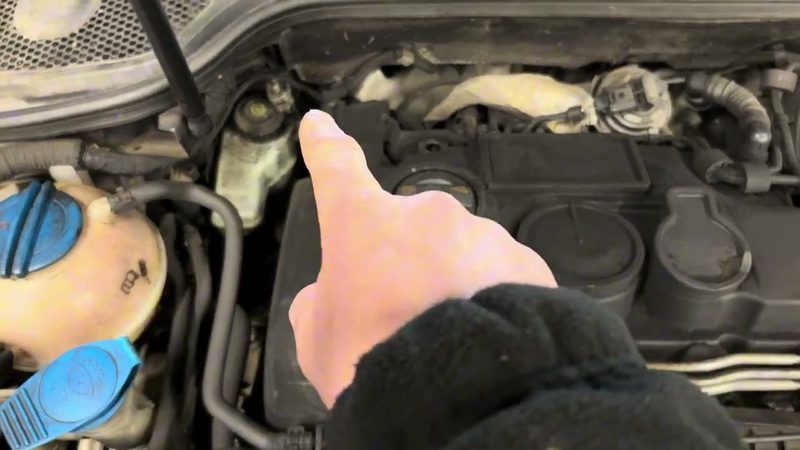
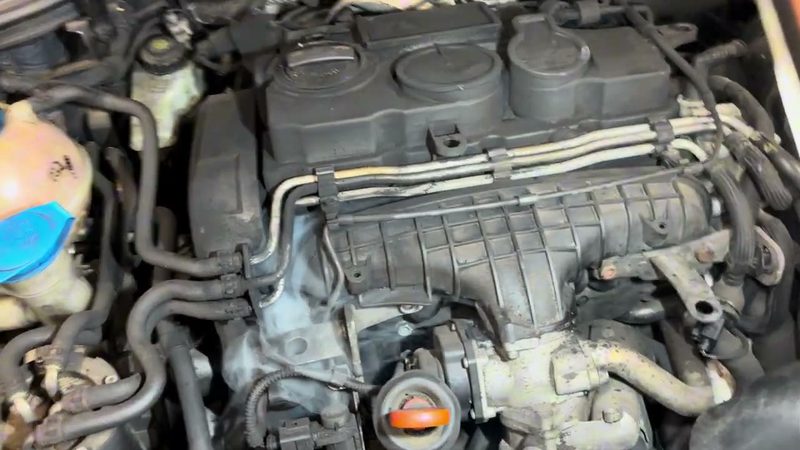
The Audi A3 in this guide told its story before any kit came out: running rough, and the top of the engine coated in a film of fresh oil. That film is blow-by - oily crankcase vapour escaping under pressure from a joint that should be sealed - and where air pushes out with the engine running, unmetered air sneaks in the moment conditions reverse. Oil misting around the inlet side is an air leak advertising itself.
Set up the smoke machine
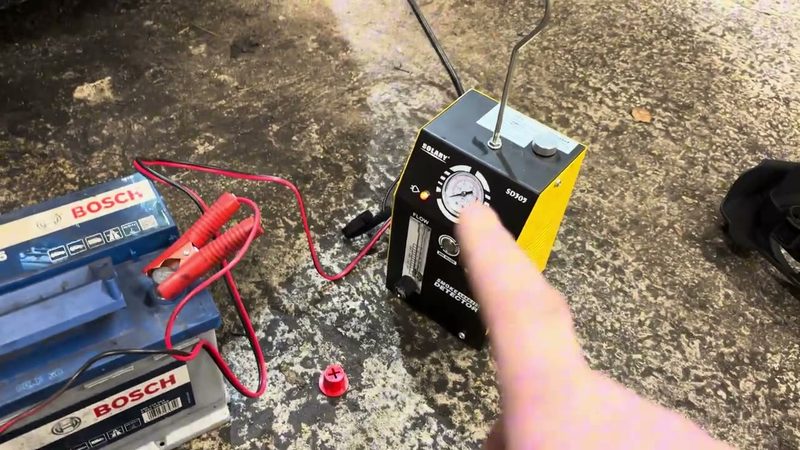
A modern DIY smoke machine is a self-contained box: fluid reservoir, heater and its own compressor inside. Clip it to the battery for power, connect the delivery hose towards the intake, and it generates a steady stream of dense, low-pressure smoke. Low pressure is the point - the system only needs gently filling, never pressurising.
Seal the intake with the balloon
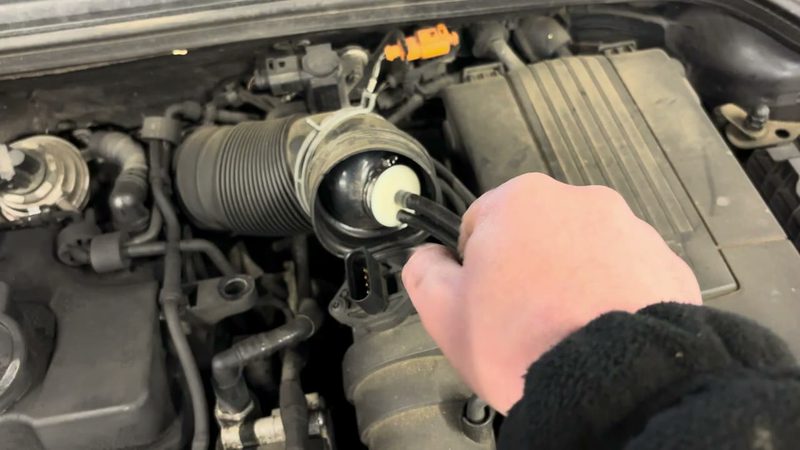
For the smoke to fill the system instead of drifting out of the airbox, the intake has to be blocked. The kit's inflatable balloon does the job: pull the air intake pipe off, push the balloon in and pump it up until it seals the bore. Now the intake tract is a closed vessel with exactly one way out - through any leak.
Fill the system with smoke
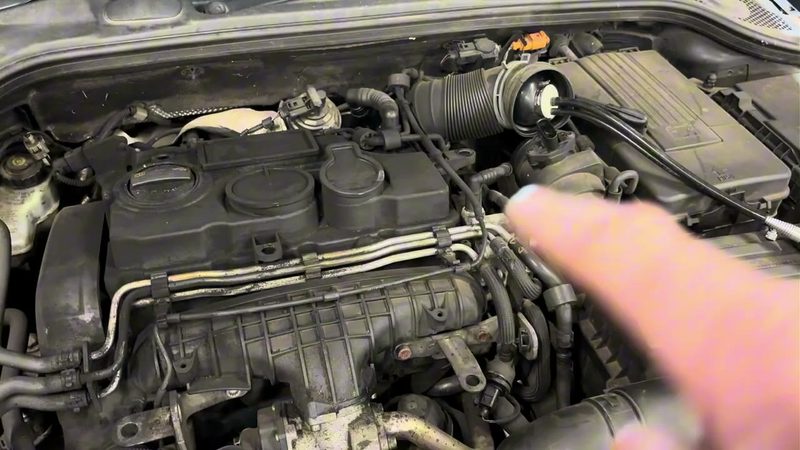
Feed the smoke in and give it half a minute to work through the manifold, pipework and vacuum lines. You are not looking for anything yet - just letting the smoke reach every corner of the sealed system. On the A3 the machine had barely started before the answer appeared.
Watch for escaping smoke
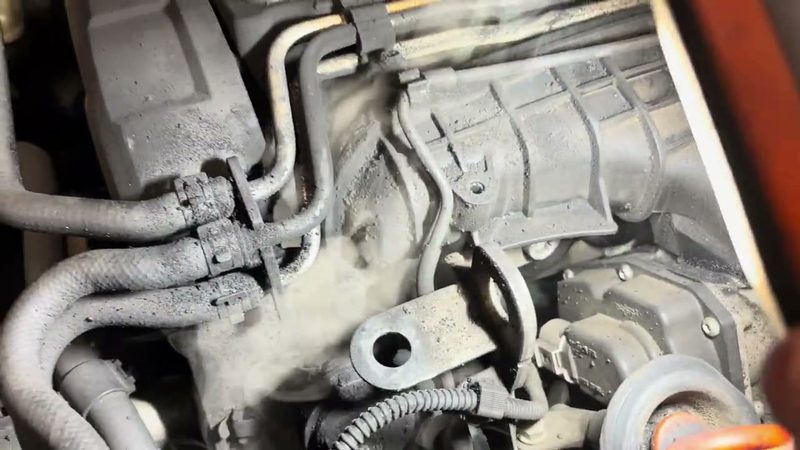
Now scan the engine bay in good light and watch for wisps rising where nothing should escape. Surface smoke can linger and mislead - blow it away and watch where it re-appears from. On this car the smoke kept curling up from low down on the inlet side, persistent and in one place: that is a leak, not a leftover.
Pinpoint the leak and diagnose
Following the smoke down led to the swirl flap connections on the inlet manifold - a known weak point where the flap spindles and gaskets wear. That is the diagnosis made: inlet manifold off, swirl flaps and gaskets inspected and resealed. And that is the machine's party trick in general - in a modern engine bay where you cannot even see the boost pipes, the smoke walks out of the exact joint that has failed, and often you smell the fresh oil in it before you see it.
Why Air Leaks Fool Everyone
The engine management system meters every gram of air at one point - the airflow sensor - and calculates fuel to match. Air that enters after that point is invisible to the calculation, so the mixture runs lean, the idle hunts, and the ECU logs codes that name the SYMPTOM, not the cause. P0171 says "running lean"; it does not say "your breather hose is split". That gap between symptom and cause is where the money gets wasted: airflow sensors, lambda sensors and coil packs all get changed on suspicion while a £5 rubber joint keeps leaking. The smoke test closes that gap for good - it does not interpret anything, it just shows you the hole.
Turbo cars double the stakes because the same pipework sees boost pressure. A joint that leaks unmetered air at idle becomes a boost leak under load - power down, P0299 underboost, sometimes limp mode. Same failed joint, two different faces, one smoke test.
Where Air Leaks Hide
After the airflow sensor, every joint is a suspect. The regulars in the workshop: inlet manifold gaskets and - as on this A3 - swirl flap spindles and their seals; boost pipes and intercooler hose joints, which fail at the clips and the moulded elbows; vacuum lines, which go brittle and crack where they bend; the brake servo hose, a big-bore leak that also changes the brake pedal feel; PCV and breather hoses, which split under their clips where you cannot see; and EGR pipework and its gaskets. The smoke does not care which of them it is - it exits the failed one and points.
What It Costs
| Route | Typical price | What you get |
|---|---|---|
| DIY smoke machine | £40–£90 | Self-contained unit with compressor, fluid and adapters - reusable for years |
| Garage smoke test | £40–£80 | Same test on professional equipment, experienced eyes on the result |
| The usual fix | £5–£60 | A hose, gasket or clip - the finding is the expensive part, not the part |
Typical UK prices in 2026. Compare that with the parts-cannon route: a MAF sensor and a lambda sensor on guesswork costs more than the machine - and fixes nothing if the real fault is a split hose.
Common Mistakes with Smoke Testing
- Not sealing the system properly. If the intake end is open, the smoke drifts out of it and tells you nothing. Balloon in, pumped up, sealed - then fill.
- Trusting lingering surface smoke. Smoke pools in a still engine bay. Blow it clear and watch where it re-emerges - only a persistent source is a leak.
- Testing a hot engine. Heat thins the smoke and rising warm air scatters it. Cool engine, still air, angled torchlight - that is how wisps get seen.
- Stopping at the first leak. Perished rubber fails in batches. Keep the smoke flowing and sweep the whole bay - the A3's swirl flaps were the biggest leak, not necessarily the only one.
- Clearing a boost-leak suspect on a low-pressure pass. A joint that only opens at full boost can hold against gentle smoke. No smoke but classic boost symptoms means a proper pressure test next.
- Replacing sensors before testing. The smoke test costs minutes and finds the truth. The parts cannon costs hundreds and finds nothing. Test first, spend second.
Stay Ahead of It
Rubber and plastic age on a calendar, not a mileage clock - the same reason coolant hoses and belts have time-based intervals. When one vacuum line cracks, its neighbours are the same age; replace in groups, not singles, and give the intake pipework a squeeze-and-look at every service. If your symptoms do not obviously point at air - or point at three things at once - run them through the symptom finder first, and if there is a warning light involved, pull the fault codes before touching anything: a lean code plus a smoke test is the fastest route from mystery to fixed that exists in this trade.
Verdict
The smoke machine belongs in the same drawer as the coolant pressure tester and the block tester: cheap kit that replaces guesswork with an answer you can see. The A3 in this guide had the kind of fault that eats diagnostic hours - rough running, oily engine, nothing obvious - and the smoke named the swirl flap joints inside a minute. Seal the intake, keep the pressure low, trust only persistent smoke, and let the leak show itself. It always does.