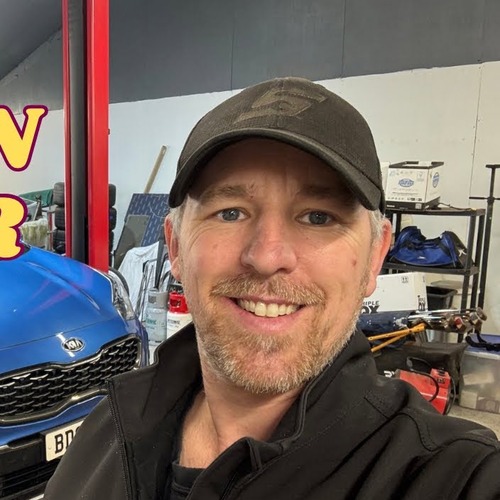
Most people find a garage the worst possible way: the car breaks, they panic, and they ring whoever is nearest and open. That is how you end up paying for parts you did not need, or paying twice because the first place guessed.
This page does two jobs. If I have a garage on my list covering your postcode, it will show you. That list is deliberately short and hand-picked, so most postcodes will not have one yet. That is the honest state of it, and I would rather tell you that than pad the page out with places I know nothing about. Either way you get the second half, which is the part that matters more: how to judge a garage yourself, what to ask before you hand the keys over, and what to do when a bill turns up wrong.
Check Your Postcode
Just the first part of your postcode is enough, for example CO2 or RM14. Nothing you type is sent anywhere or saved.
How I Judge a Garage
I have worked in and around the trade for over twenty years, and I have seen the inside of a lot of workshops. The good ones are not the ones with the shiniest reception. These are the things that actually correlate with a job done properly.
They diagnose before they quote
A garage that names a part over the phone, before anyone has looked at the car, is guessing with your money. The right answer to "what is wrong with it?" is almost always "bring it in and we will find out, the diagnostic time is £X". Paying an hour of diagnostic time is nearly always cheaper than paying for the wrong part twice.
They show you the old parts
Ask for the old parts back at the point of booking, not afterwards. An honest workshop says yes without blinking, because the parts are sitting in a bin anyway. It is the single cheapest piece of accountability you can ask for, and the reaction to the question tells you as much as the parts do.
They ring before they spend
Any competent garage rings you the moment the job grows beyond what was agreed, and gets a yes before continuing. If a place is happy to add three hundred pounds of work without asking, the problem is not this bill, it is every bill after it.
They are busy but not chaotic
A good independent usually has a week or two of work booked. Somewhere that can take your car this morning, every morning, is worth a second look. But busy is different from chaotic: cars blocking each other in, jobs half stripped for weeks, nobody sure whose keys are whose. That is a workshop that will lose track of yours too.
They will say "that is not worth fixing"
The most valuable thing a mechanic ever told me about another mechanic was that he talked a customer out of a job. A garage that only ever finds more work to do is running a sales operation. A garage that occasionally tells you to put your wallet away and sell the car is one that expects to see you again in five years.
They specialise honestly
Nobody is equally good at everything. A place that does mostly diesels, or mostly one or two makes, or mostly gearboxes, is usually better at those than a general shop, and will often tell you when your job is not their strong suit. That sentence, "we could do it but you would be better off at so-and-so", is the sound of somebody you can trust.
The Questions to Ask Before You Hand Over the Keys
Ask these on the phone when you book. It takes two minutes and it filters out most of the places that would have caused you grief. You are not being difficult, you are being a customer who knows what they are buying.
Red Flags
None of these on its own proves anything. Two or three together and I would take the car somewhere else.
Check a Garage's Credentials Yourself
You do not have to take anyone's word for it, including mine. These are the checks anybody can do from their phone in a few minutes, before booking.
The car's own MOT history
Put the registration into the government's free MOT history service. It shows every test, every advisory and the recorded mileage at each one. If a garage tells you something has just failed that has never once been advised in five years of tests, that is worth a question. It is also the fastest way to sanity check a used car before you buy it.
Check MOT history on GOV.UKOr use my own lookup: the Mr Auto Fixer MOT checker pulls the same DVSA data and lays it out in plain English.
Trade bodies and accreditation
Membership is not a guarantee of good work, but it does mean somebody has standards to answer to and there is a complaints route above the garage itself. The Motor Ombudsman runs an approved code of practice and a dispute service. Trust My Garage and the Good Garage Scheme both operate inspected member schemes. If a garage displays a logo, it takes thirty seconds to confirm on the scheme's own website that the membership is real and current.
Reviews, read properly
Ignore the star average and read the one and two star reviews only. You are not looking for whether people are unhappy, because somebody always is. You are looking for a pattern: the same complaint appearing repeatedly, and how the garage replied. A defensive owner arguing with every unhappy customer in public tells you exactly how your complaint would go.
If the Work Is Wrong or the Bill Is Not What You Agreed
This is general information rather than legal advice, but knowing roughly where you stand changes how the conversation goes.
Under the Consumer Rights Act 2015, a garage doing work for you must perform the service with reasonable care and skill, and where no price was fixed in advance the charge must be reasonable. If the work has not been done properly, your first remedy is normally to give the garage the chance to put it right. If that fails or is not practical, you can look for a reduction in what you pay.
One thing catches people out badly, so it is worth knowing before it happens: a garage generally has the right to keep hold of your vehicle until the bill for work it has done is paid. That is a lien, and it is legal. It means driving off in protest is not an option, and it is exactly why the quote-versus-estimate question earlier matters so much. Pay under protest in writing if you must, keep every document, and dispute it afterwards from a position where you have your car back.
The escalation route runs: raise it with the garage in writing first and give them a fair chance to fix it; then, if they belong to one, use their trade body's dispute service; then Citizens Advice, who can also refer matters to Trading Standards. Keep the invoice, the original quote, any messages, and photographs of the fault. Most disputes are won or lost on whether somebody kept the paperwork.
When a Main Dealer Is Actually Worth It
I spend most of my time telling people that a good independent will do the same job for less, and that is usually true. But it is not always true, and pretending otherwise would be as dishonest as the reverse.
Go to a franchised dealer when the car is still inside its manufacturer warranty and the fault is one the warranty should cover, when there is an outstanding recall or a technical service bulletin that only they can apply, when the job needs manufacturer-specific software to code or calibrate a component, and on some newer models when the work touches driver assistance cameras and radar that need a proper calibration rig. Electric and hybrid high voltage work also belongs with somebody properly qualified for it, dealer or independent.
Everything else, which is most of what a car needs across its life, an experienced independent will generally do at a lower labour rate with more room to talk to you like an adult about what is actually worth doing.
Know a garage that deserves to be on this list?
The list is short on purpose. If you have used somewhere that got it right, especially in Essex and the surrounding counties, tell me about it and I will look into it. I would rather add five places slowly than a hundred I cannot stand behind. Send me the details.