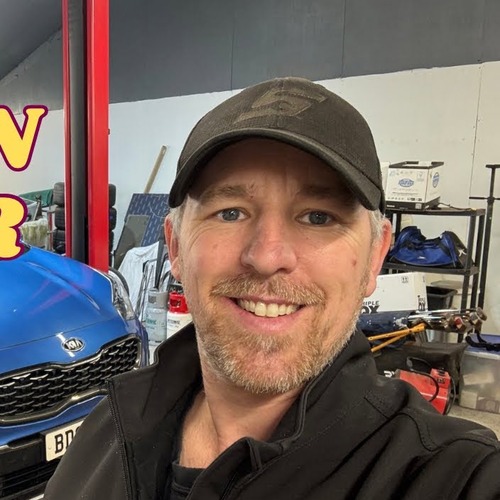
Servicing a car in the UK in 2026 is more expensive than it has ever been. Labour rates have climbed, parts are dearer, and certain main dealers now charge more for a routine oil change than a small independent charges for a full service. After more than twenty years on the spanners, I get asked the same question every week - what should this actually cost me? Here is the honest version, written from the workshop floor.
The three service levels - interim, full and major
Almost every UK garage works from the same three-tier menu. The names occasionally vary (some chains call them "essential", "standard" and "premium" to make the cheapest one sound less basic), but the structure is the same.
Interim service
An interim service is a six-month or 6,000-mile top-up. It is engine oil and oil filter, a visual check around the car, lights, tyres, brakes, screen-wash and a quick look underneath. Nothing more. It exists for high-mileage drivers, taxis, delivery vans and anyone doing short stop-start journeys that age oil prematurely. If you do under 6,000 miles a year, you do not need an interim service - a yearly full service is enough.
Full service
A full service is the annual one - 12 months or 12,000 miles, whichever comes first. This is the one most owners actually pay for. Oil and filter, plus a proper multi-point inspection covering brakes, suspension, steering, exhaust, fluids, drive belts and an end-to-end safety check. Anything else due at that mileage - pollen filter, air filter - gets quoted on top.
Major service
A major service is typically every two years or 24,000 miles. It is everything in a full service plus the longer-interval items: pollen filter, engine air filter, spark plugs (on petrols), and on a diesel the fuel filter. Brake fluid is usually due at this stage too, on a two-year cycle. A genuinely well-done major service sets your car up for another two-year stretch of trouble-free running.
What's actually in a "full service" - the 30-point check explained
"Multi-point check" is a phrase garages love because it sounds thorough without committing to anything specific. Here is what should actually be physically inspected on the ramp:
- Engine oil drained and replaced with the correct grade; oil filter renewed
- Brake pad thickness measured (front and rear), disc condition and thickness checked
- Brake hoses inspected for cracks, bulges and chafing
- Handbrake travel and operation tested
- Suspension bushes, ball joints, anti-roll bar drop links checked for play
- Steering rack gaiters, track rod ends, CV boots all inspected for splits
- Drive belts inspected for cracks and tension
- Coolant level and condition; antifreeze strength tested with a refractometer
- Brake fluid moisture level tested (not just topped up)
- Battery voltage and load test, terminals checked for corrosion
- All lights - exterior and interior, including reversing and number plate
- Tyre tread depth measured on inner, centre and outer; pressures set
- Exhaust visually checked end to end for blows, corrosion and loose mounts
- Underbody inspected for leaks (oil, coolant, brake fluid, fuel)
- Screen wash topped up; wiper blades inspected
- Service indicator reset; service book or digital record stamped
If your invoice just says "service carried out", it is fair to ask for the written checklist. A garage that won't produce one is a garage to walk away from.
2026 typical UK service prices
These are the going rates across England, Wales and Scotland for a standard 1.6 petrol or diesel family car. Northern Ireland sits slightly lower; central London sits significantly higher.
| Service Type | Independent Garage | Main Dealer |
|---|---|---|
| Interim service | £75 - £130 | £140 - £220 |
| Full service | £140 - £260 | £250 - £450 |
| Major service | £200 - £400 | £400 - £700 |
| Service + MOT combined | £180 - £310 | £300 - £520 |
Premium and German cars typically sit 30–50% above these figures because of the synthetic oil specification, longer service routines and specialist diagnostic time. A full service on a 3.0 diesel Range Rover at an independent specialist is realistically £350–£500. At a main dealer, expect £600–£900.
Why dealer servicing is more expensive
Dealers are not pulling numbers out of thin air. The cost stack is real:
- Genuine parts only - branded boxes, OE only, no aftermarket alternative offered
- Higher labour rates - £130–£180/hr is common at main dealers in 2026 versus £55–£95/hr at a good independent
- Manufacturer-mandated diagnostic equipment - six-figure scan tools that have to pay for themselves
- Brand training requirements - technicians must hold current manufacturer certifications that have to be renewed
- Site overheads - large premises, courtesy cars, branded waiting areas
- Warranty claim handling - they can flag and submit a warranty claim if something subtle is found; an independent usually cannot
None of that makes a dealer service mechanically better than a competent independent's service. It makes it different - branded paperwork, OE parts, the courtesy car. Whether that's worth a 50–100% premium is a personal call.
Block Exemption - you can use any garage during your warranty
The UK has retained the EU's Block Exemption Regulation post-Brexit. In plain English: you do not have to service your car at a main dealer to keep the manufacturer's warranty valid. Any qualified garage can do the work, provided two conditions are met:
- The service is carried out to the manufacturer's published schedule and specification
- OEM-quality parts and the correct oil grade are used
Keep the receipts, get the service book stamped, and the warranty stands. I have personally seen owners talked into £900-a-year dealer services on the basis that they "have to" - they don't. The dealer relies on the average customer not knowing.
The "free check" trap
Watch out for the chain-garage "free winter check" or "free MOT pre-check". These exist for a single reason: to get your car on a ramp and find £600 of work to quote. Common upsells include:
- Worn front pads "advised" when they have 4–5mm left (legal minimum is 1.5mm and most people change at 3mm)
- Brake fluid "discoloured" - pull-out the test strip, problem solved
- "Slight play" in a wheel bearing or drop link that is well within tolerance
- Pollen filter shown to you with a torch trick that makes any filter look filthy
- "Coolant due a flush" on a system that's perfectly fine
If a free check produces a long list, get a second opinion from an independent. Nine times out of ten, the actual work needed is half what was quoted.
What should NOT be on a service bill
Items that often appear on inflated service bills but rarely belong there at standard intervals:
- Brake fluid change every service - it's every two years, not every year. Hygroscopic, yes, but the moisture test strip tells you when it's actually needed.
- Manual gearbox oil at every service - most manufacturers list manual gearbox oil as "lifetime fill". A change at 100,000 miles is reasonable as cheap insurance, but not yearly.
- Automatic transmission flush as upsell - on certain ZF 8-speed and some CVT boxes, a high-pressure flush can disturb deposits and cause failure. A drain-and-fill at the correct interval is fine; an aggressive "transmission flush service" sold to you on the spot is risky.
- Coolant flush on a healthy system - modern long-life coolants (OAT and HOAT) are good for 5+ years. Don't pay for a flush unless there's a real reason.
- Fuel system "cleaning" service - usually a bottle of additive poured into the tank for £40 labour.
What SHOULD be on a service bill - at the right interval
- Pollen filter - every 24 months or 20,000 miles. Cheap, easy, often skipped.
- Engine air filter - every 24–48 months depending on conditions. Dusty rural drivers more often.
- Fuel filter (diesel only) - every 24–48 months. Cheap insurance against injector damage.
- Spark plugs - 40,000–60,000 miles for standard plugs, up to 100,000 miles for iridium long-life.
- Brake fluid - every two years.
- Cambelt (where fitted) - strictly to the manufacturer's interval. Not part of a service, but make sure you know when yours is due.
Oil grade matters - getting it wrong damages engines
Modern engines are tight on oil specification. Putting 5W-40 into an engine that wants 0W-20 sounds harmless but isn't - it will fail to circulate fast enough on cold starts and on some direct-injection engines it will trigger LSPI (low-speed pre-ignition) damage. The handbook will tell you the exact grade. Common pitfalls:
- Ford EcoBlue 2.0 diesel - needs 0W-30 to spec WSS-M2C950-A. Using generic 5W-30 voids warranty.
- VAG long-life - engines on long-life schedules need the right VW specification oil (504/507 for diesels). The wrong oil will block the DPF and ruin the engine within years.
- BMW LL-04 - needed on most modern petrols and diesels. Substituting an LL-01 oil shortens engine life.
Long-life schedules - the VAG trap
VAG group (VW, Audi, Škoda, SEAT) offer two service schedules: fixed (every 12 months or 10,000 miles) and long-life (variable, up to 19,000 miles). Long-life sounds great until you realise it was designed for German autobahn driving at sustained speed. In UK conditions - short trips, cold starts, congested traffic - long-life is brutal on the engine. Soot and fuel dilution in the oil hammer the timing chains and turbos.
Workshop tip
If you own a VAG car on long-life servicing, ask your garage to switch it to fixed every 10,000 miles. The dashboard reminder will adjust, the oil specification stays the same, and you'll typically add 50,000+ miles of reliable engine life for the price of one extra service.
Service history's effect on resale value
Full service history adds 15–25% to a used car's selling price. A car with a stamped book and matching invoices at a fair independent looks just as good to a buyer as one stamped at a main dealer. What buyers - and trade - actually want to see is continuity. No gaps. The book matched against the MOT mileage log on the DVLA check. If you skip a service to save £180, you risk £600 off the eventual sale price.
How to verify the work was actually done
The honest test most owners never apply:
- Mark the oil filter - touch it with a paint pen or a dab of Tipp-Ex before you drop the car off. If it's still there when you collect, the filter wasn't changed.
- Check the dipstick - pull it before booking the car in. Old oil is dark brown to black. Fresh oil is honey-coloured (petrol) or noticeably less dark (diesel). After the service, it should be obviously different.
- Ask for the old pollen filter - a quick way to know if it was touched.
- Service book stamp - make sure it's filled in properly, with mileage and date.
- Match parts to invoice - if the bill says new air filter, you should see a clean air filter through the airbox lid.
Independent specialists vs general garages vs chains
Where you go matters as much as what you pay.
- Marque specialists (e.g. an independent VW specialist) - best of both worlds. Dealer-level knowledge and tools, independent prices. The right choice for premium and complex cars.
- Local independent - best for everyday cars. Look for a long-established business with online reviews from real names and repeat customers.
- National chains - variable. Some branches are excellent, others are pure upsell mills. Quality depends on the manager. Use them for fixed-price MOTs and simple tyre fitting; treat their "free check" offers with caution.
- Main dealer - sensible for cars under manufacturer warranty if you're worried about resale or if a complex software-related fault needs OE diagnostics. Otherwise overpriced for routine work.
Servicing your own car - when DIY makes sense
A DIY oil and filter change costs around £40 in oil and £8 in a filter - a £140 saving versus a garage interim. With a £20 ramp set and a Saturday morning, it's well within the reach of anyone competent with a spanner. DIY makes sense when:
- The car is out of warranty
- You're keeping it long-term (so resale stamped history matters less)
- You're happy to use the correct manufacturer-spec oil and an OE-quality filter
- You can keep a written log of what was done and when
What I would not DIY: anything involving brake fluid (proper bleed kit and discipline required), cambelt jobs (timing tools and specialist torque settings), or anything where a wrong move could write the engine off.
The honest mechanic test
One question separates a trustworthy garage from a chancer: "Can I have the old parts back?" Any honest mechanic will say yes without hesitation. If you've paid for a new filter, you own the old one. If you've paid for new brake pads, you own the worn ones. A garage that refuses, hesitates or "loses" them is a garage with something to hide. Make it a habit. Once a workshop knows you check, they tend to be remarkably careful with your invoice.
The takeaway
A fair full service on a normal UK family car in 2026 is £140–£260 at a good independent and includes everything listed in the 30-point check, a stamped book, and the old parts back if you ask. Anything substantially above that needs a proper line-by-line justification. Anything substantially below probably isn't doing the work.
One thing that quietly changes the bill: an MOT test fee at or below the statutory maximum sits outside the scope of VAT. If your invoice shows it inside the VAT-able subtotal, somebody is paying twenty per cent that need not be charged - see the paperwork guide.