Roughly one in three cars fails its MOT first time. The frustrating part - as someone who's been on the testing side of that conversation for two decades - is that most of those failures are for things the driver could have spotted and fixed at home in under an hour. This is a tester's-eye view of how the MOT actually works, what fails most often, and a pre-test checklist that has saved customers genuine money.
How the UK MOT Actually Works
The MOT is a roadworthiness test run by the Driver and Vehicle Standards Agency (DVSA). Cars and light vans up to 3,000kg sit in Class 4 - that's the test most readers will be familiar with. Motorcycles are Class 1/2, three-wheelers Class 3, larger vans and minibuses Class 5 and 7.
A car needs its first MOT three years after first registration, then annually. The current maximum statutory fee for a Class 4 test is £54.85 - that's the most a tester is legally allowed to charge. Most independent garages charge less to bring you in the door: £35–£45 is normal, with some doing it at £29.99 as a loss leader hoping you'll book repairs with them.
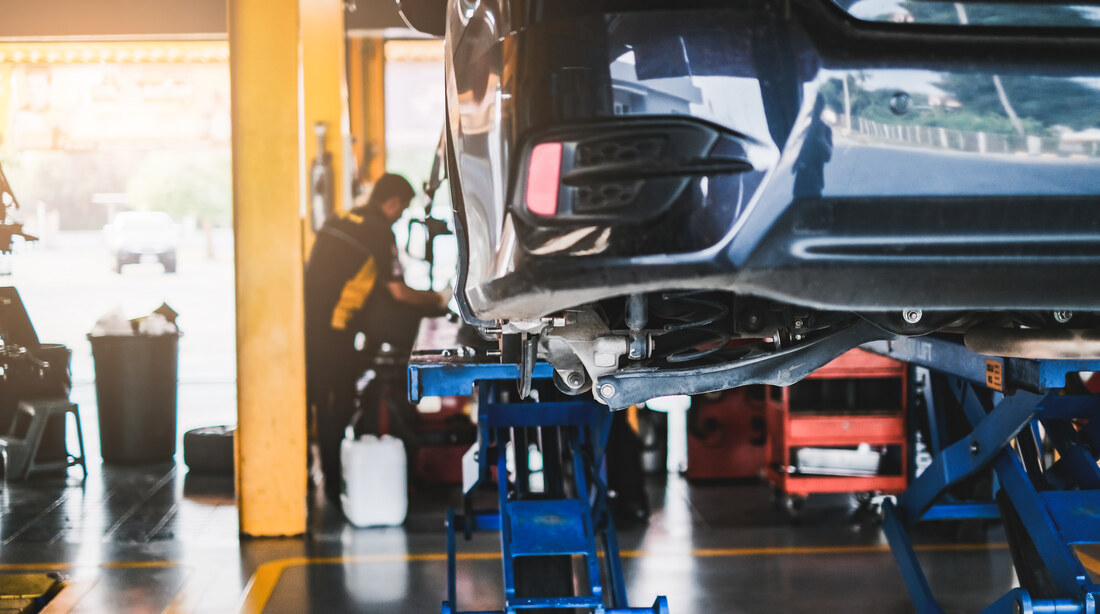
The test itself takes around 45–60 minutes if there are no problems, longer if the tester needs to investigate something. The car goes on the lift, lights and electrics are checked, brakes are tested on a rolling brake tester, emissions are measured at the tailpipe (or via OBD on newer cars), suspension is shaken on the play detector, and the tester does a documented walk-around of around 40 individual check points.
Minor, Major, Dangerous - The Classification System
Since May 2018, every MOT defect falls into one of four categories. Knowing the difference matters because it determines whether you can drive away.
| Category | What it means | Result |
|---|---|---|
| Advisory | Item is wearing but still legal. No action required now. | Pass |
| Minor | Defect with no significant safety impact. Repair when convenient. | Pass with note |
| Major | May affect safety, other road users, or the environment. Repair before driving on the public road if MOT has expired. | Fail |
| Dangerous | Direct and immediate risk to safety or environment. Must not be driven. | Fail - vehicle unfit for use |
The grey area people get caught out on: if the previous MOT certificate is still valid (i.e. you brought it in early) and the new test records only major defects, you can technically drive the car away on the old certificate until that expires. If the old MOT has expired or you collect any dangerous defect, you're walking - or paying for recovery.
The Top 10 MOT Failure Categories
DVSA publishes annual failure data and the rankings barely shift year-on-year. Here's what fails, in roughly the order it crops up on UK test bays.
1. Lighting and Signalling (≈19% of failures)
The number one failure every single year. Mostly blown bulbs, but also cracked lenses, water in headlights, wrongly-aimed beams, and aftermarket LEDs that don't meet the standard. A 20p bulb has cost more MOTs than any other single part.
Check yourself: with the car on the drive, work through every external light. Sidelights, dipped beam, main beam, indicators front and rear, hazards, brake lights, fog lights, number plate light, reverse light. Get someone to help with brake lights or reverse against a wall and watch the reflection in the garage door.
2. Suspension (≈13% of failures)
Worn lower arms, perished anti-roll bar bushes, knackered top mounts, and split CV gaiters. UK roads being what they are, suspension takes a hammering. The tester uses a play detector - two hydraulic plates that twist the wheel back and forth while the tester listens for knocks underneath.
Check yourself: push down hard on each corner of the car and let go. It should rebound once and settle. If it bounces three or four times, the dampers are gone. Walk around looking for split rubber boots on driveshafts and steering joints.
3. Brakes (≈10% of failures)
Pads worn below 1.5mm, scored discs, sticking calipers, perished brake hoses, imbalanced braking effort left vs right. Also: the handbrake. A surprising number of cars fail because the handbrake won't hold the rear wheels on the rolling road test.
Check yourself: covered in our brake pads article. Eyeball pad thickness through the spokes, listen for squealing, feel for pulsation through the pedal. Test the handbrake on a slope.
4. Tyres (≈7.5% of failures)
Tread below 1.6mm, sidewall damage, mixed tyre types on the same axle, incorrect speed rating, valve faults, and bulges or cracks. The legal limit of 1.6mm applies across the central three-quarters of the tread, around the entire circumference - not just one strip in the middle.
Check yourself: use a 20p coin. Insert it into the tread groove. If the outer band of the coin is visible, the tread is below 1.6mm. Do this in at least three places on each tyre - inside, middle, outside. Check for screws, sidewall cracks, and bulges. Inspect the spare if your car has one (technically not part of the MOT, but worth knowing).
5. Screenwash (and Wipers)
An empty screenwash bottle is an MOT major fail - section 7.5 of the inspection manual. It's the cheapest failure in motoring. Wipers also need to clear the screen properly; split, torn or smeary blades will be a major.
Check yourself: top up the screenwash before you set off. If the wipers smear, replace them. Quality blades are £15–£25 a pair at any motor factor.
6. Registration Plates
Faded, cracked, incorrect font, dirty beyond reading, wrong size, or missing entirely. Cherished plates with non-standard spacing or italic fonts will fail - the legal British Standard is BS AU 145e, and from September 2021 plates must also comply with reflectivity requirements (no 4D laser-cut plates that fail the British Standard).
7. Mirrors and Visibility
Driver's door mirror missing or cracked, interior mirror loose, and windscreen damage. The screen rules are specific: anything larger than 10mm in the driver's swept area (the 290mm-wide vertical strip in front of the driver, known as "Zone A") fails. Outside that area, the limit is 40mm.
Check yourself: measure any chips in the screen. A 10mm chip is about the size of a 5p coin. If it's in the driver's eyeline and any bigger, get it filled before the test - most insurers cover screen chip repair at zero excess, but only before it cracks.
8. Seatbelts
Frayed, twisted on the spool, slow to retract, or with damaged stalks. The tester tugs each belt sharply - if the inertia reel doesn't lock, that's a fail. Don't forget rear belts; they're checked too.
9. Emissions
This is where the rules have got significantly tougher for diesel since 2018. We'll go into the diesel changes in a moment.
10. Steering and Horn
Excessive play in the steering, worn track rod ends, leaking power steering pumps. Plus the horn - yes, the horn is tested, and a horn that doesn't sound clearly is a fail.
The 2018 Diesel Emissions Rules
From May 2018, two big changes hit diesel testing. First, if the car was originally fitted with a Diesel Particulate Filter (DPF), the tester is required to physically check for it - visible signs of removal or tampering is an automatic major fail. Second, the smoke opacity limit dropped significantly: most modern diesels are now tested against a manufacturer-plate value, and any smoke that's clearly visible at the tailpipe will fail you. Owners of older diesels with sticky EGR valves, partially blocked DPFs, or recently fitted "performance" remaps regularly fail at this point.
Advisory vs Fail - What an Advisory Really Means
An advisory is the tester telling you "this isn't a fail today, but it's wearing and you should keep an eye on it." It is recorded on the certificate and on your MOT history forever - which means a potential buyer of your car can see it on the gov.uk MOT history service.
Common advisories I write up frequently:
- "Brake pads wearing thin on inner edge" - pads have ~3mm left.
- "Front suspension arm has slight play in a ball joint" - not enough movement to be a major yet.
- "Corrosion to brake pipes - not seriously weakened" - surface rust only, no flaking.
- "Tyre worn close to the legal limit" - tread is at around 2mm.
- "Slight oil leak from engine" - drips on the floor but nothing pouring out.
An advisory should be treated as a "fix within the next service" item. Leaving them rarely gets cheaper. The brake pad advisory at this year's MOT will be a major fail at next year's.
What the Tester Is and Isn't Allowed to Do
This is one I get asked about a lot. A tester is allowed to inspect anything that's accessible without removing covers, undertrays, or trim. They cannot:
- Dismantle anything to investigate further (other than removing wheel trims, fuel caps, etc.)
- Refuse the test on the basis of cosmetic damage that doesn't affect the test items.
- Add items to the test that aren't in the DVSA manual (engine mounts, gearboxes, clutches, oil leaks that aren't dangerous - none of these are MOT items).
- Charge more than £54.85 for a Class 4 test, or charge for the retest within 10 working days at the same station.
If you feel an MOT decision was wrong, you can appeal directly to the DVSA - keep the certificate and don't have any repairs done in the meantime, because an inspector may need to re-examine the car in its failure condition.
Headlight Alignment - The Hidden Killer
One MOT failure category that's invisible to the driver: headlight aim. The tester uses a beam-setter - a wheeled trolley with a screen - to check that the dipped beam is pointing slightly down and to the left, into the gutter rather than into oncoming traffic. After any work that touches the front of the car (bonnet, bumper, front suspension, a knock to the wing), the alignment can shift. Most cars have manual adjusters behind the headlight housing, and any half-decent garage can set them right in 10 minutes with a beam-setter. Without that equipment you can't reliably set headlights at home - by eye is hopeless.
The 30-Minute Pre-MOT Checklist
Half an hour spent on this list the day before the test routinely saves customers £200–£400. Tick through it in order.
- Top up screenwash. Empty bottle = fail. 90 seconds.
- Walk around all lights. Side, dip, main, indicators, hazards, brake, reverse, number plate, fog. Replace any blown bulbs (bring a spare or use a phone torch reflection in the garage door for brake lights).
- Tyres. 20p test on each, plus the inside edge - check for uneven wear. Look at the sidewalls for bulges or cracks. Check pressures while you're at it.
- Wipers. Run them on a wet screen. Streaks or judder = new blades.
- Brake check. Roll forward, hard brake. Should pull up straight, no judder, no grinding noise.
- Handbrake. Park on a hill, handbrake on, neutral. Should hold without rolling.
- Horn. Press it. Has it actually worked recently?
- Seatbelts. Pull each one out sharply. The inertia reel must lock.
- Mirrors. Check the driver's door mirror for cracks; check the interior mirror is firm on its stalk.
- Windscreen. Any chip larger than 10mm in the driver's view = fail. Get it filled.
- Number plates. Clean, both present, no fading, correct font.
- Warning lights. Turn the ignition on. Any warning lights that don't go out - particularly ABS, airbag, ESC, EML - are an automatic major. The engine management light coming on is the big one.
- Boot of the car. Make sure the tester can access the boot floor. Any rubbish in the boot just delays things.
Book Early - Use the One-Month Rule
You can book your MOT up to one month before the expiry date and keep the original anniversary. So if your MOT is due on 14 June, book it for 14 May - that way, if it fails, you have a month to sort repairs without losing your MOT renewal date.
The Free Retest - Make Sure You Use It
If your car fails the MOT and you leave it at the test station for them to do the repair work, the retest is completely free. If you take it elsewhere for repairs and bring it back within 10 working days for a partial retest (only the items that failed), it's also free at the original station. After 10 working days, you pay for a full test again.
"Partial retest" only covers items that can be re-examined without putting the car back on the brake tester or the play detector. Brakes, suspension, emissions, headlight aim - all of those require a chargeable full retest if more than a day has passed. Light bulbs, screenwash, wipers, registration plates - these can be partial-retested quickly.
One Final Tip
If you're buying a used car, type the registration into the free DVLA MOT history checker on gov.uk. Three years of previous MOT advisories tell a story no seller will. A car with "corrosion to underbody - heavy, not seriously weakened" on the last three MOTs is one welding bill away from being scrap. A car with "oil leak from engine, not excessive" for four years running is overdue a head gasket. The data is free and most buyers never look at it.
The MOT isn't a quality test - it's a minimum safety standard. A car that scrapes through with three majors fixed at the last minute is not a well-maintained car; it's a car that just-about works. Used properly, the MOT is a yearly health check that tells you exactly what to expect from your motor over the next twelve months. Used badly, it's a £55 surprise.
If you are keeping records for a van or a small fleet rather than one car, note that vans over 3,000 kg are MOT class 7 and that DVSA expects inspection and defect records kept for 15 months - both covered in the vehicle paperwork guide.