Workshop Case Study
Some jobs teach you something even after twenty years, and this 2017 Transit Connect was one of them. It arrived on a recovery truck with the simplest of complaints: driving down the M25, it stopped dead. No bang, no warning - just an engine that cut out and would not restart. The starter spun it over willingly, the scanner showed a camshaft position sensor code, and cam sensor faults are common enough on these vans that it could have been a hundred-pound fix. It was not.
The Van That Stopped on the M25
The first rule with a diesel that cranks freely but shows no sign of firing is to be suspicious of that easy cranking. An engine with correct compression fights the starter; one spinning a little too happily may no longer be opening and closing its valves in time with its pistons. The cam sensor code was telling the truth in its own way - the sensor really could not see the camshaft where the crankshaft said it should be. The question was why, and the answer was under the timing cover.
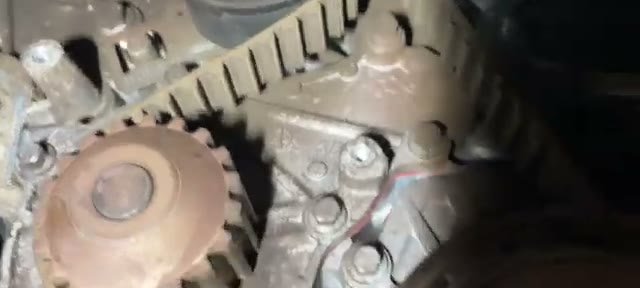
The belt had not snapped. Something more unusual had happened: it had spun the teeth clean off. Along the top run the belt looked healthy, teeth all present; down at the crank sprocket it had been machined into a smooth rubber band, and a pile of shredded teeth fell out when the cover came off. The crank was turning, the belt was slipping over it, and the camshaft was standing still - which is exactly what the sensor had been trying to report.

DIY Car Service Guide
- Full service at home: oil, filters, plugs, fluids
- Which jobs are safe to DIY and which are not
- What a garage charges for each item, so you know the saving
Instant PDF download · works on phone, tablet or PC · 7-day money-back guarantee
Finding the Real Culprit
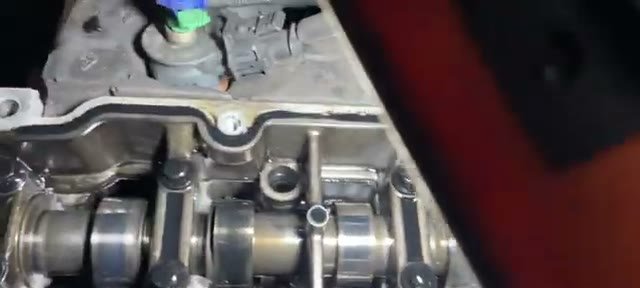
A belt does not strip its own teeth for fun, and here is the lesson of this job: the belt is nearly always the victim, not the villain. Every pulley spun freely, nothing was seized - and then, trying to set the timing up, the camshaft turned by hand far too easily before locking solid. The rocker cover came off and there was the answer: the cam followers had come away from their lobes, the valvetrain was in disarray, and the camshaft had effectively declared independence from the rest of the engine. Asked to drive that mess, the belt gave up its teeth.
A search confirmed what the workshop suspected - this is a known pattern on the 1.5 TDCi, where the cam and followers give trouble, the valve timing drifts, everything clashes, and the belt is the fuse that blows. If you run one of these engines and it ever stops dead with a cam or crank sensor code, this article is your checklist.
Decision Time: New Engine or Rebuild?
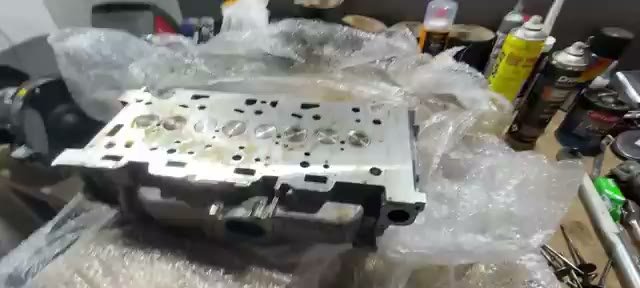
With the head off, the damage audit read: six of the eight valves bent, camshaft unserviceable, followers scattered, head face needing a skim. The easy quote is a reconditioned engine - and a four-figure bill that made no sense for a working van that earns its keep every day. The alternative: send the head to a local machine shop for a rebuild, replace the failed parts, and put the same engine back together properly. The owner needed the van back at work; the rebuild won the maths comfortably. That decision - repair the engine you have versus replace it - is the same one our keep or sell calculator walks through for whole cars, and it deserves real numbers rather than instinct.
The Rebuild
The strip-down is honest, methodical work: turbo and exhaust manifold off the front, EGR valve and intake pipework off the back, injectors out, thermostat housing aside, and every bolt that ties the head to the block found and freed - including the one hiding behind the fuel pump that catches people out. The head went away for machining and came back with a perfect face and fresh valves; the rebuild went the other way with a new camshaft, new followers, new gaskets throughout, and every fastener torqued to the data sheet figure, stage by stage.
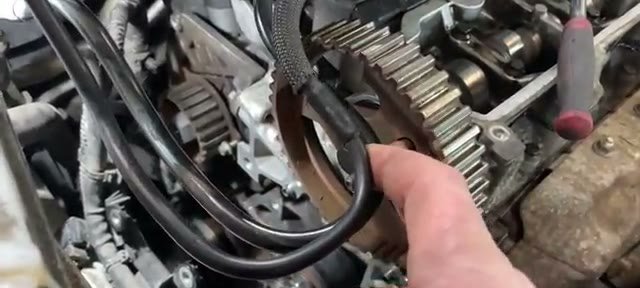
Timing an engine like this is done with pins, not eyesight: a pin locks the cam, a bolt locks the fuel pump, a pin (or in the workshop's case, a drill bit of exactly the right size) locks the crank. New belt, new tensioner, new idler and - as a matter of course, because nobody wants to be back in here - a new water pump. Then the ritual that separates a repair from a gamble: ten full revolutions by hand, refit the pins, and confirm everything still lines up perfectly before the covers go anywhere near the engine. It did.
The Moment of Truth
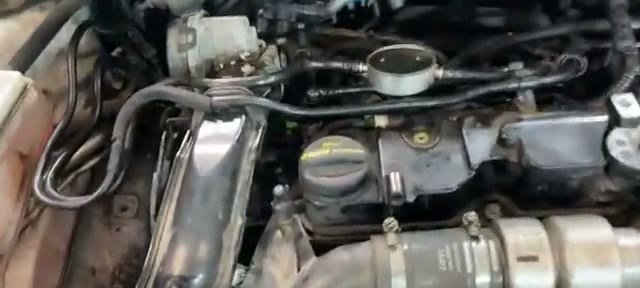
Fresh oil and filter, coolant topped up, and the key turned. It started on the button and settled straight into an even idle - no tapping, no protest, just a van again. The road test came back clean, the old crank sensor code was cleared as the last souvenir of the failure, and after a day of running checks the van went back to its owner to carry on earning. Total outcome: no replacement engine, a rebuilt head, a properly timed belt kit, and another expected 100,000 miles in front of it.
What This Job Teaches Every Owner
Three lessons travel well beyond this van. First: a belt failure is a symptom until proven otherwise - fit a new belt without asking what killed the old one and you will meet the same failure again, with interest. Second: "it still turns over" means nothing on an interference engine; six bent valves turned over just fine. Third: the cheap window is before the failure - the full belt kit on schedule, oil changes on time with the right specification, and any new top-end noise investigated immediately. Our cambelt vs chain guide explains how to find out what your own engine runs, the cambelt cost guide shows what the scheduled job should cost - always a fraction of this one - and the maintenance schedule checker will tell you from your reg whether yours is due.
The Outcome
Recovered on a truck with a dead engine; driven home with a rebuilt one. The difference between this ending and a scrapyard ending was refusing to stop at the first answer - the cam sensor code and the stripped belt were both symptoms, and the real fault sat under the rocker cover. Diagnose fully, decide with numbers, rebuild properly, prove the timing by hand before the first start. That is the whole recipe, and it saved this van.