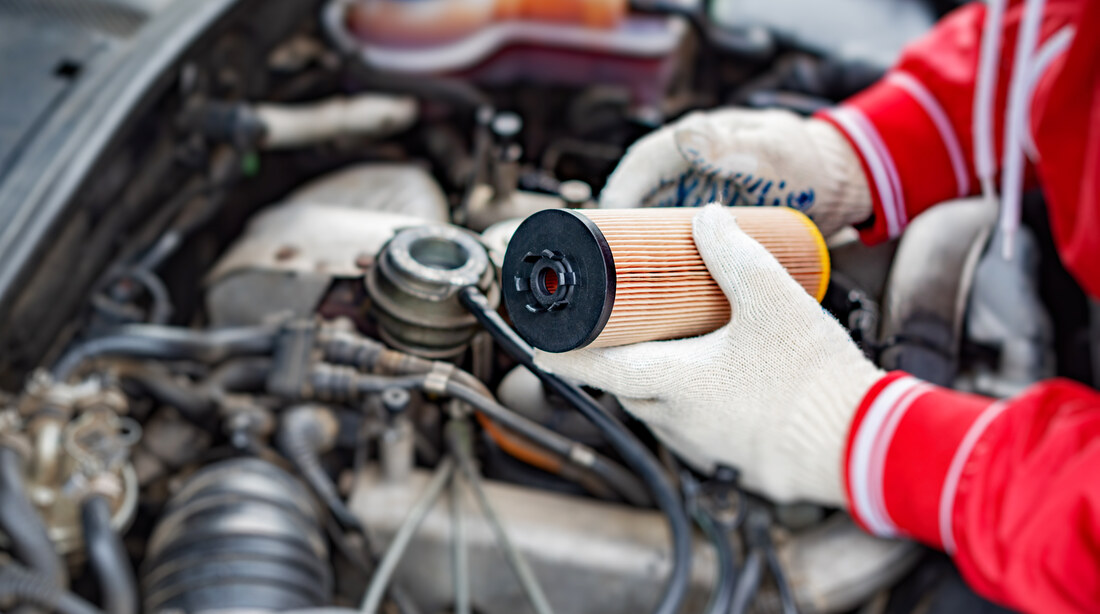
There's no other service item on a car where ignoring the manufacturer's schedule will cost you the engine. Cambelts have killed more good cars in UK workshops than every other failure combined - and I see two or three a year that could have been prevented with a £450 bill. This guide explains exactly what the timing belt or chain does, how to find out which one your car uses, when it needs changing, what it costs in 2026, and what a wet belt is - because if you own a Ford EcoBoost or a Peugeot PureTech, that bit matters more than the rest.
What the Timing Belt or Chain Actually Does
Inside your engine, the crankshaft spins at the bottom and the camshafts spin at the top. The crankshaft moves the pistons up and down; the camshafts open and close the valves that let fuel and air in and exhaust gases out. These two have to be perfectly synchronised - to within a few degrees - every revolution of the engine, or the pistons and valves will hit each other.
The cambelt or timing chain is what links the two. It's a closed loop running between the crankshaft sprocket at the bottom of the engine and the camshaft sprocket (or two sprockets, on twin-cam engines) at the top, normally with one or more idler pulleys and a tensioner to keep it tight. As long as that loop holds its tension and doesn't slip, the engine runs sweet. The moment it stretches, slips a tooth, or breaks - that's when the trouble starts.
The water pump usually sits in the timing belt run and is driven by the same belt. That's important and we'll come back to it.
Cambelt vs Chain - Pros and Cons
Both designs do the same job. They're just different ways of solving the same engineering problem.
Cambelt (Toothed Rubber Belt)
A rubber-and-fibre toothed belt running outside the engine, behind a plastic cover, dry. Cheap to make, quiet, light, and easy to design around. The downside is that rubber degrades - heat, oil, age, and miles all take their toll. Cambelts have a fixed service interval and must be replaced on time.
Timing Chain
A metal chain - usually a single or double-row roller chain, sometimes a silent chain - running in the engine oil behind a metal cover. Stronger, much more durable, and in theory designed to last the life of the engine. The downsides are weight, noise, cost, and the fact that "designed to last the life of the engine" turns out, in real-world UK use, to mean something more like "lasts until the oil hasn't been changed often enough."
How to Find Out Which Your Car Has
This catches people out all the time. Customers ring up convinced their car has a chain because they were told so on a forum, when in fact it has a belt that should have been changed three years ago. There are three reliable ways to check.
1. The Service Schedule
Open the owner's manual or the manufacturer's service schedule (usually downloadable from a main dealer's website with your VIN). If there's a line for "Cambelt replacement" or "Timing belt replacement" with a years/miles figure, you have a belt. If there's no such line at all, you almost certainly have a chain. Bear in mind that some chain-driven engines still list a tensioner or guide inspection - that's not the same thing.
2. The Timing Cover
Open the bonnet and look at one end of the engine - usually the right-hand end as you stand at the front of the car. A cambelt sits behind a black or grey plastic cover, often ribbed, frequently held on by clips or a few small bolts. A chain sits behind a one-piece cast-aluminium or pressed-steel cover with a gasket and several long bolts. If you can lift a corner of the cover with a flathead screwdriver, it's plastic, and you've got a belt.
3. Ring the Main Dealer with the VIN
Free, definitive, takes 90 seconds. Read out your VIN (the 17-digit number on the windscreen base or driver's door pillar), ask whether your engine is belt or chain driven, and when the belt is due. Get the figures in years and miles - both apply.
Rule of Thumb
If you're driving a small-to-medium European or Japanese petrol from roughly 2010 onwards with a turbocharger, it's worth assuming a cambelt until proven otherwise. Most modern downsized petrols (Ford EcoBoost, PSA PureTech, VAG TDI, Renault dCi, Vauxhall ecoFLEX) use belts. Bigger, older, or non-turbo engines are more likely to have chains - but always confirm with the schedule.
Common UK Cars with Cambelts
This is far from a complete list - these are the engines I see most often in a UK independent workshop:
- Ford 1.0 EcoBoost (Fiesta, Focus, EcoSport, B-Max, Puma, C-Max) - wet belt, see below.
- Ford 1.5 and 1.8 EcoBlue diesel (Transit, Transit Custom, Focus, Mondeo) - wet belt.
- Ford 1.6 TDCi and 1.5 TDCi (older Focus, Fiesta, C-Max, Transit Connect) - conventional dry belt, 125,000 mile or 10 year interval.
- VAG 1.6 and 2.0 TDI (Golf, Passat, A3, A4, Octavia, Leon, Caddy) - dry belt, typically 130,000 miles or 5 years on the older PD engines, 140,000 miles or 6 years on common rail.
- Renault 1.5 dCi (Clio, Mégane, Captur, Kadjar, Trafic) - dry belt, 96,000 miles or 6 years.
- PSA 1.2 PureTech (Peugeot 208, 308, 2008, 3008; Citroën C3, C4; DS3, DS4) - wet belt.
- PSA / Ford 1.6 HDi and 1.5 BlueHDi (308, 3008, Berlingo, Partner, C-Max, Focus, Mini diesel) - dry belt.
- Fiat 1.3 MultiJet (Punto, 500, Doblò, Corsa D 1.3 CDTI) - dry belt.
Common UK Cars with Timing Chains
- VAG 1.4 TSI EA111 (Golf Mk6, Polo, Ibiza, A1, Fabia) - single-row chain, known for stretching. P0016 is the classic fault code.
- BMW N47 2.0 diesel (1, 3, 5 Series 2007–2014) - chain at the back of the engine, infamous for failure. Replacement requires engine removal.
- Mini Cooper N12/N14/N18 (R56 era) - chain, known for stretching and the dreaded "death rattle" on cold start.
- VAG 2.0 TFSI EA888 (Golf GTI, A3, A4 2.0T) - chain, generally reliable on later versions.
- Mercedes M271 1.8 Kompressor (C-Class, E-Class W211) - chain, generally reliable but does stretch on high mileage.
- Modern Mazda SkyActiv petrols - chain.
- Honda 1.5 VTEC Turbo and most Toyota petrols - chain.
- Vauxhall 1.4 turbo (A14NET, B14NET) - chain.
The Wet Belt Problem
This deserves its own section because it catches so many UK owners out. A wet belt runs inside the engine, bathed in engine oil, instead of running dry behind a cover. Ford's 1.0 EcoBoost and EcoBlue diesels and PSA's 1.2 PureTech are the main offenders on UK roads.
The theory was that an oil-bathed belt would last longer because oil reduces wear. In practice, the rubber compound breaks down over time, especially on cars that do lots of short journeys (oil gets diluted with fuel and water from cold starts and never reaches operating temperature for long enough to boil it off). When the belt degrades, it sheds tiny fragments of rubber. Those fragments circulate in the oil and block the oil pickup screen at the bottom of the sump.
You get one warning if you're lucky - an oil pressure light. Most people see no warning at all. Within a few hundred miles, the engine is starved of oil, bearings wear out, and you've got either a £2,500 engine rebuild or a scrap car.
If you own one of these engines, the rules are simple:
- Change the belt strictly on schedule - Ford's revised interval is now 6 years / 100,000 miles for the EcoBoost, but many independents recommend 60,000 miles to be safe.
- Change the oil every year minimum, regardless of mileage. Use only the correct manufacturer-spec oil - Ford WSS-M2C925-B for the EcoBoost, for example. Generic 5W30 is not good enough.
- Avoid using the car exclusively for short trips. If your daily commute is 5 miles to the office, you're running the engine in its worst possible operating window.
- When the belt is changed, the oil pickup pipe must be inspected and cleaned, and the sump dropped on high-mileage examples.
The Ford 1.0 EcoBoost Reality Check
When a customer brings in a 1.0 EcoBoost Fiesta with 80,000 miles and a full service history and asks me whether they should buy it, the conversation always comes back to the wet belt. If the belt has been done, on time, with the correct oil - fine, the engine is a lovely thing. If it hasn't, walk away. The risk isn't worth the saving on the purchase price.
Replacement Intervals
The number-one rule with cambelt intervals: years and miles, whichever comes first. The rubber degrades with age even if the car has barely moved. I've seen a 12-year-old Ford with 40,000 miles on the clock and a belt that was visibly cracked. Common UK intervals:
| Engine Family | Typical Interval |
|---|---|
| Ford 1.0 EcoBoost (wet belt) | 6 years / 100,000 miles (revised - earlier cars were quoted at 10 years) |
| Ford 1.5/1.8 EcoBlue diesel (wet belt) | 10 years / 144,000 miles |
| Ford 1.6 TDCi (dry belt) | 10 years / 125,000 miles |
| VAG 1.6/2.0 TDI common rail | 5–6 years / 130,000–140,000 miles |
| Renault 1.5 dCi | 6 years / 96,000 miles |
| PSA 1.2 PureTech (wet belt) | 6 years / 100,000 miles (revised) |
| PSA 1.6 HDi | 10 years / 100,000 miles |
| Fiat 1.3 MultiJet | 5 years / 75,000 miles |
Always check your specific car against the manufacturer's current schedule - these are guidelines and they get revised. Several have been shortened in recent years as wet belt failures became apparent.
Interference vs Non-Interference Engines
This is the make-or-break distinction. In an interference engine, when both the inlet and exhaust valves are at their fully open position, they project into the cylinder space where the piston travels. The clearance is provided entirely by the timing - the camshaft is timed so the valves are closed when the piston is at the top of the bore.
If the timing goes - belt snaps, chain jumps, tensioner fails - the camshaft stops turning. The crankshaft keeps spinning (it has all the inertia of the car's transmission and momentum behind it), so the pistons keep rising. They hit the open valves at a fair clip. The result is bent valves, sometimes broken valves, sometimes damaged valve guides, sometimes a cracked cylinder head, and on the very worst cases a piston with a valve head punched through it.
In a non-interference engine, the geometry of the head and pistons is designed so the valves never touch the pistons regardless of where they are. A snapped belt just means the engine stops - you fit a new belt and it runs again.
The brutal truth is that nearly every modern engine is interference. Manufacturers chase compression ratio and efficiency, which means tight valve-to-piston clearances, which means interference. There are still some non-interference engines knocking around - old Honda 1.6s, some early Vauxhall 1.6 16Vs - but if your car was built in the last 15 years, assume it's interference and treat the belt accordingly.
Real UK Replacement Costs
These are realistic 2026 prices at an independent UK garage. Main dealers typically charge 30–60% more. DIY parts kits are around 40–50% of the garage price for the belt-only job, but the labour element is significant - most cambelt jobs involve removing the engine mount, dropping the engine slightly, removing covers, and turning to TDC with locking pins.
| Job | Independent | Main Dealer |
|---|---|---|
| Cambelt only (typical 1.6 diesel) | £350–£550 | £500–£800 |
| Cambelt + water pump | £450–£800 | £650–£1,100 |
| Cambelt + water pump + auxiliary belt | £500–£900 | £750–£1,300 |
| Ford 1.0 EcoBoost wet belt + oil pickup clean | £700–£1,100 | £900–£1,400 |
| PSA 1.2 PureTech wet belt | £600–£1,000 | £800–£1,300 |
| Twin-belt V6 (older Land Rover, some Audi V6) | £800–£1,400 | £1,200–£2,000 |
| Timing chain replacement (BMW N47) | £1,800–£3,000 | £3,000+ |
| Timing chain replacement (VAG 1.4 TSI) | £800–£1,400 | £1,200–£2,000 |
Always Change the Water Pump
This is non-negotiable in my workshop. On any engine where the water pump is driven by the cambelt, the pump comes off when the belt is off. To do the belt, you're 80% of the way to doing the pump - the only extra parts cost is the pump itself (typically £30–£80) and a small amount of coolant.
If you skip the pump and it fails 30,000 miles later, you'll pay the full labour bill again. Worse, when a water pump seizes, it often takes the cambelt with it - and you're back to the bent-valve scenario. I won't sign off a belt job without doing the pump unless the pump is brand new and there's a documented receipt. Any garage telling you to leave the pump because "it looks fine" is being lazy or trying to undercut a quote.
Signs Your Chain Is on Its Way Out
Chains rarely snap without warning. They stretch, the tensioner runs out of travel, the chain becomes slack, and you get symptoms:
- Rattle on cold start. 2–5 seconds of rattling from the timing cover end of the engine, fading as oil pressure builds up the tensioner. Classic BMW N47, Mini N14, VAG 1.4 TSI symptom.
- Persistent rattle that gets worse with revs. Late-stage chain wear.
- Fault codes P0016, P0017, P0018, P0019 - camshaft / crankshaft correlation. Sometimes P0014 for VVT performance.
- Rough idle or misfires as the chain jumps a tooth.
- Check engine light with no other obvious cause.
If you spot any of these, get it checked quickly. A chain that's stretched but still running can be replaced. A chain that's jumped or snapped is engine-out territory.
Buying Used: Belt Status Is the Single Most Important Question
When someone asks me what to look for buying a used car, my first question is always: "When was the cambelt last done, by whom, and is there a receipt?" If the answer is vague, factor £500–£900 into your offer. If the engine has a chain that's known for trouble (BMW N47, VAG 1.4 TSI, Mini N14), listen for that cold-start rattle and walk away if it's there. A clean belt receipt is worth more than a leather interior.