
This 2012 Renault Megane came in with the front windscreen wipers completely dead while the rear wiper still worked fine. This immediately rules out the stalk as the fault and points to a problem specific to the front wiper circuit - most likely the motor or its connections.
This guide covers the full diagnostic process: removing the wiper linkage from under the scuttle panel, testing the motor’s power supply with a multimeter, and inspecting the motor internally for corrosion on the contact ring. The fault on this one turned out to be a poor earth contact inside the motor due to moisture ingress - which cleaned up and worked immediately. The customer ultimately chose a new motor for long-term reliability.
Tools & Parts Needed
Shop Parts & Tools for This Job
As an Amazon Associate, Mr Auto Fixer earns from qualifying purchases. Prices and availability may vary.

DIY Car Service Guide
- Full service at home: oil, filters, plugs, fluids
- Which jobs are safe to DIY and which are not
- What a garage charges for each item, so you know the saving
Instant PDF download · works on phone, tablet or PC · 7-day money-back guarantee
Step-by-Step Guide
Confirm the Fault
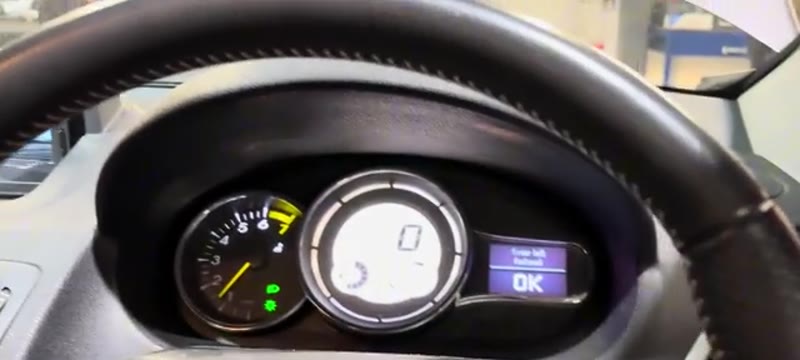
Turn the ignition on and operate the wiper stalk. Front wipers completely dead. Operate the rear wiper - works fine. This confirms the fault is not the stalk. Check the wiper fuse in the fusebox - if blown, replace it first and retest.
Remove the Wiper Arms
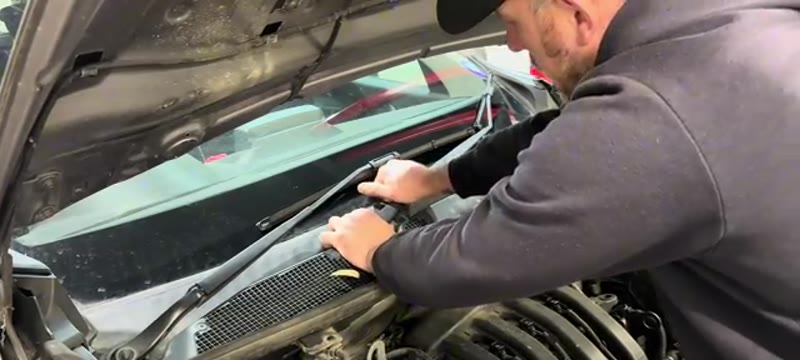
Pull off the small plastic caps at the base of each wiper arm. Undo the 16mm nuts underneath. Wiggle each wiper arm off its spline - they can be tight; grip firmly and rock side to side. Don’t lose the washers.
Remove the Weather Strip & Scuttle Panel
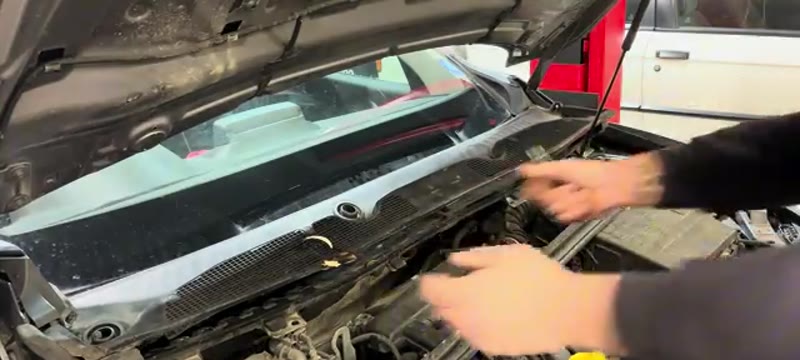
Peel off the rubber weather strip that runs along the base of the windscreen - it has two clip locations one either side. Gently lift the scuttle panel away from the car, taking care as the plastic can be brittle with age. Move it completely clear to reveal the wiper motor and linkage assembly beneath.
Remove the Wiper Motor & Linkage
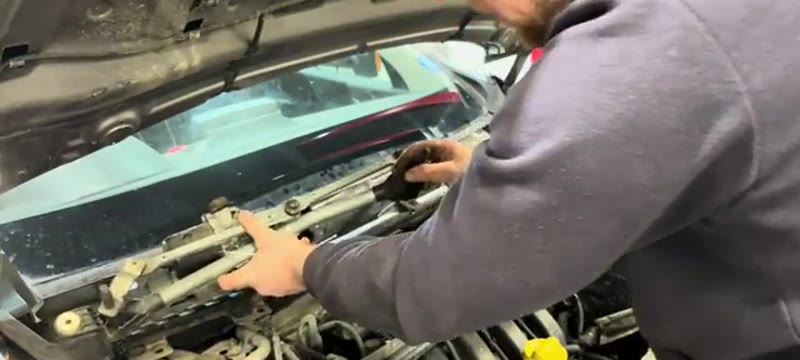
The motor bracket is held by a 41mm bolt at the front. Remove this and move the bracket aside. Undo the 10mm bolt on the left side of the motor and the 10mm bolt on the right. Use a small hook tool behind the wiring plug tab to lift it and pull the plug free. The whole motor and linkage assembly now lifts out.
Test for Power at the Plug
With the assembly out but before further dismantling, test whether power was reaching the motor. Set a multimeter to DC voltage. Find a good earth on the engine bay metalwork and probe the wiper plug terminals with the ignition on and the wiper stalk activated. On this Megane the reading was 11.9V - confirming power is reaching the motor and the fault is within the motor itself.
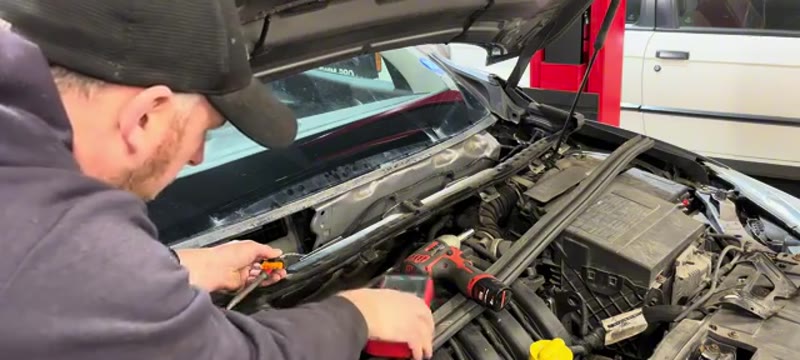
Open the Motor & Inspect Internally
On the bench, use a small screwdriver or pick to gently prise up the plastic clips around the motor back cover and pop it off. Inside you will see the worm gear, drive gears and the electrical contact ring. Check carefully - on this motor one of the contact points showed a slightly melted or burnt appearance with poor contact to the body. This indicates moisture had entered and caused a short circuit on the earth return path.
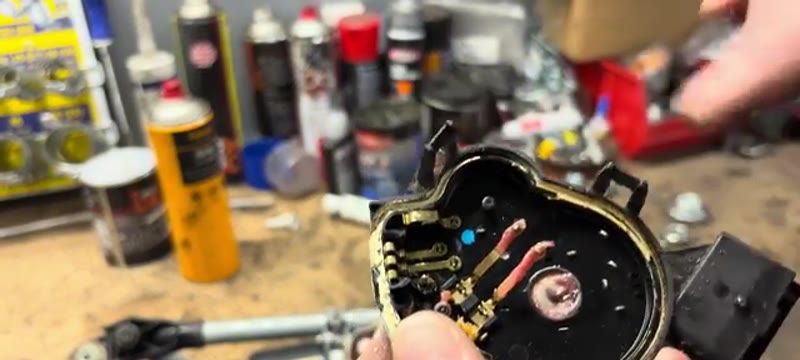
Clean the Contacts
Use fine sandpaper to clean the contact point on the ring and the corresponding contact on the motor body until both are shiny and clean. Very gently bend the spring contact outward slightly to increase the contact pressure. Reassemble the cover and retest by reconnecting the plug and operating the wiper stalk with the ignition on - the motor should run immediately if the contact was the fault.
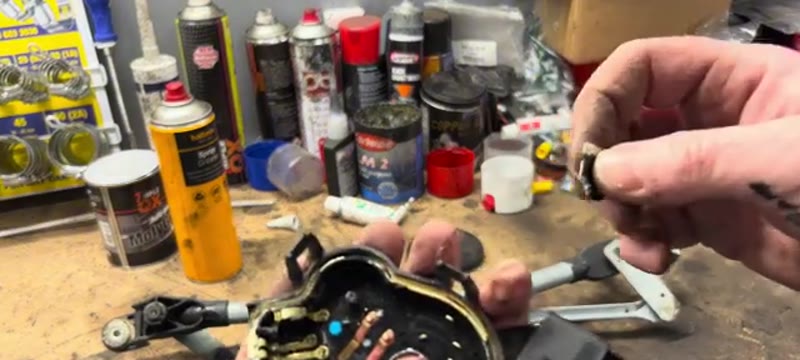
Refit or Replace Motor & Reassemble
Whether refitting the cleaned original or fitting a new motor, refit is the reverse of removal: locate the motor and linkage into position, refit both 10mm bolts, refit the front bracket bolt, and reconnect the wiring plug. Refit the scuttle panel and rubber weather strip. Refit the wiper arms ensuring the splines are correctly aligned with the wipers in their parked position. Test the wipers through all speeds and confirm full operation.
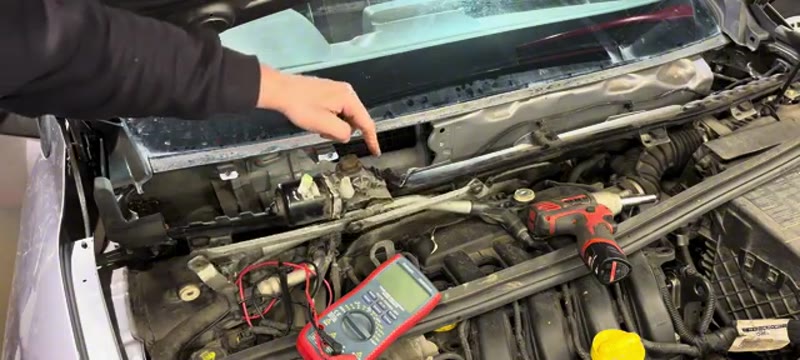
Why Megane Wipers Stop - and Why It Is Often Not the Motor
Here is the diagnosis that saves Megane owners real money: most "wiper motor failures" on these cars are actually the linkage. The wiper mechanism lives under the scuttle panel at the base of the windscreen, exactly where leaves collect and water sits, and the linkage's ball joints and spindle bearings corrode until the mechanism binds. The motor then strains against the seizure - wipers that slow down mid-sweep, park in the wrong place, or groan audibly are the classic progression - until either the linkage locks solid or the overworked motor finally burns out. The distinction matters because a linkage is £20–£40 and a motor £60–£120, and fitting a new motor to a seized linkage kills the new motor the same way it killed the old one.
Garage vs DIY Cost
| Who does it | Typical price | What you get |
|---|---|---|
| Renault dealer | £220–£350 | Genuine motor and linkage assembly fitted |
| Independent garage | £150–£250 | New motor fitted; linkage extra if seized |
| DIY | £40–£120 | Motor, linkage or both - plus a careful hour under the scuttle |
Typical UK prices for the Megane. A used genuine motor from a breaker at £25–£45 is a legitimate option here - wiper motors are slow-wearing parts when the linkage is free.
Motor, Linkage or Complete Assembly - What to Buy
If the motor tests healthy once freed (the guide's bench test), clean and grease the linkage joints and spend nothing. If the linkage is worn past saving, complete motor-and-linkage assemblies from Valeo (Renault's OE supplier) or Magneti Marelli at £80–£150 beat piecing parts together. A seized-solid mechanism at high mileage is best replaced as an assembly - the corrosion that locked the joints has usually pitted the spindle bearings too, and they will groan within months of a grease-only rescue. The marketplace £30 "complete assembly" earns its price with soft linkage joints that develop play, giving you wipers that slap the A-pillar on the fast setting.
Common Mistakes on the Wiper Motor Job
- Not marking the arm positions. Tape a line on the glass at each blade's park position before the arms come off - wipers reassembled a spline out either smack the pillar or miss half the screen.
- Levering the arms off by force. Corroded arms need a proper puller or careful rocking - a screwdriver under the arm bends it, and a bent arm chatters forever.
- Losing the park position. Run the motor to its natural park (connected, ignition on, then off) before fitting the linkage and arms - assembling to an unparked motor puts the whole sweep in the wrong place.
- Cracking the scuttle panel clips. The plastic scuttle is brittle after years of UV. Release its clips squarely and it survives; peel it like a lid and it does not.
- Fixing the mechanism but not the drainage. Clear the scuttle drains and leaf litter while everything is apart - the standing water that seized this linkage is already working on the next one.
Related Wiper Faults on the Megane
When wipers misbehave in ways a motor cannot explain, work the electrical ladder: the stalk switch (intermittent speeds that come and go with a wiggle), the fuse and its holder, and on Meganes the notorious UCH body control unit that manages the wipers - one-speed-only or mind-of-their-own behaviour with a healthy motor points there. Washer problems travel separately: a silent pump is a £10 fix, but no spray with a running pump is frozen or split tubing under the same scuttle. While you are working in that area anyway, the Megane pollen filter guide is the ten-minute companion job, and the symptom finder triages any electrical oddities the Megane produces next.