
The cam belt and water pump change on the Renault Clio Mk3 1.2 16v is a thorough job that requires engine mount removal, timing mark alignment and - uniquely on this engine - alternator removal to access all of the water pump bolts. The water pump sits behind bracketry and a coolant pipe that simply can't be reached without moving the alternator out of the way.
The belt on this car was original with 78,000 miles - well overdue. Always change the water pump at the same time as the belt since the pump is driven by it and the labour overlap is significant.
Tools & Parts You'll Need
DIY Car Service Guide
- Full service at home: oil, filters, plugs, fluids
- Which jobs are safe to DIY and which are not
- What a garage charges for each item, so you know the saving
Instant PDF download · works on phone, tablet or PC · 7-day money-back guarantee
Step-by-Step Guide
Underside Access - Aux Belt, Under Tray & Arch Liner
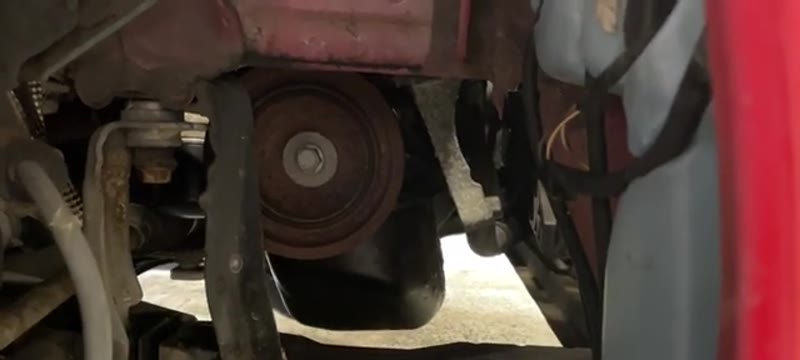
Start by removing the engine undertray and the inner wheel arch liner on the cam belt side - the liner is held by a few push clips and two T20 Torx screws. This exposes the lower pulley and the auxiliary belt. Undo the T50 Torx bolt on the auxiliary belt tensioner to release the tension, then slip the auxiliary belt off. Set it aside.
Support the Engine & Remove the Engine Mount
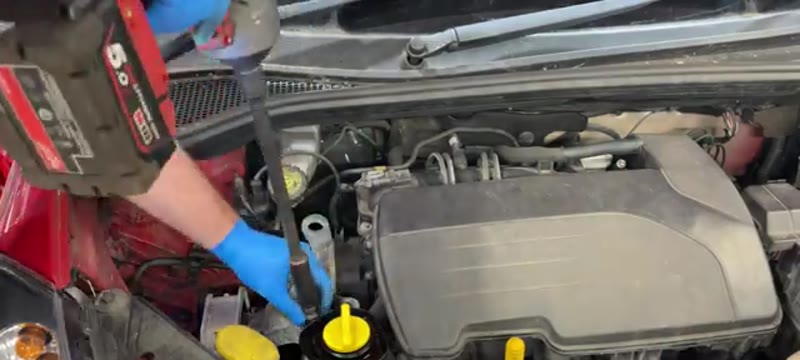
Place a trolley jack with a piece of wood under the sump to support the engine. Remove the engine mount - four to five 16mm bolts. Lift it clear. This is necessary to access the cam belt covers behind the mount.
Remove the Support Bracket & Cam Belt Covers
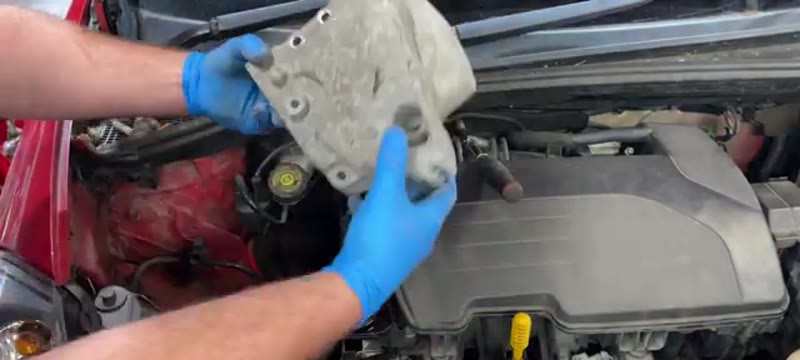
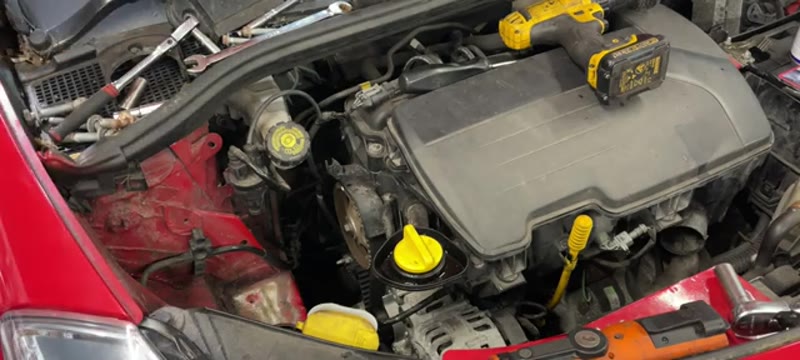
Remove the support bracket behind the mount (four 10mm bolts) and slide it out - this covers both the mount and the upper cam belt area. With the bracket clear, undo all the 8mm bolts around the upper and lower cam belt covers and remove them to expose the full belt, tensioner and pulleys.
Time Up the Engine & Install Flywheel Locking Pin
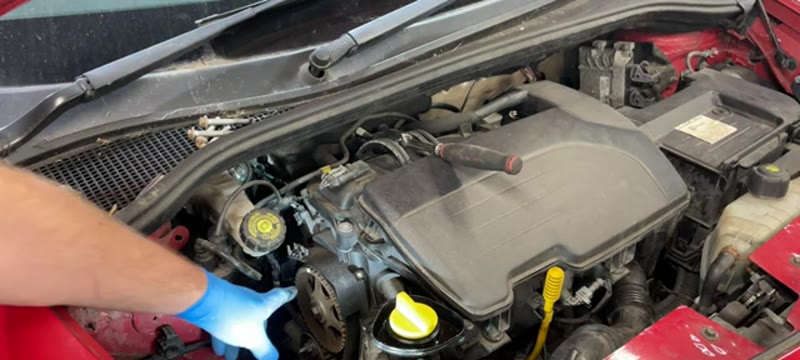
Using an 18mm socket on an extension bar, rotate the engine clockwise to bring it to TDC. On the cam pulley there's a small arrow on one of the teeth - line it up with the corresponding arrow marked on the cover casing. Mark both clearly with white paint. Remove the lower pulley temporarily to check the crank mark - there's a dimple on the inner pulley teeth that must align with its reference mark. Mark both. Insert the flywheel locking pin to lock the engine in time.
Remove the Tensioner & Old Belt
Undo the 13mm nut on the tensioner and push it around to release the tension. Slip the belt off all the pulleys. Inspect it - this one was original at 78,000 miles with no visible damage, but age and mileage alone make replacement essential. Remove the tensioner completely.
Remove Alternator to Access Water Pump
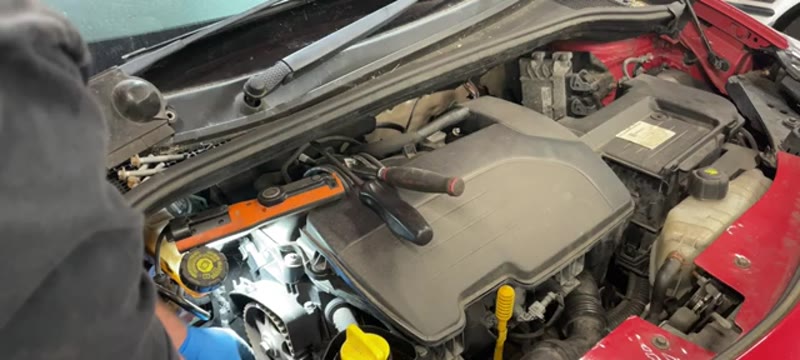
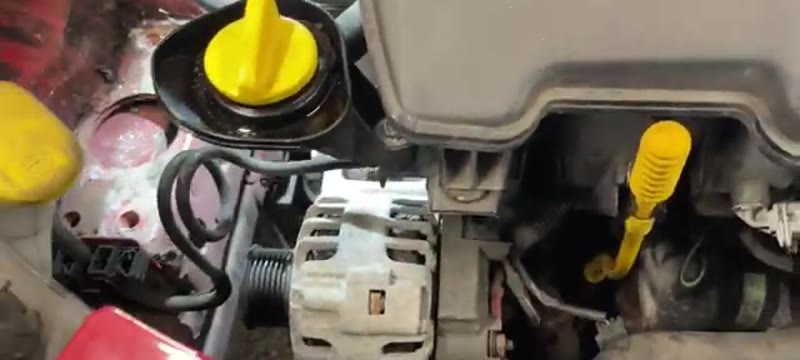
This is the step that catches people out on the Clio 1.2 16v. The water pump has two bolts hidden behind a coolant pipe bracket that runs across the front of the engine - you cannot reach them without moving the alternator. Disconnect the battery first. Remove the intake air pipe in front of the alternator. Undo the alternator's electrical connections (13mm). Remove the two 10mm mounting bolts and the alternator bracket to give access to the two otherwise-hidden water pump bolts.
Replace the Water Pump
With the alternator out of the way all seven water pump bolts (8mm) are now accessible. Undo them all. Place a container under the engine to catch the coolant that will run out. Use a gentle tap with a hammer to break the seal, then slide the old pump out. Clean the mating face on the block thoroughly with a wire brush, razor blade and fine sandpaper until completely smooth. Fit the new metal gasket onto its locating lugs, then fit the new square O-ring into the coolant pipe port. Locate the new water pump onto the lugs and start all seven bolts by hand before tightening evenly.
Fit New Tensioner, Belt & Set Tension
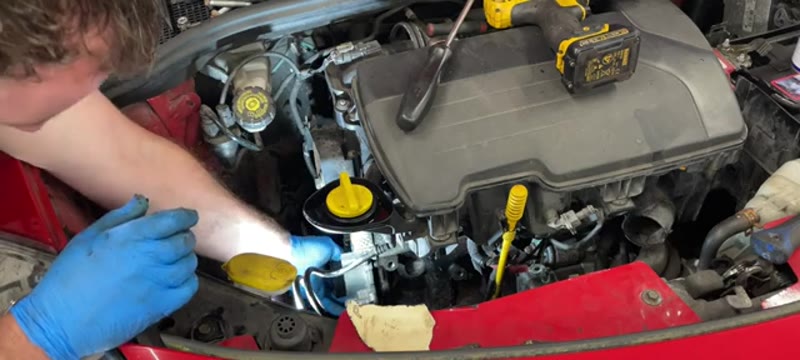
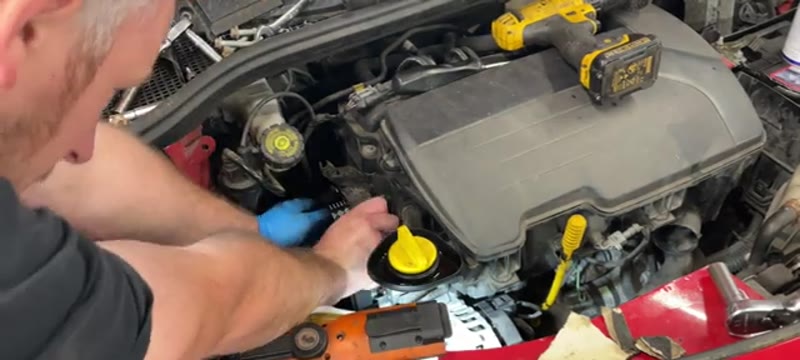
Fit the new tensioner - the locating pins must face toward the front of the engine and locate into the matching holes in the block before you tighten the nut. Fit the new idler pulley. Feed the new belt (which has direction arrows moulded in - these are important) around the lower pulley first, then up around the water pump and onto the camshaft pulley. Pull the tensioner pin, then insert a 6mm Allen key and turn the tensioner anticlockwise - watch the pointer on the tensioner body move toward the centre reference mark. When centred, nip up the 13mm nut to lock it in position.
Verify Timing, Rebuild & First Start
Pull the flywheel locking pin and rotate the engine clockwise by hand twice using the 18mm socket. Reinsert the flywheel pin - it must locate cleanly. Check both painted timing marks have returned to their exact positions. Only then is the timing confirmed correct. Refit all components in reverse: covers, bracket, engine mount, alternator, auxiliary belt, arch liner and undertray. Top up the coolant, run to temperature and check for leaks.
Key Torque Specifications
Shop Parts & Tools for This Job
As an Amazon Associate, Mr Auto Fixer earns from qualifying purchases. Prices and availability may vary.
Why the Clio's Belt Gets Changed on Time, Not on Condition
You cannot inspect your way out of this job. The D4F engine in the Mk3 Clio is an interference design - if the belt snaps, valves and pistons collide and the engine is scrap - and a cambelt shows almost nothing on the outside before it fails. The rubber degrades from age as much as mileage, which matters on a Clio more than most cars because so many of them do low annual miles: a 15-year-old belt with 40,000 miles on it is further past its safe life than a 5-year-old belt with 70,000.
Renault's schedule is deliberately time-led for exactly that reason. If you have just bought a Mk3 and the history folder does not contain a belt receipt, assume it has never been done and book the job - the previous owner's optimism is not a service record.
Renault Dealer vs DIY Cost - and the Clio's Odd Labour Story
| Who does it | Typical price | What you get |
|---|---|---|
| Renault main dealer | £600–£850 | Genuine parts, dealer labour |
| Independent garage | £400–£700 | Belt, tensioner and pump on an engine most garages know well |
| DIY | £80–£130 | Quality belt kit and pump - plus the alternator removal this engine demands |
Typical UK prices for the Mk3 1.2 16v. The parts are cheap; the quote is all labour, because the water pump bolts hide behind the alternator on this engine.
That is the honest maths problem on an older Clio: the job can cost a third of the car's value. It is still worth doing - a belt failure writes the car off entirely - but if you are genuinely torn, run the numbers through our keep or sell tool and check the cambelt cost guide for how the Clio compares.
Genuine Renault vs Aftermarket Parts
Gates and Dayco supply belts for the D4F, INA and SNR (Renault's own OE bearing supplier) make the tensioners, and Airtex, SKF and Graf list the pumps. A complete aftermarket kit from those names is £80–£130 - roughly half the genuine-boxed price for identical hardware. SNR is worth a special mention: it is a French OE manufacturer, often the exact part in the Renault box, and usually the cheapest of the quality options for this car.
As with any interference engine, no unbranded belts, ever. On a £1,500 car the temptation of a £25 kit is real, and so is the scrapyard it leads to.
Common Mistakes on the Clio Belt Job
- Trying to dodge the alternator removal. The pump bolts genuinely cannot all be reached with it in place. Attempting the shortcut ends with rounded bolts and a longer job - take it out as the guide shows.
- No timing pin. The D4F is locked at TDC with a crank pin. Marks-and-hope is not a method on an interference engine.
- Over-tensioning the new belt. A small engine with a short belt run is easy to over-tension - it whines within days and eats the pump bearing. Set it to spec, not to feel.
- Not supporting the engine properly. The right-hand mount comes off for belt access. Support the engine from below with a board spreading the load, not a jack head on the sump.
- Skipping the two-revolution check. Rotate the crank twice by hand, re-check the pin and marks, and only then refit covers. Every tooth-out disaster in history skipped this step.
- Rushing the coolant refill. Small Renaults airlock. Fill slowly through the bleed screws as the guide shows, or the first motorway run cooks the new pump.
Related Faults and Checks While You Are In There
With the front of the engine stripped, spend ten minutes on the things you can only see now. Check the crank seal for weeps (oil is the number one killer of new belts), inspect the aux belt and its tensioner - it is off anyway and costs £15 - and squeeze the coolant hoses at the pump for sponginess. The right-hand engine mount that came off for access is itself a known Clio wear item: if the rubber is cracked or sagging, £25 now saves a diagnosis of "mystery clunk" later.
After the job, keep an ear on the belt area for the first week - a fresh whine means tension needs re-checking, immediately not eventually. And if you are chasing a rattle that started before the belt change, the symptom finder will help you decide whether it was ever the belt at all.