
This 2018 Renault Trafic with 45,000 miles came in with hard cold starting - a classic sign of failing glow plugs on a diesel. On bench testing, one plug was completely dead and another barely glowing. All four were replaced as a full set.
Glow plugs on this 1.6 dCi engine are accessible from the top with minimal stripdown - just the coolant bottle needs moving to reach plug four. The key tool is a quarter-drive 10mm socket; a full-size drive simply won't fit.
Symptoms of Failed Glow Plugs
- Hard starting on cold mornings - especially below 5°C
- Excessive white smoke on cold startup
- Engine management or glow plug warning light
- Rough running when cold, smooths out once warm
- Longer-than-normal cranking before firing
Also Applies To - Same 1.6 dCi Engine
- Vauxhall Vivaro (older shape)
- Nissan Primastar
- Fiat Talento
What Do Glow Plugs Do?
Glow plugs are a critical part of a diesel engine's cold-start system. Unlike petrol engines which use a spark plug to ignite fuel, diesel engines rely on compression heat - but when the engine is cold, especially in UK winter temperatures, the compressed air in the cylinder may not be hot enough to reliably ignite the diesel spray. Glow plugs are electric heating elements screwed into each cylinder that pre-heat the air inside to ensure reliable ignition from the first crank.
On a modern diesel van like the Renault Trafic, the glow plug system typically heats the cylinders for 1–5 seconds before the starter motor engages - shown by the coil/heater icon on the dash. Once the engine is warm, glow plugs are not used for combustion but some systems continue to run them briefly after start to reduce initial white smoke emissions and improve idle quality.
Symptoms of Failing Glow Plugs
Glow plugs don't always fail all at once - often one or two fail while the others are still functional. Even a single failed glow plug causes noticeable symptoms, particularly in cold weather. Common signs include: difficulty starting in cold weather, excessive white smoke on cold start (unburnt diesel due to incomplete combustion), rough running or misfiring in the first few minutes after a cold start, and an engine management warning light with a glow plug fault code. On a Trafic, a fault code P0670–P0677 range typically points to a glow plug or glow plug control circuit issue.
In mild weather, a single failed glow plug can go unnoticed for months - the remaining plugs compensate, especially if the engine is started warm. When temperatures drop below 5°C, however, the failure becomes obvious very quickly. If your Trafic has become harder to start in cold weather, the glow plugs should be one of the first things to check.
How Often Should Glow Plugs Be Replaced?
Glow plugs are typically not on a fixed scheduled replacement interval like spark plugs in a petrol engine. They are replaced on a condition basis - when they fail or show symptoms. However, on a high-mileage diesel van (over 100,000 miles), replacing all four glow plugs as a preventative measure during a major service is good practice. The cost of the plugs is modest, and replacing them as a set avoids the scenario where one is changed and another fails shortly after. Always replace all plugs at the same time to ensure equal cylinder performance.
Tools & Parts Needed
Shop Parts & Tools for This Job
As an Amazon Associate, Mr Auto Fixer earns from qualifying purchases. Prices and availability may vary.
Renault Trafic Owner's Bible (also Vivaro)
- Trafic and Vivaro specific faults and service intervals
- The known weak points and what they cost to put right
- Written for the van, by someone who works on them
Instant PDF download · works on phone, tablet or PC · 7-day money-back guarantee
Step-by-Step Guide
Disconnect All Four Glow Plug Connectors
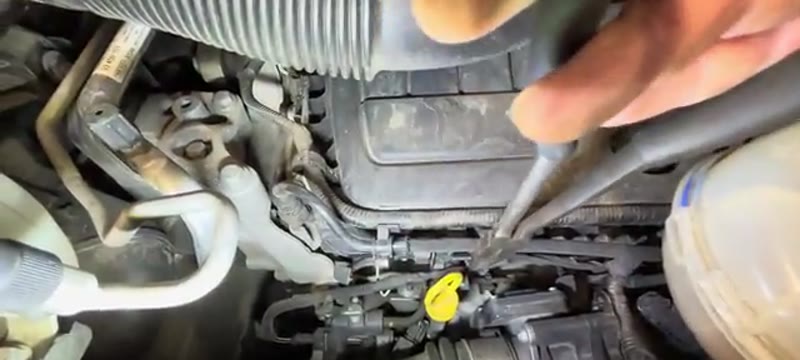
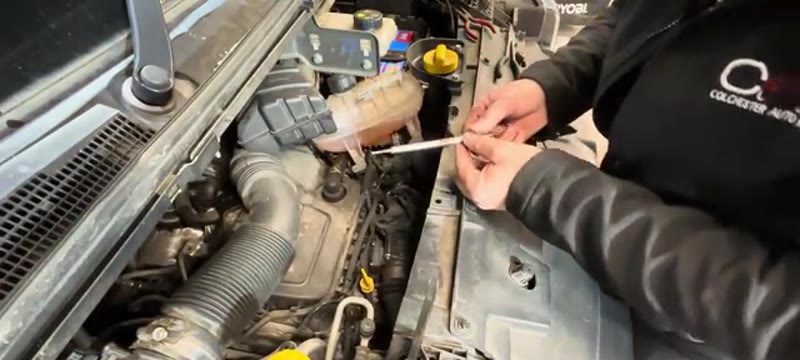
Open the bonnet. The four glow plug connectors are small black tabs sitting on top of the engine - one per cylinder. Use long nose pliers to gently pull each one off. Plugs 1–3 are straightforward. Plug 4 is buried at the back - push the tab on the coolant bottle to release it and move it aside, then gently pull the small top coolant pipe free to create enough clearance.
Remove All Four Glow Plugs
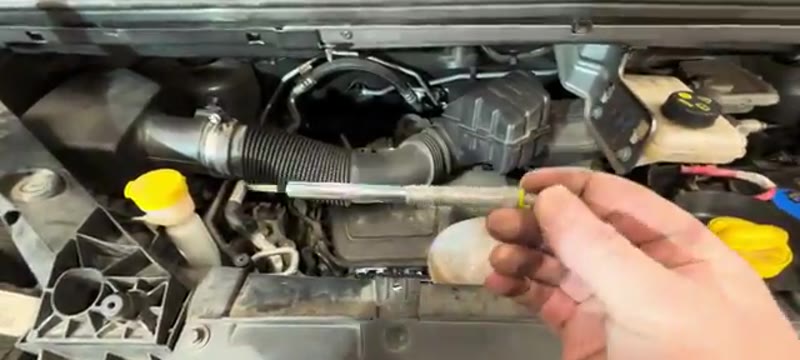
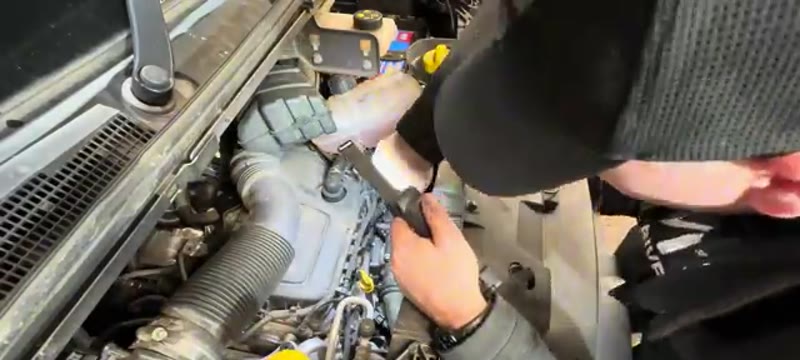
Fit the 10mm quarter-drive socket on an extension and ratchet. Looking carefully down past each connector location you'll see the shiny glow plug hex head. Seat the socket fully, crack each plug loose, then spin out by hand. Use long nose pliers to lift each plug clear. Number 3 may be slightly tighter - persevere, it will come.
Test the Old Plugs
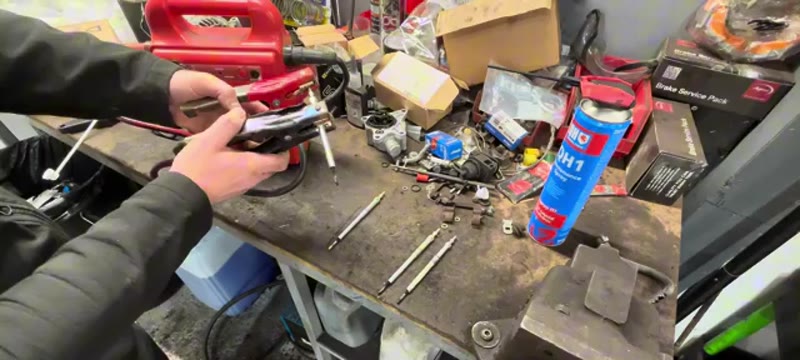
Connect a jump pack earth to the body of each plug and briefly touch positive to the tip. A healthy plug glows bright red within 1–2 seconds. On this Trafic: plug 2 was completely dead, plug 3 was barely glowing and nearly gone, plugs 1 and 4 were working. All four replaced as a service item regardless.
Fit the New Glow Plugs
Apply a tiny amount of copper slip to the threads of each new plug - this prevents future seizure. Drop each plug into its hole, let it find its seat, then use the 10mm socket to wind it in by hand first to guarantee no cross-threading. Tighten to a firm nip only - do not overtighten.
Refit Connectors & Test
Press each connector back onto its glow plug until you feel a click. Plugs 3 and 4 can be fiddly - use long nose pliers gripping where the cable meets the plastic and press firmly. Refit the coolant bottle and pipe, making sure the pipe clips in fully on both sides. Start the engine - it should fire readily with no warning lights showing.
There are two ways to change glow plugs on a working Trafic: on your schedule in October, or on the road's schedule in the first minus-five week of January, when the van will not start on a customer's timetable and every garage in town is booked with everyone else's van. The plugs on a 1.6 dCi are a wear item with a fairly predictable life - heat cycles, not miles, kill them - so a van past 100,000 miles heading into winter with its original plugs is running on borrowed time. Fleet operators change plugs preventively at high mileage for exactly this reason: the £40–£80 set is nothing against a morning of missed jobs.
The one-minute autumn test: multimeter on each plug (healthy plugs read under an ohm), or watch the pre-heat light behaviour - a light that goes out suspiciously fast, or cold-start smoke that was not there in summer, is the van telling you which winter this will be.
What the Job Costs, Planned vs Unplanned
| Scenario | Typical price | Notes |
|---|---|---|
| Planned DIY, October | £40–£80 | Bosch/NGK set, warm engine, easy removal |
| Garage, planned | £120–£250 | Quality set fitted at your convenience |
| Garage, January breakdown | £200–£400+ | Emergency pricing, seized plugs from cold-shock removal, plus the lost workday |
Typical UK prices for the 1.6 dCi. The gap between the top and bottom rows is the whole argument for preventive replacement on a working van.
Buying Plugs for the 1.6 dCi
Bosch supplies many of Renault's originals and a Bosch, NGK or Beru set at £40–£80 is exactly what the dealer fits for £180-plus. Order by engine code, not just "Trafic 1.6" - the dCi family spans several plug specifications and the glow control module expects the right one. Skip unbranded plugs entirely on this engine: a cheap plug that swells or sheds its tip in an alloy head is the most expensive £12 saving in diesel ownership.
Common Mistakes on This Job
- Doing it on a stone-cold engine. The alloy head grips steel plugs when cold. Run the engine to warm (not hot), and the plugs release with a fraction of the force - this alone prevents most snapped plugs.
- Rushing a tight plug. If a plug resists, stop: more penetrating oil, more warmth, quarter-turn back and forth. The impatient half-turn is where plugs shear.
- Skipping the anti-seize question. A wisp of ceramic-safe anti-seize on the threads (not the element) is cheap insurance for the next change - but keep it off the plug tip and torque correctly, since anti-seize changes the feel.
- Not checking the connections. The supply wiring and its connectors corrode on winter-salted vans; a perfect new plug behind a crusty terminal still will not heat.
- Forgetting the fourth plug because three went well. The set is the job. Three new plugs and one survivor means doing the access again next winter.
Winter-Readiness Beyond the Plugs
Glow plugs are one leg of the cold-start tripod. The battery is the second - a diesel needs serious cranking amps at minus five, and a battery past its fifth winter rarely delivers them. The fuel system is the third: a neglected fuel filter waxes up in hard frost and no amount of glow heat fixes fuel that will not flow. If the van struggles cold with healthy plugs, work through battery and filter before deeper diagnosis - the symptom finder runs the cold-start logic in order. For the rest of the van's winter prep, the 2017 Trafic glow plug guide covers the previous shape's identical job if you run both generations.
<Job Summary
Frequently Asked Questions
Can I Drive with Failed Glow Plugs?
Technically yes - the engine will start and run if even one glow plug is still working, especially in milder weather. However, it's not advisable. You'll experience hard starting, poor fuel economy, and rough running in the first minutes after startup. The extra stress on the starter motor trying to crank a cold engine multiple times increases wear on the battery and starter. In winter conditions below 5°C, a failed glow plug makes the van unreliable. It's better to fix it promptly than struggle with failed starts at the roadside.
How Long Does the Job Take?
With reasonable DIY experience and the correct tools, glow plug replacement on the Trafic 1.6 dCi typically takes 1–2 hours. The fastest part is removing the old plugs (20 minutes for all four). Testing takes time if you want to bench-test each plug to confirm failure. Refitting is slower than removal because you must be careful not to cross-thread and not to overtighten. If you're less confident or working on a van with significantly corroded plugs, allow 2–3 hours. A skilled technician can do it in 45 minutes to an hour.
Do I Need a Torque Wrench?
No - a torque wrench is not essential. Glow plugs only need to be tightened firmly (a nip), not to a specific torque figure. This is actually safer than using a torque wrench, which could encourage over-tightening. Screw them in gently by hand using the quarter-drive socket and ratchet until they're snug and seated. You'll feel when they're in the right place. If you're worried about tightness, remember that glow plugs are soft brass and the head is mild steel - over-tightening risks snapping the tip off inside the head (a very costly failure). Gentle and firm is the rule.
What If a Glow Plug Snaps Off Inside the Head?
This is the nightmare scenario and one reason not to overtighten. If a plug snaps and the tip stays in the cylinder head, removal requires either drilling it out very carefully or, in some cases, a machine shop may be able to extract it with a screw extractor tool. If a piece breaks off inside the combustion chamber itself, the engine won't start and the debris will need to be flushed out. Prevention is much better than cure - never force a plug and only apply hand pressure with the quarter-drive ratchet. If a plug feels stuck, apply penetrating oil (like WD40) and let it sit for an hour before trying again.