Free Guides By Make Fault Codes MOT Checker Symptom Finder Shop YouTube

The Mystery of the Ford Focus
Losing Coolant

By Jamie (Mr Auto Fixer) - Professional Mechanic, 20+ Years Experience

⏱ 30–60 Minutes Ford Focus Petrol Engine Cooling System ⚠ Advanced Fault 📍 UK Guide
Last checked: April 2026
WhatsApp

This is one of the most deceptive faults you'll come across on a Ford Focus petrol. The car loses coolant steadily, there are no visible leaks anywhere, and the only other clue is a very brief misfire on cold start that disappears almost immediately. Many owners - and some garages - miss this entirely.

The culprit is usually a failed head gasket or, more commonly on Fords, a cracked water jacket in the engine block - allowing coolant to seep into the cylinders. Here's how to diagnose it properly.

Classic Symptoms to Watch For

  • Coolant level drops regularly with no visible external leak
  • Brief misfire or rough idle on cold start - clears within seconds
  • No white smoke from the exhaust (not always present)
  • No mayo / milky oil on the dipstick or oil cap
  • No overheating (in early stages)
  • Coolant reservoir may show slight discolouration over time
⚠ Don't Ignore This If coolant is entering the cylinders, continuing to drive the vehicle risks serious engine damage including a bent connecting rod or full engine failure. Get this diagnosed as soon as possible.

Tools You'll Need

Borescope / endoscope camera
Coolant pressure tester kit
Spark plug socket set
Torque wrench
Combustion leak tester (optional)
Drain pan & gloves

Step-by-Step Diagnosis

01

Check & Rule Out the Obvious

Before going deep, do a full visual inspection of all coolant hoses, the radiator, water pump, and heater matrix connections. Check underneath the car after it's been parked overnight for any drips. If everything looks dry - that's actually your first big clue.
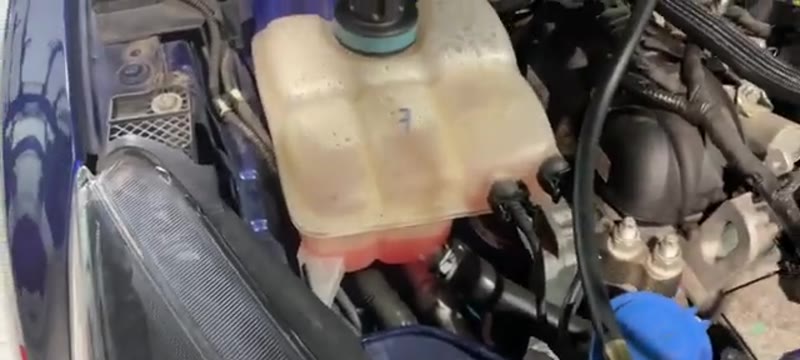
Checking the coolant header tank and engine bay for visible leaks on a Ford Focus 1.5 EcoBoost
02

Note the Cold Start Misfire

Start the car from cold and listen carefully. A brief stumble or misfire that disappears within 5–10 seconds is a tell-tale sign that coolant has pooled in one or more cylinders overnight. Once the engine fires it off, the misfire clears - which is why so many people dismiss it.

Pro Tip: If you have a diagnostic tool, check live data or stored misfires. You may see a misfire count on cylinder 3 or 4, which are most commonly affected on the Focus.
03

Pressurise the Cooling System

With the engine cold, remove the coolant cap and attach a coolant pressure tester. Pump it up to around 1.0–1.2 bar (the standard pressure for most Ford Focus systems). Leave it pressurised and watch the gauge - if it drops, you have a leak somewhere even if you can't see it.
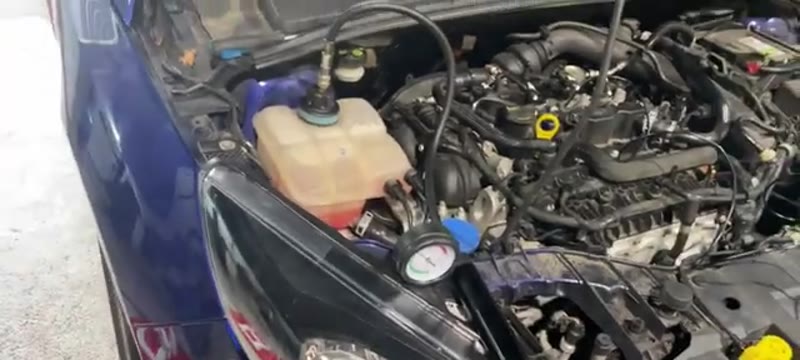
Pro Tip: Keep the system pressurised for the next step - this is what forces the coolant out and makes it visible.
Pressure tester fitted to the cooling system of the Ford Focus to check for pressure loss
04

Remove the Spark Plugs & Use a Borescope

With the system still under pressure, remove all four spark plugs. Insert a borescope (endoscope camera) down each cylinder and inspect the walls carefully. With the coolant system pressurised, you should be able to see coolant actively seeping or weeping into the cylinder - most often it will appear on the cylinder walls as a wet patch or small droplets forming.
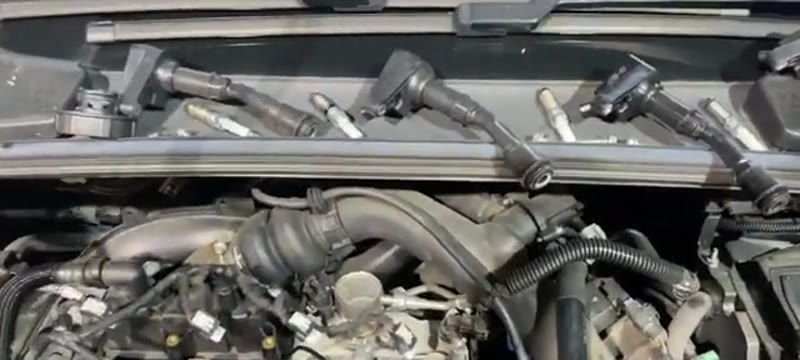
Pro Tip: Do this in a darkened area if possible - the borescope light makes wet patches much more visible.
Ignition coils and spark plug wells on top of the Ford Focus 1.5 EcoBoost engine
05

Identify the Source - Head Gasket or Cracked Block?

If water is seeping in, you now need to determine where it's coming from. On Ford Focus petrol engines, a cracked water jacket in the block is surprisingly common and can look almost identical to a head gasket failure. A cracked block is more serious - a head gasket can be replaced relatively straightforwardly, but a cracked block typically means the engine needs replacing.
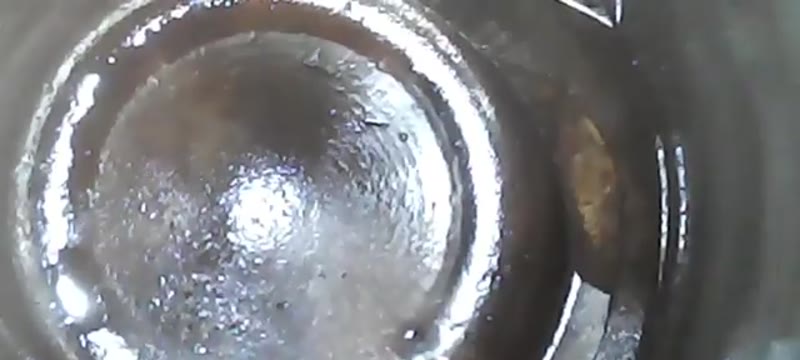
Pro Tip: A combustion leak tester (block tester / sniff test) on the coolant reservoir can help confirm combustion gases in the coolant, which points more towards a head gasket. However, a cracked water jacket can also cause this.
Borescope view inside cylinder two of the Ford Focus showing coolant sitting on the piston
06

Confirm & Advise the Customer

Once you've confirmed coolant ingress into the cylinders, the vehicle should not be driven until repaired. Present the customer with the findings and explain the two possible causes. In many cases on older Ford Focus models, given the cost of a replacement engine vs the car's value, this can be a write-off decision - be honest with the customer upfront.

Parts & Tools for This Job

Engine Borescope Camera OBD2 Diagnostic Scanner Antifreeze Coolant

ⓘ As an Amazon Associate, Mr Auto Fixer earns from qualifying purchases. Prices and availability may vary.

Diagnosis Summary

Based on the diagnostic process above, here's what to expect:
Difficulty
Advanced
Diagnostic Time
1.5 - 2.5 hrs
Head Gasket Repair (est.)
£600 - £1,200
Cracked Block
Replacement Engine
Safe to Drive?
No - stop immediately
Common on Fords?
Yes - known issue
Common Questions

FAQ

The diagnosis is the DIY win here: spotting the pattern - steady coolant loss, no visible leak, a brief misfire on cold start that vanishes - is what most people miss, and the guide shows the checks that confirm it at home. Whether the repair itself is DIY depends on what you find, but knowing the cause before anyone quotes you is the whole game.
Diagnosis fees run £80–£200 at garages for elusive coolant loss - and misdiagnosis costs far more in parts swapped on guesswork. The home checks in this guide cost nothing and point you at the actual fault before you spend a penny.
Allow 30–60 minutes for the checks, plus an overnight observation if the loss is slow. The cold-start misfire clue lasts only seconds, so listen for it on the first start of a cold morning - that is when this fault shows its hand.
The diagnosis kit is the story here: a coolant pressure tester to make the leak show itself, a borescope to look inside the cylinders, and a spark plug socket set to get there. A combustion leak tester is the optional confirmation. None of these is expensive any more, and they pay for themselves the first time they prevent a wrong repair.
Jamie - Mr Auto Fixer
Written & Verified By
Jamie - Mr Auto Fixer
20+ Years Experience MOT Tester Professional UK Mechanic

All guides on this site are written from real, hands-on experience - not copy-pasted from a manual. If I haven't done the job myself, it doesn't go on the site.

About Mr Auto Fixer