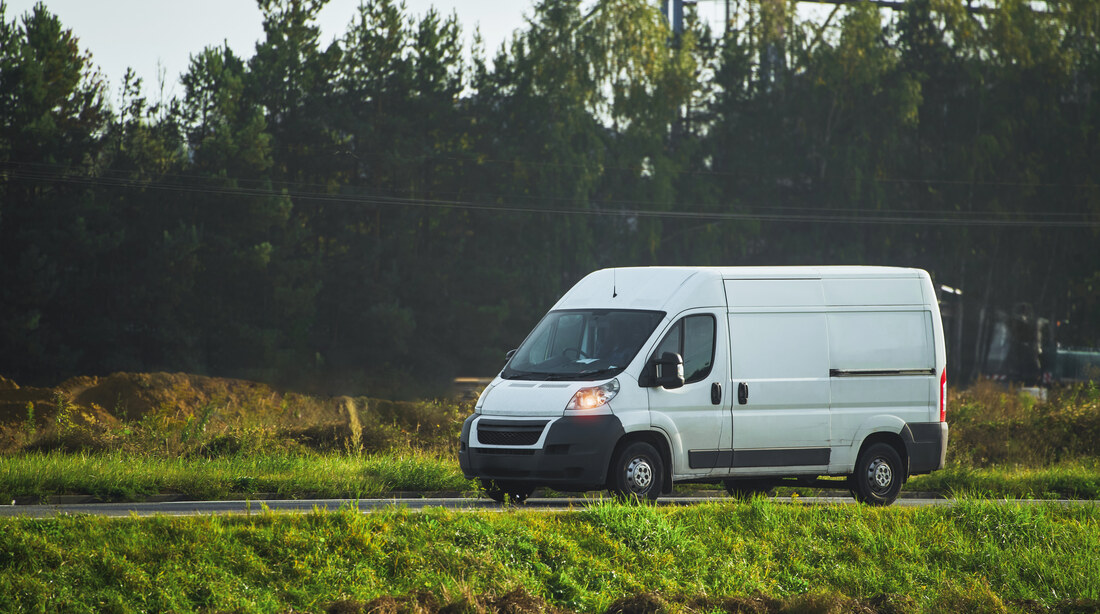
The Transit Custom has been Britain's best-selling van for over a decade, and there's a fair chance one is sitting outside your unit, your driveway, or the next job after this one. I see them every week - fleet vehicles, owner-driver tradesman vans, leisure conversions, all the same engine underneath. This guide is the workshop view: what to service when, the faults I see most often, the wet belt issue every diesel owner needs to know about, and what a 2020-plate Custom will really cost you to run in 2026.
Why the Custom Owns the UK Van Market
The Transit Custom launched in 2012 as Ford's medium-panel-van replacement for the old short-wheelbase Transit. It got a substantial facelift in 2018 - new dashboard, revised front end, AdBlue tank for Euro 6.2 - and the all-new MK2 (sometimes called the "Custom 2024" or next-gen) arrived in spring 2024 on an entirely new platform shared with VW. For practical workshop purposes you're looking at two main generations: 2012-2023 (MK1) and 2024-onwards (MK2), with the 2018 facelift being a meaningful update mid-way through MK1.
The reasons for its dominance are simple. Decent payload (around 900-1,400kg depending on trim), competitive list price, dealer network on every high street, plug-in for any trade lockable racking, and a residual value that holds up better than the European competition. The trade-off is the engine - and that's where most of your maintenance attention needs to be.
Engine Variants in the UK
Three engines have powered the Custom over its life:
- 2.2 TDCi (2012-2016) - the older Duratorq engine. Solid, no wet belt, chain-driven cam. Outputs of 100, 125, and 155 bhp. Reliable if maintained, but tired examples are now 9+ years old. Some early units suffered injector and turbo issues but well-serviced examples are still earning their keep on building sites.
- 2.0 EcoBlue (2016-onwards) - the current Ford diesel. Four outputs across the model life: 105, 130, 170, and 185 bhp. Wet timing belt, BorgWarner turbo, common rail. The engine you'll find in the vast majority of used Customs on UK forecourts.
- 1.0 EcoBoost MHEV (2019-onwards, commercial only) - petrol mild-hybrid, only fitted to specific commercial trims. Rare in the UK and not what most buyers consider. Chain cam, no wet belt issue, but limited payload and torque for heavy work.
Service Schedule - What and When
Ford's official service interval for the 2.0 EcoBlue Transit Custom is 18,000 miles or 12 months, whichever comes first. The 2.2 TDCi was 15,000 miles or 12 months. The MK2 (2024-on) is broadly the same as the EcoBlue MK1.
I'll give you the same advice I give every fleet manager and owner-driver in my workshop: halve the interval. A 9,000-mile or six-month oil and filter change is the single best maintenance habit you can develop on this engine. The wet belt issue is directly linked to oil quality and condition, and Ford's 18,000-mile interval is too long for stop-start commercial use.
The Right Oil - Don't Get This Wrong
The 2.0 EcoBlue uses oil to Ford specification WSS-M2C950-A, viscosity 5W-20. The most common brands fitting that spec are Castrol Magnatec Stop-Start 5W-20 E, Comma Eco-FE 5W-20, and Fuchs Titan GT1 Flex C2 5W-30 (the C2 part matters more than the 30). Do not put generic 5W-30 in this engine. The wrong viscosity accelerates timing belt wear inside the oil bath - that's not theoretical, the belt manufacturer Continental specifically calls it out.
| Service item | Interval | Typical UK indy cost |
|---|---|---|
| Oil & filter change (correct spec) | 9,000 mi / 6 months | £90–£130 |
| Air filter | 36,000 mi / 24 months | £25–£50 |
| Fuel filter | 36,000 mi / 24 months | £60–£110 |
| Pollen / cabin filter | 24 months | £25–£45 |
| Brake fluid | 2 years | £40–£70 |
| Coolant | 10 years / 100,000 mi | £70–£120 |
| Wet timing belt (real-world) | 80,000–100,000 mi | £900–£1,400 |
| Manual gearbox oil (recommended) | 100,000 mi | £80–£130 |
The Wet Belt - The Single Most Important Issue
If you take one thing from this guide, take this section. The 2.0 EcoBlue from 2016 onwards uses a belt-in-oil camshaft drive: the timing belt is housed inside the engine, submerged in oil, running where most engines have a metal chain. Ford and other manufacturers (PSA on the 1.2 PureTech, VW on later 1.0 TSI) chose this design for efficiency reasons - reduced friction and a quieter engine.
The problem is real and well-documented. As the belt ages, the outer coating breaks down. Fine particles of degraded rubber shed off the belt into the oil. Those particles travel through the engine and accumulate on the oil pump pickup screen, eventually blocking it. With the pickup blocked, the oil pump can't supply pressure, the bearings starve, and the engine destroys itself. Sometimes the belt itself snaps before the pickup blocks - same outcome, bent valves, scrap engine.
The Numbers That Matter
Ford's official interval for the wet belt is 10 years or 144,000 miles. In the real world, on stop-start commercial vans with longer oil change intervals, I see belt failures from 70,000 miles. My recommendation: change the belt, oil pump, and oil pump pickup as a package at 80,000-100,000 miles regardless of age. The job is £900-£1,400 at an independent specialist. The alternative is an engine replacement at £4,000-£7,000 fitted.
Warning Signs the Belt is Failing
- Oil consumption increasing - top-up between services where there wasn't any before
- Oil pressure warning light flickering, especially when warm
- Rough idle or misfire at idle - timing slipping a tooth
- Engine management light with codes P0016, P0017, P0018, P0019 (cam-crank correlation)
- Black residue or visible rubber particles when the oil filler cap is removed
- Whining or rumble from the front of the engine on a cold start
Any one of those, on an EcoBlue over 60,000 miles with unknown belt history, is a signal to stop driving and book the belt job before the engine eats itself.
EGR Valve Failures - Expect Them at 60,000+
The EGR (Exhaust Gas Recirculation) system on the 2.0 EcoBlue routes a portion of cooled exhaust gas back into the intake to reduce NOx emissions. The valve and its cooler sit in a hot, sooty environment, and on short-trip vans that never properly warm up, carbon builds on the seat and inside the matrix passages. Sooner or later the valve sticks and you get one of these codes:
- P0401 - insufficient EGR flow detected
- P0402 - excessive EGR flow detected
- P0490 - EGR position sensor circuit fault
- P040B - EGR temperature sensor performance
Typical failure point is 60,000-90,000 miles. An independent garage will charge £400-£600 for valve replacement including labour and a system relearn; Ford main dealer £700-£1,000. Some chancers will offer to "delete" the EGR with a software remap - don't. It's an MOT fail under the emissions section, will void any warranty, and on Euro 6 vans it'll affect the DPF regeneration logic.
DPF Issues - The Stop-Start Killer
Every diesel Custom from 2009 onwards has a Diesel Particulate Filter. It traps soot, then periodically heats up - either passively during a motorway run, or actively by injecting extra fuel into the exhaust - to burn the soot off. A working DPF needs a regular session at sustained temperature to clear itself, typically 30-40 minutes at motorway speed.
If the van only does short stop-start trips, the DPF can't complete a regeneration. Soot accumulates, the engine goes into a regen attempt, gets interrupted by the trip ending, restarts on the next drive, and the cycle never finishes. The DPF differential pressure sensor - a small unit screwed into the manifold - is the weakest link in the system. The sensor reads pressures before and after the filter; when it fails, you get codes like P2002 (DPF efficiency below threshold) or P244A (DPF differential pressure too low). The sensor itself is £35-£50 and a 20-minute job.
The 40-Minute Motorway Rule
If your Transit Custom only does short urban trips, take it for a 40-minute motorway run once a week - fifth or sixth gear at around 70 mph, engine fully warm. That single habit will save you £1,500 in DPF replacement and £300 in forced regen fees down the road. The DPF light usually comes on when soot loading hits about 75%; if you act on it then, a 30-minute motorway blast will normally clear it.
Vacuum Pump Failure - The Brake Servo Killer
The 2.0 EcoBlue uses a tandem vacuum-and-fuel pump driven off the camshaft. The vacuum side supplies the brake servo. Over time the diaphragm fails, allowing oil to be drawn through into the servo. You'll spot it as a brake pedal that suddenly needs more effort, or oil weeping from the bottom of the brake servo on the bulkhead. Catch it early and it's £350-£500 for the pump and a re-vac of the system. Leave it, and the servo itself fills with oil and becomes unsalvageable - add £400 for a new servo and the cost of bleeding the entire brake system.
AdBlue System (2018-onwards, Euro 6.2)
From the 2018 facelift onwards, Transit Customs were Euro 6.2 compliant with an AdBlue tank - a separate fluid that's injected into the exhaust to break down NOx. You'll usually find the tank filler next to the diesel filler, behind a blue cap.
The component that fails most often is the AdBlue tank level sensor. It throws a warning on the dash ("AdBlue low - refill now") even when the tank is full, and after a programmed number of starts the van enters a no-start lockout. The fix is the sensor module (£180-£280) or in stubborn cases the whole tank assembly (£450-£700). Some indy specialists can repair the sensor wiring loom rather than replace, saving money - worth asking.
Common Electrical Niggles
None of these are dangerous, but they fill up the workshop's "while you're at it" list:
- Dashboard flicker / random warning lights. Usually a software issue with the Body Control Module (BCM). Dealer reflash, £80-£120.
- Wipers parking in the middle of the screen. Failed park position sensor in the wiper linkage. £180-£240.
- Driver's door lock actuator. Lock goes lazy or doesn't operate at all. Common on facelift vans at 5+ years. £230-£320 with the door card off.
- Reverse light not working. Bulbholder corrosion or the switch on the gearbox. £40-£100.
- Glow plug warning light cycling. One glow plug failed. Set of four £40-£70, fitting £100-£180.
Clutch and Dual-Mass Flywheel
Heavily-loaded vans give the clutch and DMF a hard life. Typical replacement mileage for the 2.0 EcoBlue is 130,000-180,000 miles. Symptoms include rattle at idle that goes when the clutch pedal is pressed, judder pulling away, or a high biting point. The whole job - clutch, DMF, release bearing - is £900-£1,400 at an indy, depending on whether the gearbox needs reseals while it's out. Don't replace the clutch without the flywheel - fitting a new clutch to a knackered DMF will give you maybe 10,000 miles of pretending the problem is fixed before everything comes apart again.
Headlight Bulb Access
The facelift Transit Custom headlight bulb change is awkward because of how Ford packaged the engine bay around the light unit. On the driver's side, the battery and washer bottle limit access; on the passenger side, the airbox is in the way. Some owners find it easier to remove the headlight unit entirely - four bolts and an unclip - than fight the bulb through the back hatch. Allow 30-40 minutes per side the first time you do it. The bulbs themselves are H7 (low beam) and H1 (high beam) on most variants.
Pollen Filter Location
The cabin air (pollen) filter is under the glove box, accessed by lowering the glove box. It's a 10-minute job - pop the side stops, lower the glove box on its hinges, slide the filter cassette out, slide the new one in. Replace at 24 months or sooner if hayfever sufferers in the family. Step-by-step pollen filter guide here.
Year-by-Year - Known Issues
| Year range | Engine | Watch out for |
|---|---|---|
| 2013-2015 | 2.2 TDCi | Injector and turbo wear on high-mile examples; otherwise sound. No wet belt. |
| 2016-2017 | 2.0 EcoBlue (early) | Wet belt danger if never changed. Early EGR cooler failures. Avoid without belt history. |
| 2018-2020 | 2.0 EcoBlue (facelift) | AdBlue sensor issues, EGR failures at 60k+, DPF sensor weak. |
| 2021-2023 | 2.0 EcoBlue (late MK1) | Better build quality, dashboard electronics still a weak spot. Most reliable MK1 to buy. |
| 2024-present | 2.0 EcoBlue (MK2) | Too new to call. Shared platform with VW Transporter T7. Early reports good but unproven. |
Spec Levels - Trend, Limited, Sport
The MK1 Transit Custom came in three main trim levels for the panel van:
- Trend - the base spec. Manual aircon, basic radio, steel wheels, vinyl floor. Workhorse trim.
- Limited - air-con (auto on later vans), Bluetooth, alloy wheels, body-coloured bumpers, parking sensors. The trim level fleet operators pick.
- Sport - black bonnet stripes, 18-inch alloys, sports seats, the 170 or 185 bhp engine output. Owner-driver favourite. Holds value notably well at auction.
The Kombi (5-seat people-carrier version) and the M-Sport variants have additional toys but use the same drivetrain. From a maintenance point of view, trim level makes almost no difference - the engine and gearbox are the same and so are the failure modes.
What a 2020-Plate Costs to Run in 2026
Realistic annual running costs for a six-year-old 2.0 EcoBlue Custom L1H1 panel van, 15,000 miles a year, average condition:
| Item | 2026 cost |
|---|---|
| Insurance (commercial, decent NCD) | £600–£1,100 |
| VED (light commercial post-2017) | £335 |
| MOT | £55 |
| Fuel - 35-40 mpg, 15,000 miles | £2,100–£2,400 |
| Routine maintenance & consumables | £600–£900 |
| Tyres - set every 25,000-30,000 mi (annualised) | £200–£300 |
| Annual total before major faults | £3,890–£5,090 |
Add £400-£600 a year averaged across the EGR, DPF sensor, AdBlue sensor, and similar wear faults you can expect on a van this age. Add a one-off £1,000-£1,400 if you're due the wet belt service.
Buying Used - Walk-Away Signs
I've inspected dozens of these for trade buyers. Here's what I tell them to walk away from:
- No timing belt change history on an EcoBlue over 80,000 miles, where the seller can't show invoices. The buy price will not survive an engine failure.
- Visible black rubber particles under the oil filler cap. The wet belt is already shedding.
- Active EGR or DPF warning light on the dash that the seller hasn't disclosed.
- AdBlue "no-start in X miles" countdown on a facelift van - the sensor or tank is on its way out.
- Heavy soot staining around the EGR cooler on the engine - points at a leaking cooler matrix.
- Service book missing or "stamps only" without paper invoices. With this engine, you need to know what oil went in and when.
- Clutch slipping on a road test, or rattle at idle that quietens when the clutch is pressed - DMF is failing.
- Heavy corrosion on the rear chassis above the rear axle, particularly on ex-fleet vans from coastal areas - MOT failure waiting.
The Custom is Still the Right Van
Despite the wet belt, the EGR, the DPF - none of it is unique to Ford. The PSA 1.2 PureTech is worse, the VW 1.0 TSI has the same wet belt issue, and Renault's diesel range has its own catalogue of niggles. The Transit Custom is the most-supported van in Britain - every indy garage knows it, parts are cheap and everywhere, the diagnostic data is widely available. Maintained properly with the right oil at half the official interval, an EcoBlue Custom will quietly do 200,000 miles. Maintain it badly and it'll cost you an engine. Your choice.
Transits over 3,000 kg design gross weight go through an MOT as class 7, not class 4. It is worth writing the plated weight on the vehicle record once - that and the rest of the van record-keeping is in the vehicle paperwork guide.