A leaking front shock absorber on the Fiat 500 2008 causes excessive body movement and a failed MOT. The procedure involves removing the anti-roll bar drop link, the two lower hub bolts and the top mount nut before the strut and spring assembly can be removed.
A spring compressor is required to transfer the spring and top mount to the new shock absorber.
When You Need This Job
- Oily residue visible on the shock absorber body
- Excessive bouncing or poor body control
- Knocking from the front suspension over bumps
- MOT failure or advisory on shock absorber condition
Tools You'll Need
DIY Car Service Guide
- Full service at home: oil, filters, plugs, fluids
- Which jobs are safe to DIY and which are not
- What a garage charges for each item, so you know the saving
Instant PDF download · works on phone, tablet or PC · 7-day money-back guarantee
Step-by-Step Guide
Remove the wheel
Undo the 17mm wheel nuts and remove the front wheel to expose the shock absorber assembly.

Unclip the ABS sensor wire and brake hose
Unclip the ABS sensor wire from its holder on the shock body and unclip the brake hose. Move them out of the way so they do not get damaged when the shock is removed.

Remove the anti-roll bar drop link
Undo the drop link nut. If the ball joint spins use mole grips on the back of the link to hold it still.
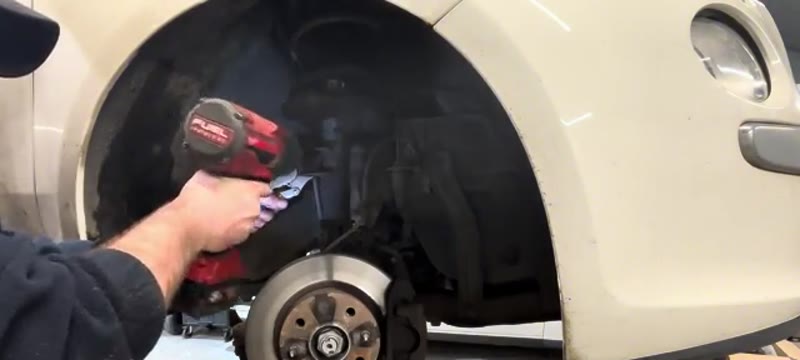
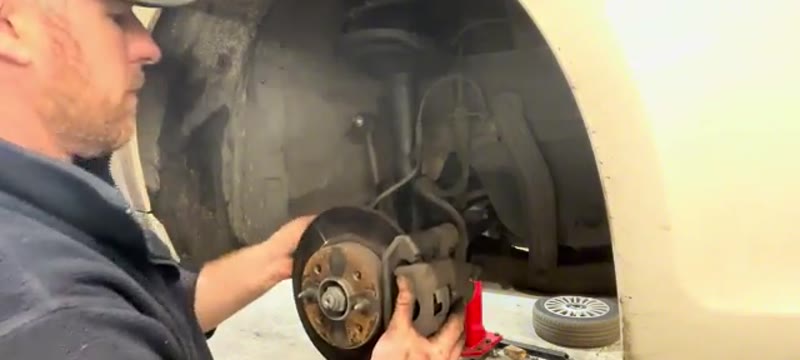
Remove the two lower hub bolts
Two bolts pass through the bottom of the shock absorber into the hub. These may be corroded - use hand tools and take care with the threads. Clean them up with a wire brush before attempting removal.
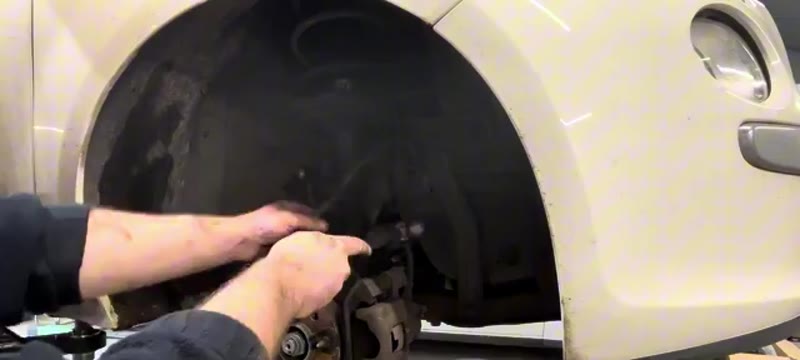
Push the hub away and free the shock
With the lower bolts out push the hub forward slightly. The shock absorber can now be moved away from the hub.
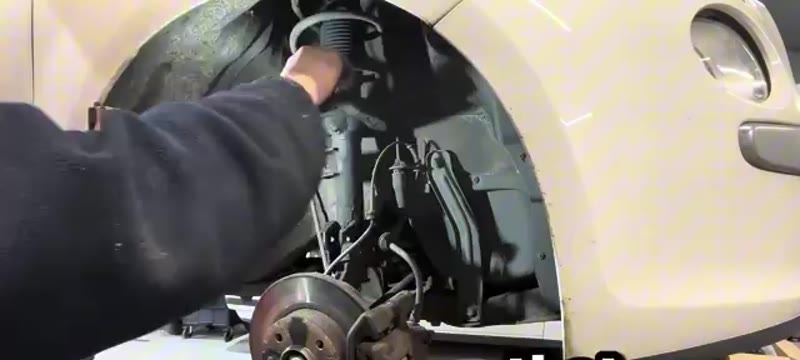
Remove the top mount nut with a 19mm socket
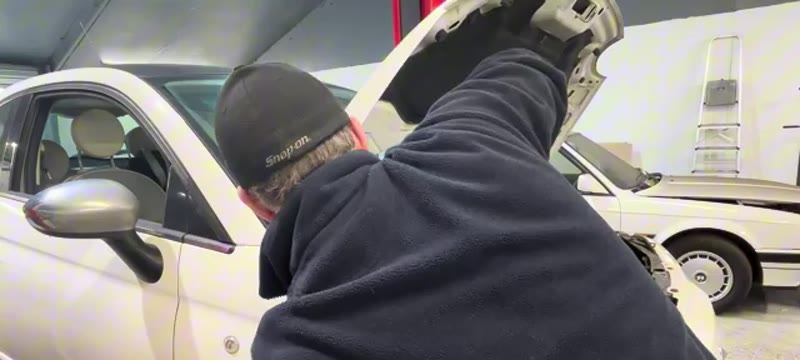
With the car back on the ground locate the top of the strut tower in the engine bay. Undo the 19mm nut. The shock absorber assembly can now be lifted out from below.
Compress the spring and swap the shock
Clamp the spring in a spring compressor. With the spring compressed undo the top nut. Remove the top mount, collar and spring. Fit the new shock into the spring ensuring it locates in the bottom recess. Refit the top mount and new nut.

Refit in reverse order
Feed the new strut assembly back into the strut tower and start the top nut. Line up the lower mounting holes, insert the bolts and tighten. Refit the drop link. Refit all clips. Torque the top nut. Refit the wheel.
Torque Specifications
While the shock is out it costs very little to fit a new top mount. These wear at a similar rate to the shock absorber and save doing the job again.
Shop Parts & Tools for This Job
As an Amazon Associate, Mr Auto Fixer earns from qualifying purchases. Prices and availability may vary.
More free repair guides on YouTube
Watch on YouTubeHow Shock Absorbers Die - Slowly, and in Secret
A shock absorber fails so gradually that your hands and backside recalibrate to it week by week: the 500 gets bouncier, nose-divey under braking and fidgety over crests, and because the change arrives over two years, nobody notices until an MOT tester finds the leak or a passenger asks why the car floats. Shocks on a town-driven 500 are typically tired by 60,000–80,000 miles - short-wheelbase city cars work their dampers constantly - and a visibly leaking shock is an MOT failure. The self-test that costs nothing: push each corner down hard and release; more than one-and-a-half bounces means the damper has left the conversation.
Worn shocks are a stopping-distance issue, not a comfort issue: a wheel that is bouncing is a wheel not braking. That is why testers care.
Garage vs DIY Cost
| Who does it | Typical price | What you get |
|---|---|---|
| Fiat dealer | £250–£400 | Genuine shock fitted, per side |
| Independent garage | £180–£300 | Quality shock fitted, per side |
| DIY | £40–£80 per shock | Bilstein, KYB, Monroe or Sachs unit and a careful afternoon |
Typical UK prices for a front shock on the 500. Always replace in axle pairs - one new damper next to one dead one gives a car that corners differently left and right.
Choosing Shocks for a 500
Sachs and Magneti Marelli supplied originals for the 500; Bilstein B4, KYB and Monroe are equivalent-or-better replacements in the £40–£80 bracket. The choice that actually matters is condition-matching: if the springs and top mounts are original at 80,000 miles, budget for top mounts and bump stops at the same time (£15–£25 a side) - fitting a new damper under a collapsed top mount rattles from day one and gets the new part blamed. The £18 marketplace shock is a comfort-and-safety gamble with no upside; damping is the whole job of the part.
Common Mistakes on the Shock Job
- Disrespecting the coil spring. On strut-type fronts, the spring is compressed with proper clamped compressors before anything releases - a spring let go by accident carries genuinely lethal energy. Cheap rusty compressors are the one tool never to economise on.
- Holding the piston rod with mole grips. The chromed rod is the sealing surface. Grip marks tear the seal and the new shock leaks within weeks - use the flats or hex provided.
- Torquing the top nut with a rattle gun. It spins the rod, ruining the internal valving. Counter-hold and torque by hand as the guide shows.
- Replacing one side only. Uneven damping across an axle upsets braking stability - always pairs.
- Ignoring the top mount and bump stop. Fifteen quid of rubber now, or the whole strut apart again in six months when the clonk starts.
Related Suspension Faults on the 500
Before condemning the shocks, be sure the symptom is theirs: a knock over bumps is more often the drop links or the lower wishbone bushes; a creak on full lock is top mounts; wander with even tyre wear is tracking. Oil streaks down the damper body, a bounce that will not settle, and uneven scalloped tyre wear are the shocks' own signatures. With the strut out, check the spring for cracked coils (500 springs snap their bottom coil quietly) and the flexi hose bracket that rides on the strut. The symptom finder tells the front-end noises apart, and the UK suspension guide covers the theory in plain English.