What Is P0341?
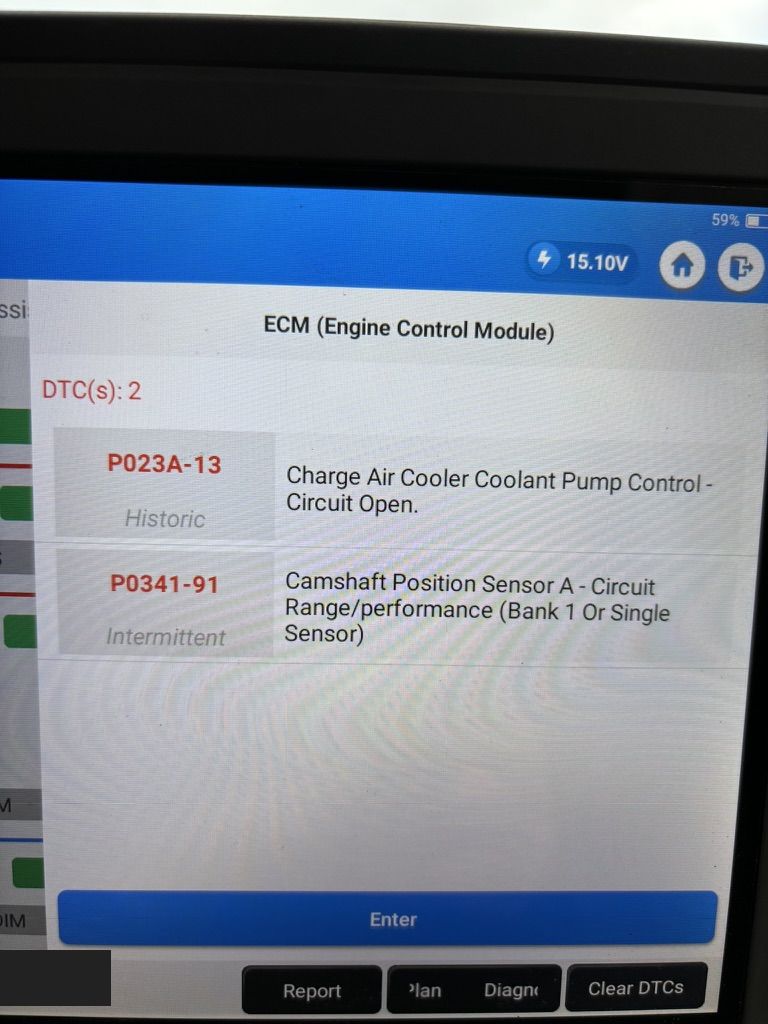
P0341 is triggered when the engine control unit detects that the camshaft position sensor signal is unstable, weak, or jumping between values when it should be steady. Unlike P0340 (complete loss of signal), P0341 means the sensor is still working but not reliably. The ECU expects a smooth, predictable signal pattern that matches engine speed. If the pattern is erratic or keeps drifting out of its normal range, the ECU cannot trust it for precise fuel and spark timing.
This is a high-severity fault because precise cam timing is critical to engine performance and emissions control. Modern engines rely on cam timing feedback to adjust fuel injection angle, exhaust valve timing, and ignition timing. If the ECU loses confidence in this signal, engine control becomes compromised.
Common Symptoms
- Check engine light stays on but flickers intermittently
- Engine misfires, especially during acceleration or at high revs
- Rough, unpredictable idle that may improve when revved
- Loss of power or hesitation when accelerating
- Fuel economy drops significantly
- Car may enter limp-home mode, cutting fuel delivery or spark to reduce damage
- Engine stumbles or hesitates when shifting gears
Common Causes
OBD Fault Code Plain English Guide
- 100 most common UK fault codes in plain English
- A severity rating for every code so you know what can wait
- Causes and next steps listed for each fault
Instant PDF download · works on phone, tablet or PC · 7-day money-back guarantee
How to Diagnose P0341
Visual Inspection
Locate the cam sensor (usually on top of the cylinder head or on the valve cover). Check the wiring for water ingress, corrosion, or cracked insulation. Test the connector - gently tug each pin to confirm it's seated. If the connector is wet, dry it and apply dielectric grease. Check for obvious dirt or debris on the sensor lens or reluctor ring.
Read Live Cam Sensor Data
Connect an OBD scanner and view live cam position data while the engine idles. A healthy signal should stay within a narrow range (e.g., 0–5 volts with smooth, regular pulses). If the voltage jumps around randomly or drops to zero intermittently, the sensor or wiring is suspect. Rev the engine gently to 2000 rpm - does the signal pattern stay consistent and proportional to engine speed?
Check Sensor Resistance
Unplug the cam sensor and measure its resistance with a multimeter across the two signal wires. A healthy inductive sensor should read 200–900 ohms depending on type. If the reading is zero, infinite, or wildly out of spec, the sensor element has failed and needs replacement.
Inspect the Reluctor Ring
With the sensor removed, use a flashlight to look at the reluctor ring (the ring of notches on the cam shaft or camshaft gear). Look for broken teeth, dirt caked on the ring, or corrosion. If heavily contaminated, clean with a soft brush and engine degreaser. If teeth are broken, the ring or camshaft will need replacement - expensive but unavoidable.
Perform a Continuity Test
With the sensor unplugged, use a multimeter to test continuity between the sensor connector terminals and the ECU. Trace the wiring harness from sensor to engine bay loom. Look for chafing, splits, or pinched cables. Measure resistance through each wire - should be near zero ohms. High resistance or open circuit indicates a broken wire that must be patched or replaced.
Mechanic's Corner - P0341 And The Oil Change Connection
The pattern I see in the workshop: P0341 on a chain-driven engine that has lived on stretched oil change intervals. Timing chains are lubricated parts - they wear their pins and plates fastest in dirty, degraded oil, and the first electronic evidence of a stretching chain is often this exact code, set because the cam signal has drifted out of its expected window while the engine still sounds normal. If your service history has 20,000-mile gaps in it, treat P0341 as the chain announcing itself early rather than a sensor grumbling, and read our cambelt versus chain guide for which engines carry known chain weaknesses.
The quick way to split sensor from timing at the diagnosis stage: a failing sensor tends to produce dropouts (signal vanishing and returning), while a stretched chain produces a steady offset that gets slightly worse with heat and load. On a scanner that shows cam-to-crank correlation in degrees, an engine reading several degrees retarded warm that reads nearly true cold is telling you the chain has grown. And if P0016 - crank and cam correlation ever joins P0341 in the stored codes, stop treating it as an electrical fault at all - that pairing is mechanical timing drift until proven otherwise.
Verdict
P0341 is a signal integrity issue, not a structural failure - but it demands urgent attention. Start with a free visual inspection: check connectors, wiring, and the reluctor ring for obvious contamination. If the sensor resistance is out of range or you see broken teeth on the cam ring, replacement or timing work is needed. If wiring and sensor test OK, you might be looking at timing chain stretch, which is expensive but critical. Do not ignore this fault. Get it checked by a garage within a few days - your engine's wellbeing depends on reliable cam timing.