What Is P0335?
P0335 is a crankshaft position sensor circuit fault. The crankshaft sensor (CKP) generates a signal as the crankshaft rotates, sending a pulse to the ECU each time the crank passes a specific position (usually cylinder 1 TDC - top dead centre). The ECU uses this signal to synchronise fuel injection and ignition timing with engine speed and piston position. Without this signal, the ECU cannot fire the injectors or spark plugs and the engine will not start.
P0335 means the sensor is not sending any signal, is sending an intermittent signal, or the wiring is faulty. This is a critical fault - the car is non-functional.
Common Symptoms
- Engine will not start or cranks but fails to start
- Engine starts and runs, then stalls without warning at speed
- Check engine light illuminated or flashing
- No fuel pump sound when turning the ignition key
- Complete loss of power or inconsistent running if it somehow starts
Common Causes
How to Diagnose P0335
{intro}
Every P0335 outcome, written out in full
The tool above asks a couple of questions and lands you on one of these 6 results. They are all set out here as well, so you can read them without clicking through, compare them against each other, or check one on a phone with no signal.
If you answered It cuts out while driving, then restarts after a wait
Stop, do not drive A crank sensor that drops out while the engine is running is one of the few faults I will tell someone to stop driving immediately. It does not warn you, and when it goes the engine stops dead - power steering and brake assist with it.
- Crank sensor failing as it heats up (Most likely) The windings inside the sensor go open circuit once they expand with heat, then close up again as they cool. That is precisely why the car restarts after twenty minutes at the roadside. The sensor is typically £20-£60 and on many engines it is two bolts and a plug.
- Chafed or corroded sensor wiring (Likely) The loom runs down near the bellhousing where it gets heat, road salt and vibration. A wire chafed through against a bracket gives exactly the same intermittent signal loss as a failed sensor. Wiggle test the connector and follow the loom by hand before buying parts.
- Debris or damage on the reluctor ring (Possible) Swarf collected on the trigger wheel, or a tooth damaged during past work, confuses the signal at certain speeds. Less common, but it explains a fault that survives a new sensor.
What to do next: Stop using the car for anything that matters. An engine that dies without warning at a roundabout or on a slip road is a genuine safety problem, not just an inconvenience. If it must be moved, keep it local and off fast roads, and treat it as a recovery job rather than a drive to the garage.
OBD Fault Code Plain English Guide
- 100 most common UK fault codes in plain English
- A severity rating for every code so you know what can wait
- Causes and next steps listed for each fault
Instant PDF download · works on phone, tablet or PC · 7-day money-back guarantee
If you answered It cranks over but will not fire at all, then The needle stays flat at zero
Drive carefully, book it in A rev counter that stays flat while cranking is a strong clue. On most cars the tachometer is driven from the same engine speed signal the ECU uses, so a needle that never twitches says the ECU is genuinely seeing nothing from the crank sensor.
- Crank sensor failed outright (Most likely) No signal at all is the simplest version of this fault and the most likely one. If the car has done any real mileage and the sensor has never been touched, this is where the money should go first. Check the connector for oil ingress at the same time - a sensor sat in a puddle of engine oil often fails again.
- Broken wiring or lost earth in the sensor circuit (Likely) A snapped wire or a corroded earth gives an identical no-signal picture to a dead sensor. A meter across the sensor terminals costs nothing and tells you whether the sensor is even electrically alive before you unbolt anything.
- Sheared reluctor or slipped trigger wheel (Possible) If the toothed wheel has cracked, slipped on its hub or lost teeth, there is nothing for a perfectly good sensor to read. Rare, but it is the reason some cars still will not start with a brand new sensor fitted.
What to do next: Before ordering a sensor, unplug it and check for oil in the connector, then check you have continuity through the loom back to the ECU plug. Ten minutes with a multimeter regularly saves the cost of the wrong part, and on some engines the sensor sits somewhere that makes fitting it twice a genuinely miserable afternoon.
If you answered It cranks over but will not fire at all, then The needle flickers or lifts
Drive carefully, book it in A needle that flickers while cranking means an engine speed signal is arriving. That changes the picture completely - the crank sensor circuit is doing at least some of its job, so the no-start probably is not solely down to it.
- Crank and cam signals disagreeing (Most likely) The ECU needs the crank and cam signals to line up before it will fire injectors. A cam sensor fault, or a chain that has jumped a tooth, gives a crank signal with no valid sync and a no-start with P0335 recorded alongside. Look for a P0340 or P0016 stored with it. P0016 - crank and cam correlation
- Weak or noisy sensor signal (Likely) A sensor on its way out can produce a signal strong enough to twitch the tacho and too ragged for the ECU to trust. Only an oscilloscope trace really settles this, which is where a proper diagnostic hour earns its money.
- A separate no-start cause entirely (Possible) Do not fall into the trap of assuming the stored code is the cause. No fuel pressure, an immobiliser that has not released or a flat battery giving low cranking speed all produce a no-start, and a marginal crank signal at low cranking speed logs P0335 as a passenger rather than the culprit.
What to do next: Read every stored code, not just this one, and note whether any cam sensor or correlation codes are sitting with it. Then check the basics before the exotic: battery voltage while cranking, fuel pressure and whether the immobiliser light goes out. A slow crank from a tired battery can generate this code all on its own.
If you answered It runs fine, the light is just on
Drive carefully, book it in A car that drives normally with P0335 stored is usually reporting an intermittent dropout that the ECU caught and recovered from. It is not an emergency today, but it is a warning shot - this fault does not get better on its own.
- Sensor beginning to break down intermittently (Most likely) Most crank sensors fail gradually. They log a code, run fine for weeks, then start cutting out. Treat a stored P0335 on a car that runs well as notice that a roadside breakdown is coming, and plan the repair rather than waiting for it.
- Connector or loom fault that comes and goes (Likely) A connector that is not fully latched, or a pin backed out of its housing, makes contact most of the time. It is free to check and it is the reason some cars get an unnecessary sensor fitted.
- A one-off logged during a low battery crank (Possible) A flat or failing battery slows the crank enough to produce an unreadable signal, and the ECU stores P0335 for it. If the code appeared the same week as a jump start or a new battery, clear it and see whether it returns before spending anything.
What to do next: Clear the code and drive it normally for a week. If it stays away and there was a battery event around the time it appeared, you can reasonably let it go. If it comes back, book the sensor in at your convenience rather than waiting for the car to choose the moment for you.
If you answered It started right after cambelt, chain or engine work
Stop, do not drive P0335 that appears immediately after timing or engine work is a completely different problem from one that arrives on its own. Something that was disturbed has not gone back correctly, and on an interference engine that is a very expensive mistake to drive on.
- Sensor disturbed, unplugged or damaged during the job (Most likely) The crank sensor sits right where hands and tools go during belt and chain work. An unlatched plug, a trapped wire or a sensor left loose in its bore explains this in most cases, and it costs nothing to check. Cambelt and chain - what actually matters
- Timing out by a tooth (Likely) If the belt or chain went back one tooth out, the crank and cam signals no longer agree and the ECU logs correlation and crank codes together. This must be corrected before the engine is run any further - on an interference engine the valves and pistons occupy the same space at the wrong moment.
- Reluctor ring damaged or refitted wrong (Possible) Where the trigger wheel is a separate part behind a pulley, it can be refitted the wrong way round or nipped during reassembly. Worth checking whenever a fresh sensor has not cured a fault that started on the ramp.
What to do next: Do not keep driving it. Go straight back to whoever did the work, before you touch anything else - if you start dismantling it yourself you hand them an easy argument. Take the code with you in writing and ask specifically for the timing marks to be rechecked, not just the sensor.
If you answered It is intermittent and always worse when hot
Stop, do not drive A fault that arrives with heat and clears when cool is a sensor coming apart internally. It will strand you, and unlike most faults you can predict roughly when - the worst traffic on the hottest day.
- Heat-sensitive crank sensor (Most likely) The classic failure mode: the internal winding goes open circuit as it expands and remakes contact as it cools. You cannot test for it on a cold engine on a driveway, which is why so many cars go home from a garage with a clean bill of health and cut out again that afternoon.
- Loom insulation broken down near a heat source (Likely) A wire resting on the manifold or a heat shield loses its insulation over the years and shorts when everything expands. Follow the loom by hand along its whole run with the engine cold and look for shiny, hard or flattened sections.
- Connector expanding out of contact (Possible) A worn terminal that holds contact cold and loses it hot is a genuine cause and one that a new sensor will not fix. If the fault survives a new sensor, this is where to look next.
What to do next: On a fault this predictable, a heat gun applied gently to the sensor while watching live rpm data will usually reproduce it in the workshop within minutes. Ask for that specific test, because a garage that only tests it cold will hand it straight back to you with nothing found.
Inspect Sensor Connector
Locate the crankshaft sensor (usually mounted on the engine block near the crankshaft pulley, front of engine). Disconnect the connector and inspect for corrosion, bent pins, or water damage. Clean any corrosion with electrical contact cleaner. Reseat the connector firmly, clear the code, and test. A loose connector often fixes P0335.
Inspect Wiring and Harness
Follow the crank sensor wiring from the connector back to the ECU. Look for cuts, abrasions, heat damage, or pinched wires. Check for rodent damage. If the harness passes through engine bay clips, verify it hasn't rubbed through insulation. Repair or replace damaged wiring sections.
Monitor Sensor Signal on Scanner
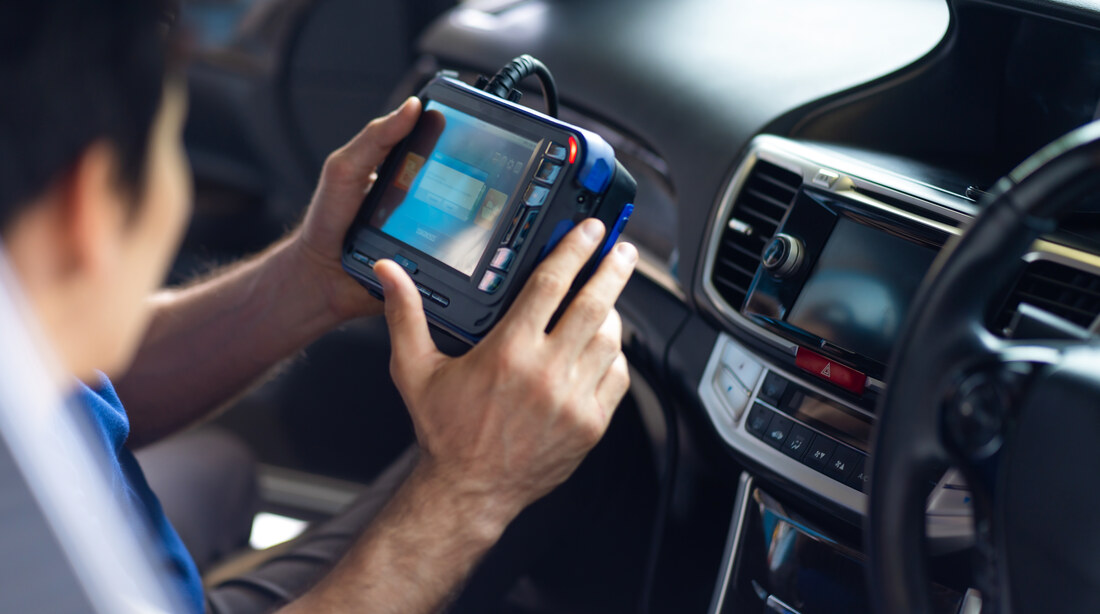
Connect an OBD scanner and monitor the crankshaft position sensor signal in live data mode while cranking the engine. The signal should show a regular oscillating pattern. If the signal is frozen, erratic, or shows no activity, the sensor is likely faulty.
Check Reluctor Ring for Damage
Remove the crankshaft pulley or damper to access the reluctor ring (the toothed target). Inspect for bent, missing, or corroded teeth. If the ring is damaged, it must be replaced. This requires removing the pulley and is a professional-level task.
Test Sensor Resistance
Disconnect the sensor. Using a multimeter, measure resistance across the sensor terminals. Most crankshaft sensors should read 200–900 ohms depending on type. Infinite resistance or zero ohms indicates a failed sensor. Compare your reading to the manufacturer's specification.
Mechanic's Corner - Crankshaft Sensor Faults
P0335 means the ECU can't get a clean signal from the crankshaft position sensor, and on many vehicles this will cause a complete no-start - the ECU won't fire the injectors or ignition without a valid crank signal. The sensor itself is relatively cheap (£15–£40), but before replacing it, check the reluctor ring on the crankshaft. This toothed ring can crack or shed teeth, particularly on high-mileage vehicles, and no sensor in the world will give a clean signal from a damaged ring.
The wiring is also worth checking - the CKP sensor sits low on the engine block in a stone-strike and oil-splash zone. I've diagnosed more P0335 faults caused by chafed wiring or a corroded connector than by an actually failed sensor.
Verdict
P0335 diagnosis begins with connector and wiring inspection - often the culprit and a free fix. If those are clean and tight, the sensor needs testing. A faulty sensor costs £180–£450 installed. Reluctor ring damage is rare but can require expensive crankshaft pulley replacement (£500–£1500). Start with the cheapest checks first.