
This 2014 Ford Focus 1.6 TDCi Duratorq came in for a cam belt and water pump change at 78,000 miles - still on the original belt, which was well overdue. The 1.6 TDCi Duratorq engine was used in Ford Focus, C-Max, Galaxy and Transit Connect between 2011 and 2015, so this guide covers a wide range of vehicles.
The job requires engine mount removal, timing lock pins, and careful attention to the belt routing and tensioner setup. The water pump on this engine is hidden behind the belt and bracketing, making it slightly more involved than some - but completely doable with the right tools.
Tools & Parts Needed
Shop Parts & Tools for This Job
As an Amazon Associate, Mr Auto Fixer earns from qualifying purchases. Prices and availability may vary.
DIY Car Service Guide
- Full service at home: oil, filters, plugs, fluids
- Which jobs are safe to DIY and which are not
- What a garage charges for each item, so you know the saving
Instant PDF download · works on phone, tablet or PC · 7-day money-back guarantee
Step-by-Step Guide
Remove Under Tray, Arch Liner & Auxiliary Belt
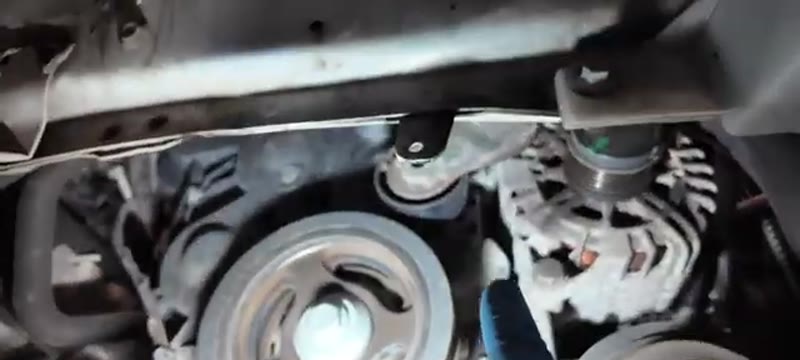
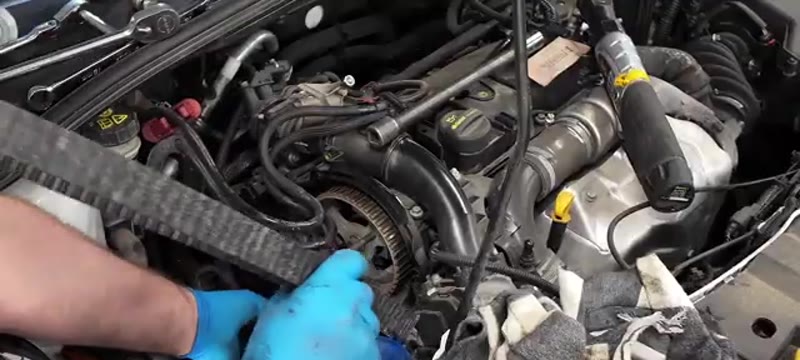
Remove the lower under tray from beneath the car. From the wheel arch side, remove the inner wheel arch liner - held by T30 Torx bolts and plastic push clips. This exposes the lower pulley and auxiliary belt. Fit a 16mm spanner to the auxiliary belt tensioner, pull to release tension, and slip the belt off. Pull the plastic cover off the lower pulley to expose the cam belt system below.
Support the Engine & Remove the Engine Mount
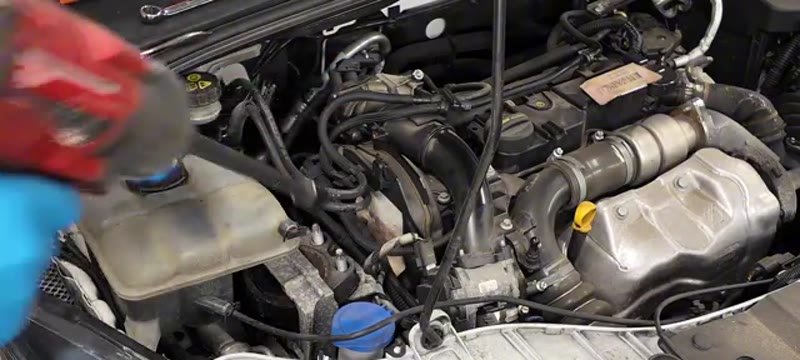
Support the engine from below using a trolley jack with a block of wood under the sump. Pull the coolant bottle loose to gain clearance. Remove the engine mount: two 18mm bolts on top, then two 15mm bolts lower down. Lift the mount clear. Now move the fuel lines, wiring plugs (including the throttle plug and bracket held by a T30 Torx) out of the way to open up access to the lower engine mount and cam belt cover.
Remove the Cam Belt Covers
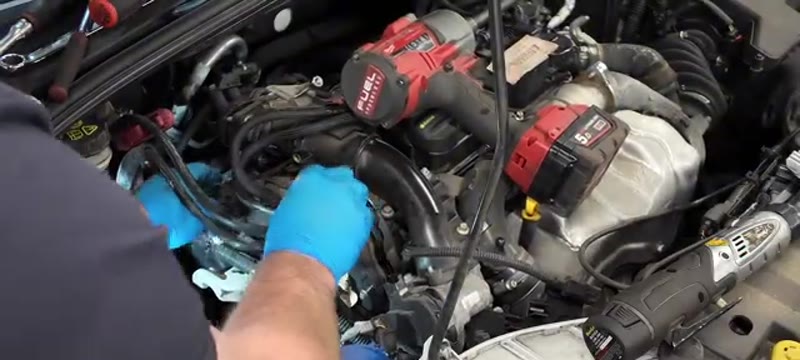
Remove the four bolts holding the lower engine mount bracket - all the same length. With the bracket loose, undo all the 7mm bolts around the top cam belt cover and wiggle it free. Then undo all the 7mm bolts on the lower cover. The lower cover comes off together with the lower engine mount bracket.
Rotate to TDC & Lock the Timing
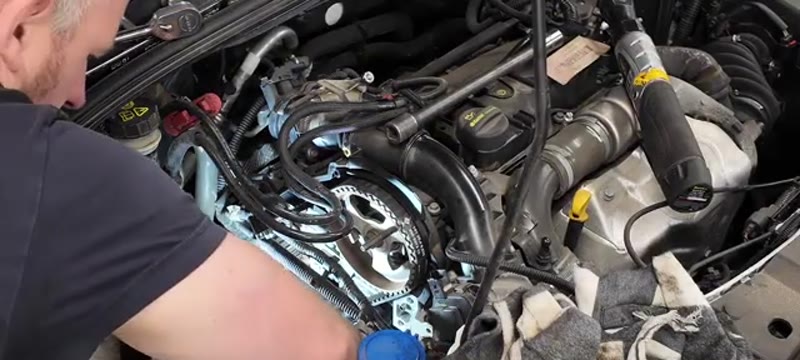
Use an 18mm socket on a long extension to slowly turn the engine clockwise. Watch for the small hole in the cam wheel - it needs to align with the hole in the cylinder head so the cam locking pin can be inserted. At the same time the crank lower pulley hole must align with the corresponding hole in the block - a correctly-sized drill bit works perfectly as a locking pin here. Remove the lower pulley to access and lock the crank. Insert the flywheel locking tool. Everything is now locked solid at TDC.
Remove the Tensioner & Old Belt
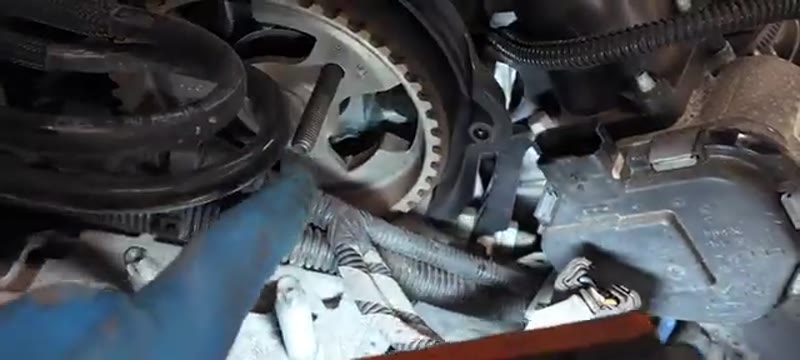
Use a 13mm spanner to crack off the tensioner nut - the tension releases immediately. Remove the belt from all the pulleys. To get the belt clear of the lower crank pulley, remove the crankshaft position sensor (one 8mm bolt) and pull it free. Inspect the old belt - at 78,000 miles on this Focus it was still original and well overdue.
Replace the Water Pump
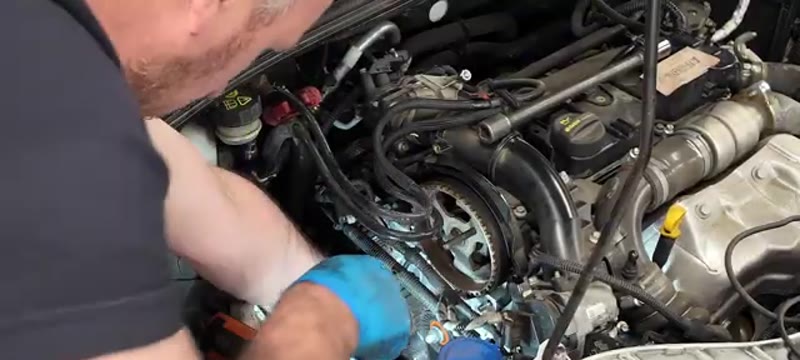
The water pump is held on by eight 8mm bolts. Undo all eight and gently pry the pump away from the block with a lever bar - coolant will drain out so have a container ready. Lower the engine slightly on the jack to help drain the coolant before the new pump goes in. Clean the mating surface thoroughly with a wire brush, Stanley blade or fine sandpaper until completely smooth. The new pump comes with a gasket that has two triangular lugs - start bolts through these lugs first to hold the gasket in position, then lower the pump onto the block and start all remaining bolts by hand before tightening.
Torque the Water Pump Bolts
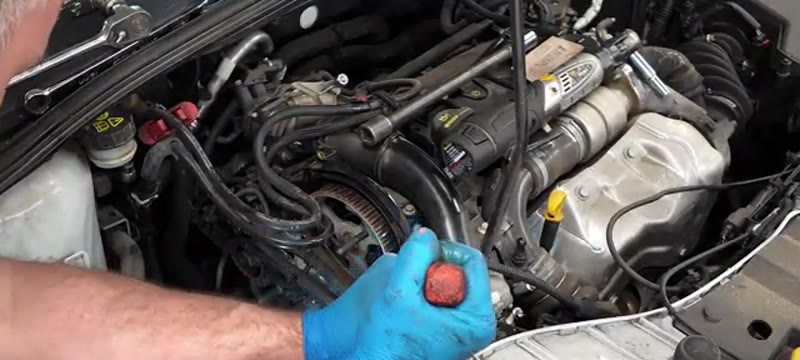
Once all bolts are started by hand, nip them all up evenly in a star pattern to pull the gasket down uniformly. Then torque in two stages: Stage 1 - 5Nm. Stage 2 - 10Nm.
Fit New Tensioner, Idler & Cam Belt
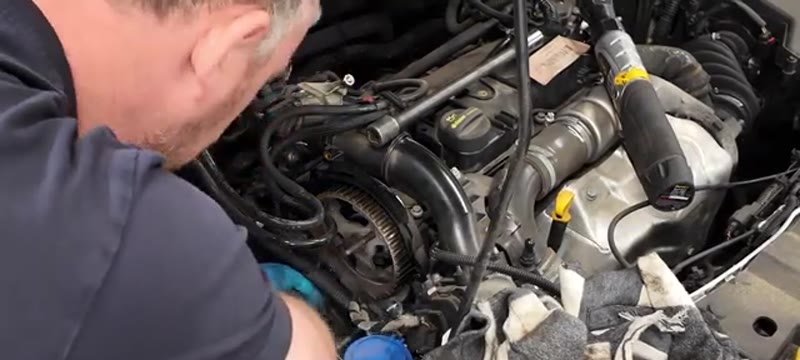
Fit the new tensioner - make sure its locating lug sits correctly over the peg to the left of the bolt hole, then fit the bolt finger-tight only. Fit the new idler. Feed the new belt down behind the wiring and onto the lower crank pulley first, then work it around all pulleys. Be mindful of the fuel pump position - there is a slot and hole you can lock it with a pin if needed. With the belt on, pull the tensioner pin and use a 6mm Allen key turned anti-clockwise to tension it - watch the small pointer arrow behind the tensioner and bring it to dead centre of the reference window. Lock down the 13mm tensioner nut.
Verify Timing & Rebuild
Remove all locking pins. Turn the engine clockwise by hand for two full revolutions. Reinsert all locking pins - cam, crank and flywheel must all locate perfectly. All paint marks must realign. Only then is timing confirmed correct. Refit in reverse: lower cover with lower engine mount bracket, crankshaft position sensor, top cover, all wiring, coolant reservoir, engine mount, lower pulley with new bolt, auxiliary belt (replace if cracked as on this car), arch liner, under tray. Refill coolant and go for a first start.
Key Torque Specs - 1.6 TDCi Duratorq
Why This Belt Change Matters (and When)
The 1.6 TDCi is an interference diesel, which means the cambelt is life support: lose it and the pistons meet the valves at speed, and the £400 maintenance job becomes a £2,000+ engine rebuild - usually a write-off on a Focus of this age. Belts fail two ways, and only one of them is mileage. The rubber compound also hardens and cracks with age, so a 12-year-old Focus on 60,000 gentle miles is at just as much risk as a motorway car at the full interval. If there is no receipt in the history proving the belt has been done, treat it as due today.
The water pump rides on the same belt, costs little, and has a habit of seeping right after a belt change if you leave the old one in - which means paying the full labour bill twice. Pump with belt, every time, no exceptions.
Ford Dealer vs DIY Cost
| Who does it | Typical price | What you get |
|---|---|---|
| Ford main dealer | £700–£900 | Genuine parts and dealer labour |
| Independent garage | £400–£700 | Belt, tensioners and pump - most garages know this engine inside out |
| DIY | £100–£160 | Complete belt kit and pump from Gates, INA or SKF |
Typical UK prices for the 1.6 TDCi. Garages quote this job confidently because the same engine appears in the C-Max, Galaxy and Transit Connect - they have done it many times.
In fact this engine (the DV6) was co-developed with Peugeot-Citroën and fitted to millions of cars across Ford, Peugeot, Citroën, Volvo and Mazda - which is why parts are cheap and every independent has the tooling. Compare quotes with our UK cambelt cost guide before booking.
Genuine Ford vs Aftermarket Kits
Gates, Dayco and Continental make the belts; INA makes the tensioners; SKF and Airtex make the pumps - and between them they supply the production lines. A complete kit with pump from any of those brands at £100–£160 is the same hardware as the Ford-boxed parts at roughly double. Because the DV6 was built in such numbers there is also a flood of cheap unbranded kits online: on an interference engine, walk past them. The belt is the single component whose failure destroys the engine - it is the worst possible place to save £40.
Buy the kit that includes belt, tensioner, idler and pump together, and check the box seals are intact - a pump gasket that has been opened and repacked is not worth fitting.
Common Mistakes on the 1.6 TDCi Belt Job
- Skipping the timing pins. Crank and cam must be locked with the proper pin set before the belt comes off. The pins cost £15–£25 - guesswork costs an engine.
- Reusing the crank pulley bolt. It is a stretch bolt, single use. Fit a new one at the correct torque and angle - a loose crank pulley takes the timing with it.
- Leaving the old tensioner in. The tensioner bearing has done the same miles as the belt. When it seizes it shreds the new belt within weeks, with full engine-destroying consequences.
- Not turning the engine two full revolutions. After fitting, rotate by hand clockwise twice and re-check every timing mark before the covers and mount go back on. This is the step that catches a tooth-out error while it is still free to fix.
- Poor coolant bleeding afterwards. The 1.6 TDCi airlocks readily. Bleed it properly and watch the temperature on the first run - a new pump run hot from an airlock does not stay new long.
- Ignoring oil on the old belt. Oil means a leaking crank or cam seal. Fix the seal now or the new belt inherits the same contamination and an early death.
Related Faults on the 1.6 TDCi
While the belt area is stripped, look after the DV6's other known weak spots. Check the crank seal and cam seal for weeps, and glance at the turbo oil feed area - this engine's most famous fault is turbo failure caused by carbon blocking the oil feed, so religious oil changes with the correct spec oil are as important as the belt itself. If the car has been feeling flat, boost-related faults are common on these and usually log fault code P0299 (turbo underboost) before anything dramatic happens.
The 1.6 TDCi is also a DPF-era diesel: if your driving is mostly short urban trips, our DPF problems guide explains the habits that keep the filter alive. For any noise from the belt end of the engine, the symptom finder will tell you whether it is belt, pump, tensioner or something cheaper.