What Is P2002?
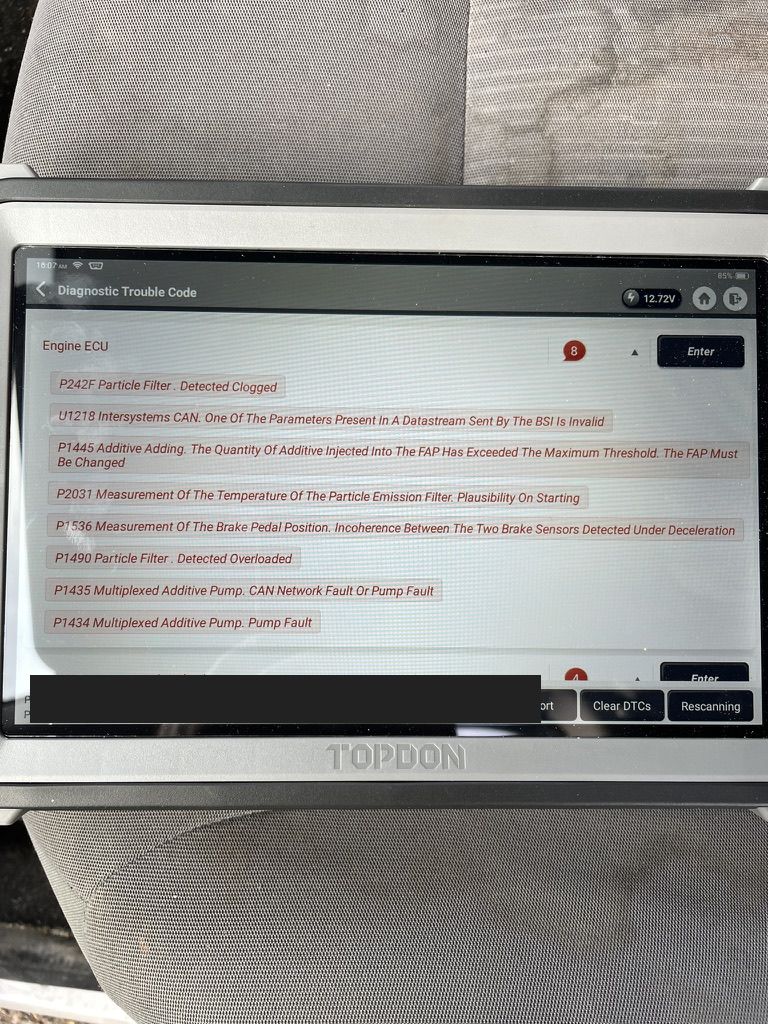
P2002 is stored on diesel vehicles when the ECU detects that the diesel particulate filter (DPF) has become blocked to the point where it can no longer clean itself efficiently. The DPF traps soot from exhaust gases, periodically burning it off through a process called regeneration. When soot loading exceeds the threshold and regeneration repeatedly fails, P2002 is stored and the car will usually enter limp mode. Ignored long enough, the DPF will need replacing - a very expensive job.
Common Symptoms
- Engine management light on
- Possible limp mode (restricted to 2,000–2,500 rpm)
- DPF warning light (on cars that have one)
- Increased fuel consumption (the ECU injects extra fuel to raise exhaust temperatures for regen)
- Excessive diesel smell
- Black smoke under acceleration
Common Causes
How to Diagnose P2002
With DPF codes, how the car is used matters as much as the code itself. Tell the flowchart how the car spends its weeks and what else is going on, and it points you at the most likely reason the filter pressure is high - and how urgent it really is.
Every P2002 outcome, written out in full
The tool above asks a couple of questions and lands you on one of these 5 results. They are all set out here as well, so you can read them without clicking through, compare them against each other, or check one on a phone with no signal.
If you answered Short trips - town, school runs, deliveries
Drive carefully, book it in Town miles never get the exhaust hot enough for the filter to clean itself, so soot wins a little more every week. Caught at this stage it is still cheap to put right.
- Regenerations never completing (Most likely) The car tries to burn the soot off roughly every 300 miles, but it needs sustained heat - a school run is over before the process finishes, and every interrupted regen leaves the filter slightly fuller than before. DPF problems - the complete UK guide
- Soot now past the self-clean threshold (Likely) Above a certain load the ECU stops attempting passive regens and demands driving conditions you may never hit in town. The pressure sensor sees the blockage and logs P2002.
- Oil level creeping up from failed regens (Possible) Each failed regen washes a little diesel past the pistons into the sump. Check the dipstick now - a level above max is both a symptom of the problem and a hazard of its own on a diesel.
What to do next: Take it for 45 minutes at motorway speed in a gear that holds around 2,500 rpm and let a regeneration complete. If the light returns within days, it needs a forced regen on a garage scanner - and the driving pattern needs an honest rethink, because some cars are simply the wrong tool for town-only work.
OBD Fault Code Plain English Guide
- 100 most common UK fault codes in plain English
- A severity rating for every code so you know what can wait
- Causes and next steps listed for each fault
Instant PDF download · works on phone, tablet or PC · 7-day money-back guarantee
If you answered DPF light is on AND the car is down on power
Drive carefully, book it in DPF warning plus limp mode means the filter is past what driving can fix. This stage still rescues fairly cheaply - ignored, it becomes a four figure bill.
- Soot overload needing a forced regen (Most likely) A garage scanner can command a stationary regeneration as long as soot load is under the hard ceiling, often around 70 to 75 percent. Half an hour of controlled high idle and the filter comes back.
- Load past the forced regen limit (Likely) Above the ceiling the ECU refuses even a forced regen for fire risk, and the filter has to come off for a proper flush clean, or be replaced. Off-car cleaning costs a fraction of a new filter and deals with ash too.
- An underlying fault that filled it (Possible) Something stopped the regens happening - lazy glow plugs, a sticking EGR, an injector down on its numbers. Find it, or the freshly cleaned filter fills straight back up. How to test glow plugs properly
What to do next: Book the forced regen this week and ask for the soot percentage from live data before and after - a garage that cannot show you both numbers is guessing. Do not keep commuting in limp mode hoping it clears itself; at this loading it will not.
If you answered Regular motorway miles, yet this still came on, then Yes - EGR, glow plug, boost or sensor codes
Drive carefully, book it in P2002 with company is nearly always the passenger, not the driver. The other codes stopped the filter regenerating - deal with them first and the DPF usually sorts itself out.
- EGR fault blocking regeneration (Most likely) Many diesels flatly refuse to regenerate while an EGR fault is live, so soot piles up as a side effect. The EGR code is the one to chase - the DPF is just keeping score. P0401 - EGR insufficient flow
- Tired glow plugs (Likely) Plenty of engines fire the glow plugs during regeneration to help exhaust temperature along. One or two dead plugs and regens quietly stop completing, especially through winter. Test the glow plugs - a ten minute job
- Boost or sensor faults tripping limp mode (Possible) Any fault that drops the car into limp mode also cancels regeneration. Fix the limp mode cause and the DPF finally gets its chance to clean itself again.
What to do next: Fix the companion faults first, clear everything, then give it a proper motorway run and re-check. Only if P2002 comes back alone afterwards does the filter side - sensor, pipes, soot - need its own investigation.
If you answered Regular motorway miles, yet this still came on, then No, P2002 is on its own
Drive carefully, book it in A car doing regular motorway miles should keep a healthy DPF clean, so suspect the measurement before the filter itself.
- Differential pressure sensor or its pipes (Most likely) The ECU only knows the DPF's state from one small sensor and two rubber pipes. The pipes crack, soot up or get refitted swapped, and the reading goes haywire. Warm engine at idle should show close to zero - a big idle figure on a car that drives well screams sensor, not filter.
- Ash filling the filter for real (Likely) Ash from burnt oil never regenerates out - it is the filter's old age. At big mileages even a well-regenerated DPF slowly fills with ash, and only an off-car flush clean removes it. Forced regens do nothing for ash.
- Wrong oil at a past service (Possible) Diesels with a DPF need low SAPS oil - the C grades. A cheap service with the wrong oil loads the filter with ash years early, so the invoice from the last service is genuinely worth a look.
What to do next: Have the pressure sensor and both of its pipes checked first - a ten minute job and a £30-£80 part against a £1,000+ filter. If the sensor is telling the truth, ask for the ash load conversation, not another forced regen.
If you answered It appeared after other work or another fault
Safe to drive A DPF pressure code that appears straight after other work points hard at the work itself - usually the little pressure pipes, and usually a free fix.
- Pressure pipes swapped or left off (Most likely) The two rubber pipes to the differential pressure sensor look identical and reach across the engine bay. Refitted swapped, the sensor reads backwards; left off, it reads nonsense. Thirty seconds to check, and it happens more often than any garage admits.
- Soot built up while the earlier fault was live (Likely) If the car spent weeks misbehaving before the repair, regenerations were probably suspended the whole time. The fault is fixed but the filter still carries the backlog - one good motorway run may be all it needs.
- Sensor disturbed or damaged during the work (Possible) Connectors get knocked and brackets bent when hands are in a tight bay. A reading that makes no physical sense - huge pressure at idle, zero under load - means the sensor circuit, not the filter.
What to do next: Go back to whoever did the work before paying anyone else - pipe mix-ups and knocked connectors are their ten minute fix. If they swear it is untouched, the motorway run to clear the backlog is your free second opinion.
Check DPF Soot Loading
Connect OBD scanner and check DPF soot loading percentage. Under 80% is healthy. Over 100% means regen has failed repeatedly.
Attempt Active Regeneration
With a professional scan tool, force an active regen whilst the engine is at operating temperature. This burns off accumulated soot.
Check for Companion Codes
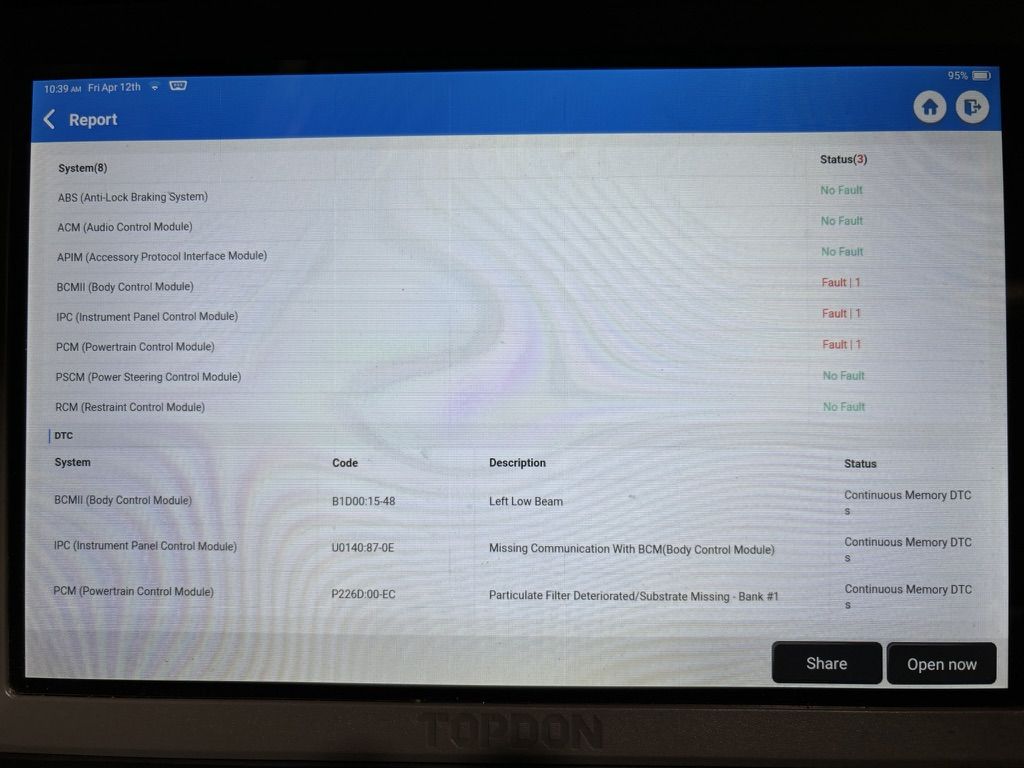
EGR faults, DPF pressure sensor codes, and fuel system codes will all prevent successful regen.
Check Engine Oil Level
If over the max mark, change the oil immediately. Excess oil enters the DPF via blow-by.
Inspect DPF Pressure Sensor
Check DPF pressure sensor and pipes for damage, cracks or blockages.
Verdict
P2002 is serious but not always terminal for the DPF. Catch it early, attempt an active regen, fix any underlying faults, and change your driving habits. Left too long, the DPF will need replacement at significant cost.