🛒 Shop
Free Guides By Make Fault Codes MOT Checker Shop YouTube

P0400 — EGR Flow Malfunction

By Mr Auto Fixer — Professional Mechanic, 20+ Years Experience

Engine management light on. Rough idle, poor emissions, and failed MOT. Learn what causes it and how to fix it.

Medium — Fix When Convenient
Last checked: May 2026

What Is P0400?

P0400 is stored when the ECU detects that exhaust gas is not flowing through the EGR system as expected. The EGR (Exhaust Gas Recirculation) system recirculates a portion of exhaust gases back into the intake to reduce NOx emissions and improve fuel economy. Very common on diesel engines, especially after high mileage when carbon build-up chokes the EGR valve or cooler. Can also appear on petrol engines, though less frequently.

Common Symptoms

  • Engine management light
  • Rough idle
  • Increased fuel consumption
  • Hesitation under load
  • Occasional smoke on start-up
  • Failed MOT emissions test

Common Causes
Carbon-Blocked EGR Valve Most common cause; carbon deposits prevent the valve opening or closing fully.
EGR Cooler Blockage The EGR cooler transfers heat from exhaust gases; if blocked, flow is restricted.
EGR Valve Stuck Open Causes rough idle and excessive smoke; ECU detects incorrect flow at idle.
EGR Valve Stuck Closed Causes emissions failure and P0400 on cars where the ECU expects flow.
Faulty EGR Position Sensor The valve moves but the sensor reports incorrect position.
Vacuum Hose Failure Older vacuum-operated EGR valves fail when the control hose splits or perishes.
Wiring Fault Corrosion on the EGR valve connector is common in high-mileage vehicles.

How to Diagnose P0400

1

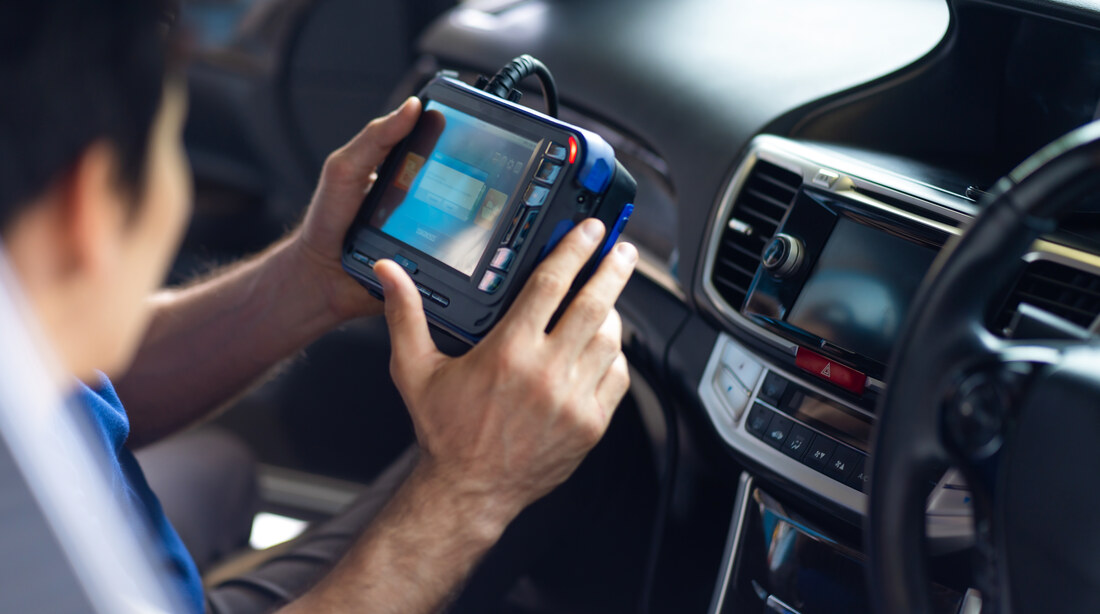
Connect OBD Scanner

Read all codes. P0400 often appears alongside P0401 (insufficient flow) or P0402 (excessive flow).

2

Inspect the EGR Valve

Remove and inspect visually. Heavy carbon build-up is immediately obvious.

3

Test EGR Operation

With a scanner capable of bi-directional control, command the EGR valve open and watch for an idle change. No change equals blocked or seized valve.

4

Check EGR Cooler

On diesel engines, a blocked EGR cooler will restrict flow. Look for thick black residue in the inlet.

5

Inspect Vacuum Hoses

On older vacuum-controlled EGR systems, check all hoses for cracks and disconnections.

6

Check Wiring and Connector

Inspect the EGR valve connector for corrosion, bent pins, or damage.

Quick Clean Tip On many diesel engines, a light clean of the EGR valve with carburettor cleaner solves P0400 without replacing any parts. Remove the valve, soak it in cleaner, and scrape away the carbon deposits.
Illegal EGR Deletion Do not simply blank off or delete the EGR system — it is illegal on road-going vehicles and will cause an automatic MOT failure.

Mechanic's Corner — EGR System Faults

P0400 is a flow fault, meaning the ECU expected a change in intake air composition when it opened the EGR valve and didn't see it. In most cases, the valve hasn't failed electrically — it's blocked solid with carbon deposits and simply can't move. This is especially common on diesel engines after 80,000 miles of urban use where the EGR system never gets hot enough to burn off deposits.

Before replacing the EGR valve, try removing it and cleaning it with carb cleaner and a wire brush. A valve that was mechanically stuck often works perfectly once clean. A genuine Valeo or Pierburg unit runs £80–£200; budget pattern parts from overseas markets have a poor reliability record on EGR valves specifically — it's one area where spending on quality pays off.

Verdict

EGR-related codes are extremely common on high-mileage diesels. In most cases the fix is a clean or replacement of the EGR valve, which is a DIY-friendly job on most engines. A mid-range OBD scanner with bi-directional control helps confirm the diagnosis before spending money.

Mr Auto Fixer
Written by
Mr Auto Fixer
Qualified Mechanic 20+ Years Experience UK Based

Professional UK mechanic with over 20 years of hands-on experience. All guides are based on real workshop repairs — not theory.

About Mr Auto Fixer
Common Questions

Frequently Asked Questions

Yes, on most engines. Remove the valve, soak in carburettor or EGR cleaner, scrape carbon, refit. Takes 1–2 hours depending on the car.
No. Many cases are resolved with a clean. Only replace if the valve is mechanically seized or the internal seals are damaged.
Yes, if the EML is illuminated at the time of the test.
Not immediately dangerous, but it will worsen fuel economy and emissions over time and will cause an MOT failure.
It depends on which warning light the code is triggering. Since 2018, any car presenting with an illuminated amber Engine Management Light (EML) at the MOT is a Major failure under DVSA rules — even if the car drives perfectly. A red warning light is always a Major or Dangerous failure depending on context. If clearing the fault makes the light go out and the code does not reappear during the pre-test drive, you will pass; if the code returns within minutes of clearing, the underlying fault must be fixed before MOT day. A tester is required to fail the car on the light being on, regardless of whether the underlying fault is something safety-critical or not. For codes that affect emissions specifically (catalyst, lambda, EGR), the car may also fail the actual emissions check. Fix the cause, clear the code, and drive the car for a few miles before the test.