What Is P0132?
P0132 means the upstream oxygen sensor on Bank 1 is consistently reporting a high voltage signal - typically above 0.9V - for longer than expected. High O2 voltage indicates a rich condition (too much fuel, not enough oxygen). If the signal stays high regardless of ECU corrections, P0132 is stored.
A genuine rich condition - excess fuel entering the cylinders - can cause P0132 alongside the sensor itself failing in a high-voltage state. Common real-world causes include leaking fuel injectors, a failed fuel pressure regulator, or a faulty coolant temperature sensor causing excess cold-start enrichment to persist.
Common Symptoms
- Engine management light on
- Rich exhaust smell (fuel smell from tailpipe)
- Black or grey smoke from exhaust
- Increased fuel consumption
- Fouled spark plugs
- Rough idle
Common Causes
OBD Fault Code Plain English Guide
- 100 most common UK fault codes in plain English
- A severity rating for every code so you know what can wait
- Causes and next steps listed for each fault
Instant PDF download · works on phone, tablet or PC · 7-day money-back guarantee
How to Diagnose P0132
Check for Companion Codes
Read all codes. P0172 (System Too Rich), P0300 (misfire from fouled plugs), or injector codes alongside P0132 confirm a genuine rich condition. Address the root cause rather than just replacing the O2 sensor.
Monitor Live Data for Fuel Trims
Check Short Term and Long Term Fuel Trim (STFT/LTFT) values. Negative fuel trim values (e.g. -15%) confirm the ECU is reducing fuel - the engine is genuinely rich. If fuel trims are normal but P0132 is stored, the sensor is likely at fault.
Check Spark Plugs
Remove a spark plug and inspect the colour. Black, sooty deposits confirm rich running. Tan or light grey indicates a normal mixture. If plugs are black, the rich condition is real.
Monitor O2 Sensor Signal
In live data, a healthy upstream sensor switches rapidly between 0.1V and 0.9V. P0132 - stuck above 0.9V - means the sensor is not switching, which either means it has failed high or the engine is genuinely very rich preventing the sensor from ever dropping.
Replace the O2 Sensor
If fuel trims are normal and there is no genuine rich condition, the sensor has failed in the high-voltage position. Replace the upstream O2 sensor.
Mechanic's Corner - Proving The Sensor Alive In Two Minutes
There is a workshop trick that settles most P0132 arguments without spending anything: make the engine briefly lean on purpose and watch whether the sensor notices. With the engine warm and idling and live data on the screen, pull a small vacuum hose for two or three seconds. That gulp of unmetered air leans the mixture hard, and a living upstream sensor will dive from its stuck 0.9V towards 0.2V almost instantly. If the voltage moves, the sensor is telling the truth and your engine really is rich - go hunting the cause with the P0172 system too rich guide. If the voltage sits pinned high while the idle stumbles lean, the sensor or its wiring has failed high, and you can buy the replacement with confidence.
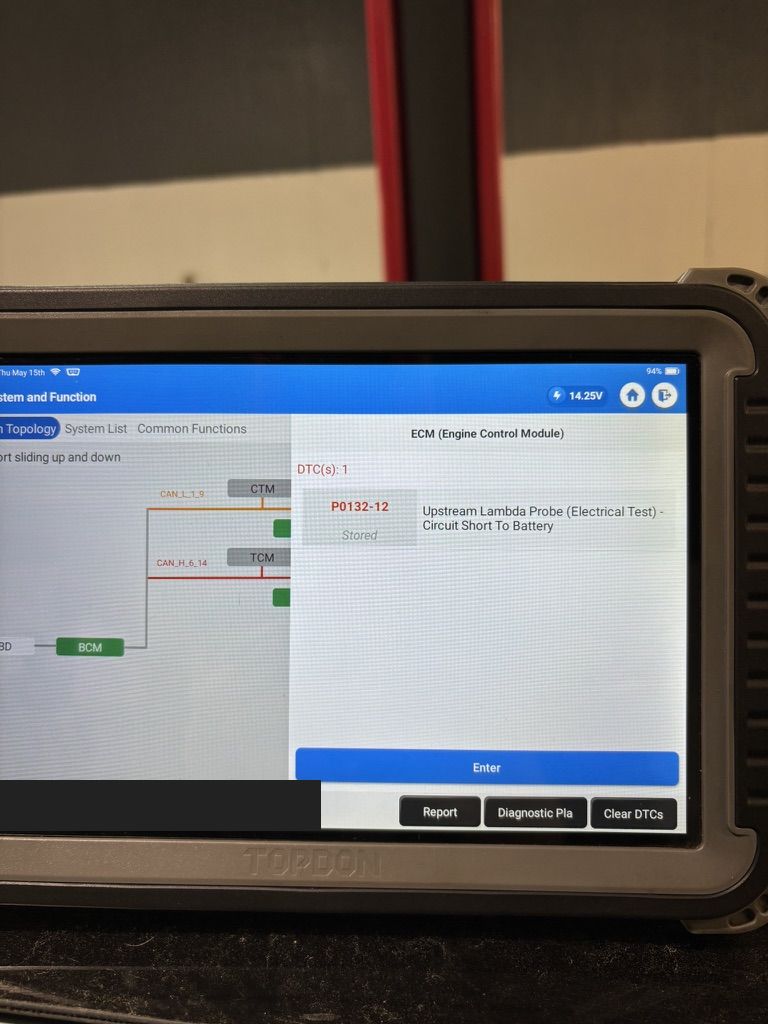
One wiring note from the scan photo above: a signal wire chafed through to a live feed produces exactly the same pinned-high reading as a failed element, which is why the loom check matters on any car where the code arrived suddenly rather than creeping in. And after fixing a genuine rich fault, change the engine oil if it smells of petrol - fuel dilution from weeks of rich running thins the oil, and that is a second bill waiting behind the first one.
Verdict
Check fuel trims in live data first - they tell you whether the engine is genuinely rich (sensor working correctly) or whether the sensor itself has failed high. Genuine rich running needs root cause investigation. An isolated P0132 with normal fuel trims means sensor replacement is the fix.