What Is P0128?
P0128 triggers when the engine control unit detects that coolant temperature is not reaching the thermostat's target regulating temperature - typically around 90–95°C in most vehicles. The ECU monitors coolant temperature via the Engine Coolant Temperature (ECT) sensor and expects the engine to warm up within a set timeframe after a cold start. If it doesn't, this code is logged.
This is a common fault on many UK cars, especially older vehicles or those with high mileage. The issue is usually mechanical (a thermostat stuck in the open position) rather than electrical, though a faulty sensor or corroded connectors can also trigger it.
Common Symptoms
- Engine temperature gauge stays in the cold range
- Heater doesn't produce hot air, especially on cold mornings
- Worse fuel economy than normal
- Engine takes longer to reach operating temperature
- Rough idle or hesitation when engine is cold
- Check engine light or warning light on dashboard
Common Causes
The most common cause. Thermostat remains open, allowing coolant to bypass the engine block and reach the radiator too quickly, preventing warm-up.
Sensor fails or becomes resistant, sending incorrect temperature signal to ECU. Engine may actually be warm, but sensor reports it as cold.
Corroded or broken wires between ECT sensor and ECU prevent proper signal transmission, causing the ECU to think the engine is always cold.
Oxidation or water ingress in the ECT sensor connector creates resistance, degrading the signal and leading to incorrect temperature readings.
If coolant is critically low, the sensor may not be submerged properly, leading to faulty temperature readings and the code.
Rare, but a failing ECU can misinterpret valid sensor data. Only consider after ruling out thermostat, sensor, and wiring issues.
How to Diagnose P0128
Every P0128 outcome, written out in full
The tool above asks a couple of questions and lands you on one of these 6 results. They are all set out here as well, so you can read them without clicking through, compare them against each other, or check one on a phone with no signal.
If you answered It takes forever to warm up, or never reaches normal
Safe to drive A car that takes far too long to warm up with this code stored is behaving exactly as the code describes, and it is not dangerous. An engine running cool will not hurt itself the way an engine running hot will, so you have time to sort it properly.
- Thermostat stuck open (Most likely) The wax element loses the ability to close fully, so coolant circulates through the radiator from the moment you start up and the engine never gets a chance to reach working temperature. This is the clear majority of these faults on any make.
- Thermostat opening at the wrong temperature (Likely) A cheap replacement rated a few degrees low, or a tired original opening early, keeps the engine just under the temperature the ECU expects within the time it allows. It warms up, it just never quite gets there or never gets there fast enough.
- Map controlled thermostat heater circuit open (Possible) Many modern engines use an electrically assisted thermostat the ECU can force open, and a failed heating element or a broken wire leaves it defaulting to open permanently. It looks identical to a stuck thermostat but needs the circuit tested rather than the part guessed.
What to do next: Feel the top radiator hose from cold with the engine idling. It should stay cool for several minutes and then warm up quickly all at once as the thermostat opens. If it warms gradually from the first minute, the thermostat is passing coolant it should be holding back and that is your answer.
If you answered It sits where it always has and only the light is on
Safe to drive A gauge sitting where it always has while the light is on catches a lot of people out, because most modern temperature gauges are heavily damped. They park in the middle across a wide band of real temperatures, so the dashboard can look perfect while the engine runs cool.
- Gauge damping hiding a genuine fault (Most likely) Manufacturers smooth the gauge deliberately so drivers do not worry about normal fluctuation, and on many cars the needle sits centred anywhere from around eighty degrees to well over a hundred. Trust a scan tool reading rather than the needle. Reading live data with a scanner
- Coolant temperature sensor reading low (Likely) A sensor that has drifted low tells the ECU the engine is cold when it is not, which logs the code and richens the fuelling at the same time. The giveaway is a cold reading on the scanner while the top hose is genuinely hot to the touch.
- Thermostat only just failing (Possible) An element that closes slowly rather than not at all gives a warm up just outside the window the ECU allows. Everything feels normal from the driving seat and the only symptom is the light, which is what you are describing.
What to do next: Plug a scanner in and watch coolant temperature climb from stone cold. A healthy engine should be near ninety degrees within about ten minutes of ordinary driving. If the scanner agrees with the gauge and both look right, look hard at the sensor circuit rather than the thermostat.
OBD Fault Code Plain English Guide
- 100 most common UK fault codes in plain English
- A severity rating for every code so you know what can wait
- Causes and next steps listed for each fault
Instant PDF download · works on phone, tablet or PC · 7-day money-back guarantee
If you answered It reads normal in town but drops on the motorway
Drive carefully, book it in A gauge that behaves in town and drops once you are on a motorway is a useful clue rather than a mystery. Air flowing through the radiator at speed overwhelms a thermostat that is not sealing, so the fault only shows itself where the airflow is highest.
- Thermostat leaking past its seat (Most likely) A thermostat that is not quite closing lets a trickle through constantly, which the engine copes with while you are pottering about but not against seventy miles an hour of cold air through the core. The temperature falls away and the code sets.
- Active grille shutters stuck open (Likely) Plenty of modern cars use motorised shutters behind the grille to help the engine warm up, and a jammed or unplugged set leaves the radiator fully exposed at all times. It is easy to miss because nothing about it feels mechanical from the driving seat.
- Cooling fan running when it should not (Possible) A fan stuck on through a failed relay or a shorted control circuit pulls heat out of the system continuously. Listen for a fan running from a cold start, because that is not something a healthy engine does on a chilly morning.
What to do next: Do a motorway run with a scanner logging coolant temperature and watch the reading as speed builds. A temperature that sags steadily above fifty miles an hour and recovers when you slow down effectively confirms a thermostat that is not sealing.
If you answered The heater blows cold or lukewarm, then Below the minimum mark, or I keep topping it up
Drive carefully, book it in Low coolant with a cold running fault and a poor heater is a different problem from a stuck thermostat, and the missing coolant matters far more than the code does. Coolant does not evaporate, so if the level keeps dropping it is going somewhere.
- External leak losing coolant slowly (Most likely) Weeping hoses, plastic housings and radiator seams lose enough over a few weeks to drop the level below the heater feed without ever leaving an obvious puddle on the drive. A pressure test finds these in minutes where looking rarely does. How to trace a coolant leak
- Air lock left after a previous top up (Likely) Air trapped in the heater matrix or around the thermostat housing stops proper circulation and gives false readings at the sensor. Many systems need a specific bleeding routine and simply filling the expansion tank does not achieve it.
- Coolant going into the engine (Possible) A failing head gasket or a cracked exhaust gas cooler consumes coolant with nothing to see outside the car. Watch for pressure building in the expansion tank within a couple of minutes of a cold start, which is not normal. Chasing an unexplained coolant loss
What to do next: Sort the level before you condemn any parts. Fill it correctly, bleed it properly and mark the tank, then check again after a few days of driving. If it drops again the leak is the job, and the fault code was only the thing that told you about it.
If you answered The heater blows cold or lukewarm, then Between the marks and it stays there
Drive carefully, book it in A correct coolant level with a heater that still will not blow hot narrows this down nicely. The coolant is there, so either it is not getting hot enough in the first place or it is not being routed through the heater matrix properly.
- Thermostat stuck open starving the heater (Most likely) The heater matrix only gets properly hot once the engine reaches full temperature, so a thermostat that never closes leaves you with lukewarm air and a cold running code together. The two symptoms share one cause far more often than not.
- Blocked heater matrix (Likely) Years of old coolant and stop leak additive silt up the narrow tubes inside the matrix. The tell is one heater hose hot and the other barely warm where they pass through the bulkhead, and it is worth checking before anybody starts on the dashboard.
- Heater blend flap or its motor failed (Possible) The flap that mixes hot and cold air can jam or lose its actuator, which gives cold air regardless of how hot the engine is. If the flap is at fault it has nothing to do with the code, and you have two separate jobs rather than one.
What to do next: With the engine fully warm, carefully feel both heater hoses where they pass through the bulkhead. Both hot means the matrix is fine and the problem is the flap or the controls. One hot and one cool means the matrix is blocked. Both cool means the engine is not making heat and the thermostat is where to start.
If you answered It appeared after coolant or thermostat work
Drive carefully, book it in A cold running code that turns up straight after cooling system work usually points at the work rather than at a fresh failure. That is not a criticism of anybody, because air and thermostats are simply easy things to get wrong.
- Thermostat fitted the wrong way round or with its seal pinched (Most likely) Many thermostats only seal in one orientation and some have a small jiggle pin that has to sit uppermost to vent air. Fitted upside down or with the rubber seal trapped, it will never close properly and the engine will never warm up.
- Air still trapped in the system (Likely) Refilling without following the correct bleed procedure leaves a pocket sitting exactly where the sensor lives, so the ECU ends up reading air temperature rather than coolant temperature. Plenty of these clear after a proper bleed and two heat cycles.
- Aftermarket thermostat with the wrong rating (Possible) Pattern parts are often supplied with a lower temperature rating than the original, sometimes sold as an upgrade. The engine then settles below the window the ECU is looking for and stores the code on every single trip.
What to do next: Bleed the system properly first, following the routine for that engine rather than just topping up the tank, then clear the code and do two full warm up and cool down cycles. If the code returns after that, take the thermostat back out and check both its orientation and the temperature rating stamped on the body.
Check Coolant Level
Turn off the engine and let it cool for 30 minutes. Open the bonnet and locate the coolant expansion tank (usually a translucent plastic tank marked with MIN and MAX lines). The level should sit between MIN and MAX when cold. If it's low, top it up with the correct coolant for your vehicle and retest. Low coolant can prevent the sensor from registering proper temperature.
Observe Temperature Gauge on Cold Start
Start the engine from cold and watch the temperature gauge on your dashboard. It should gradually rise from cold towards the middle (around 90°C). If it stays pinned cold for more than 5–10 minutes, the thermostat is likely stuck open or the sensor is faulty. Use an infotainment temperature display if available for comparison.
Feel the Upper Radiator Hose
After the engine has been running for a few minutes (be careful, it gets hot), feel the upper radiator hose. If it warms up very quickly and stays constantly hot, the thermostat is stuck open. On a healthy engine with a working thermostat, the hose will be cool for the first 3–5 minutes, then gradually warm up.
Inspect ECT Sensor Connector
Locate the Engine Coolant Temperature sensor (usually screwed into the cylinder head or thermostat housing). Disconnect the connector and inspect for corrosion, water, or oxidation on the terminals. If corroded, clean with a wire brush and dielectric grease. Reconnect and retest. A corroded connector is a quick fix that resolves many P0128 faults.
Use a Multimeter on the Sensor
With the engine off and cool, disconnect the ECT sensor. Use an ohmmeter on your multimeter to measure resistance. As a rough guide, cold engines typically show 5k–10k ohms, whilst hot engines show 200–500 ohms. Consult your car's service manual for exact values. If resistance is wildly out of range or doesn't change with temperature, the sensor has failed.
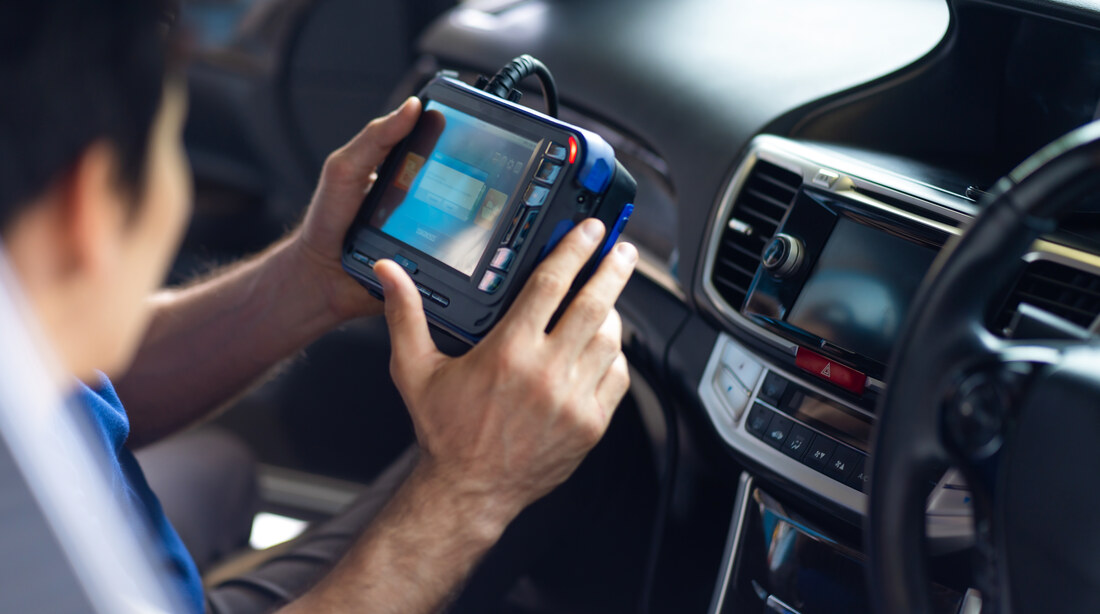
If you have access to a diagnostic scanner, connect it to the vehicle and monitor the live ECT sensor data. A healthy sensor should show the actual coolant temperature (90–95°C when warmed up). If the scanner shows 20°C constantly or jumps erratically, the sensor or its wiring is faulty.
Mechanic's Corner - P0128 on UK Cars
P0128 is almost always a thermostat fault on UK petrol cars, but the way to confirm this takes only 10 minutes. With the engine fully cold, start the engine and watch the coolant temperature gauge or a live scanner reading. The temperature should rise steadily and reach 80–90°C within 5–8 minutes of normal driving. If it climbs to only 60–70°C and then stalls or rises very slowly even on a motorway run, the thermostat is stuck open. This is confirmed diagnosis - replace the thermostat.
On VAG 2.0 TDI diesel engines, a common alternative cause of P0128 is a faulty coolant temperature sensor rather than the thermostat itself. The sensor reads consistently low, telling the ECU the engine never reaches temperature. The thermostat is physically closing correctly but the sensor is lying. Verify by comparing the coolant temp sensor reading against an infrared temperature gun on the radiator top hose - if the hose is genuinely hot but the scanner reads cold, the sensor is faulty.
Verdict
P0128 is a straightforward fault to diagnose in most cases. Start by checking coolant level and inspecting the ECT sensor connector for corrosion. Then observe the temperature gauge and radiator hose temperature during a cold start. A stuck-open thermostat is the most common culprit and requires replacement of the thermostat assembly. If the sensor or wiring is faulty, a replacement sensor (usually £20–£80) or wiring repair will resolve it. Don't ignore this code - poor engine warm-up leads to higher emissions, worse fuel economy, and faster engine wear. Get it sorted within a week or two.